




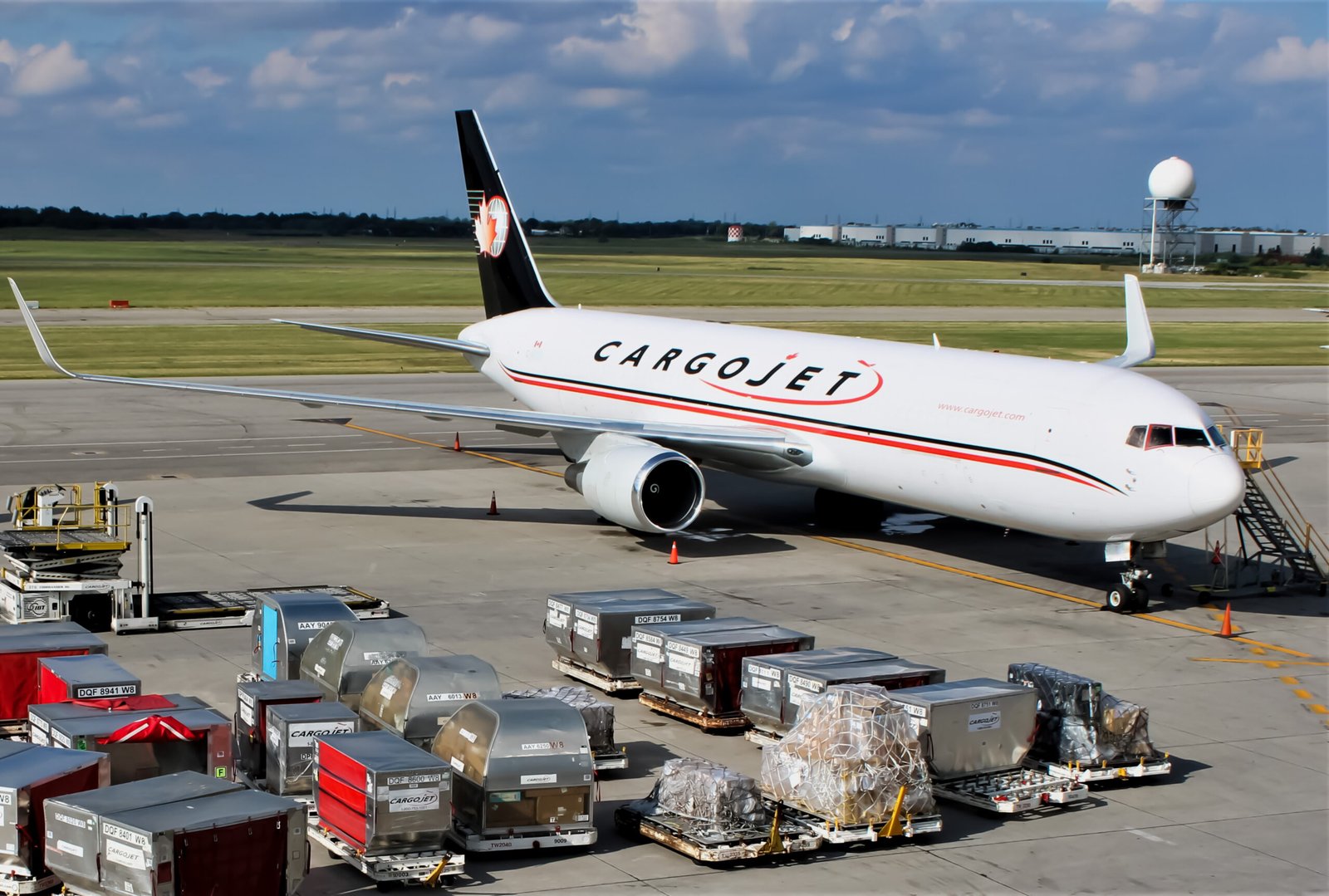
Cargojet has begun testing the European market with a measured transatlantic launch centred on flexibility and customer demand, rather than a rapid network build-out.
The Canadian carrier has introduced a once-weekly service between Canada and Liège, using CargoLand by LGG as its European entry point. Management says the route is not intended as a conventional expansion push, but as a carefully controlled way to assess market response and scale only when demand proves sustainable.
Pauline Dhillon, recently appointed as Cargojet’s sole CEO, said the company’s intention is to expand only in line with actual customer commitments, utilisation patterns and network performance. In her words, Europe should be viewed as an extension of Cargojet’s Canadian overnight network, not as a stand-alone volume play.
Liège was selected because of its cargo infrastructure and strong feeder connectivity. Rather than trying to replicate the ground handling, trucking or express parcel systems already in place in Europe, Cargojet intends to integrate into existing local ecosystems. That, the company argues, allows it to provide end-to-end connectivity while avoiding the fixed costs and complexity associated with building a proprietary network in a market still marked by uneven recovery and volatile utilisation.
Dhillon said the approach is designed to preserve both service quality and commercial discipline, allowing the carrier to benefit from local connectivity without taking on unnecessary structural burden.
Fleet strategy is a key part of that flexibility. Cargojet operates a mix of Boeing 757 and 767 freighters, which can be redeployed across domestic, international, charter and ACMI work as demand shifts. The company says majority ownership of the fleet gives it further control over aircraft allocation and maintenance planning, while helping protect its domestic network, which continues to operate with on-time performance above 99 percent.
That fleet structure also means there is no immediate need to add aircraft specifically for the European launch. Dhillon said any future fleet growth would depend on stable long-term revenue commitments.
The launch also comes during a leadership transition designed to reinforce continuity rather than signal a strategic reset. With Dhillon now serving as sole CEO, founder Jamie Porteous remains involved as Strategic Advisor through 2026, while an Executive Chairman oversees governance. The company says the structure is intended to preserve institutional knowledge while creating clearer accountability as international activity develops.
Cargojet’s cautious stance is also supported by a stronger financial base. In the second quarter of 2025, the business materially reduced its net loss and maintained stable EBITDA despite a 10 percent drop in block hours. Domestic and charter revenues continued to grow, supported in part by structurally higher e-commerce demand in Canada, although ACMI performance weakened against a backdrop of softer international trade conditions.
Looking ahead, Cargojet says European expansion will be shaped primarily by direct customer behaviour rather than by freight indices or macroeconomic forecasts. Management believes real-time network use offers a more dependable guide for capacity planning than broader market indicators, particularly for a cargo-only airline focused on time-sensitive shipments rather than volume-led expansion.