



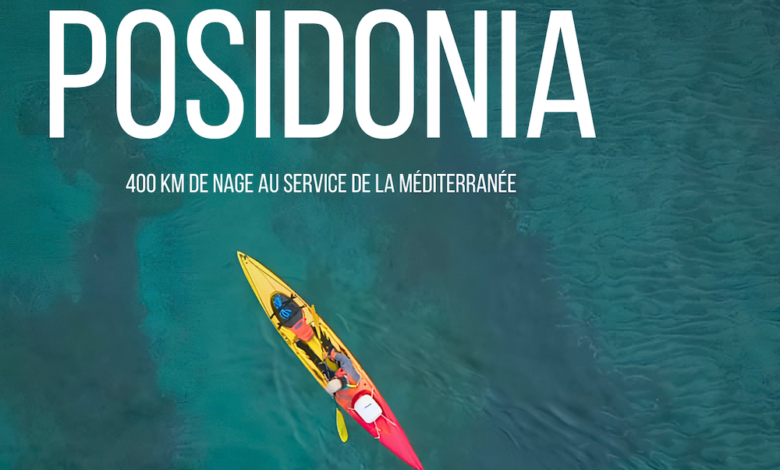
A 52-minute documentary titled Posidonia offers a very different meaning to a name more commonly associated with the major shipping exhibition held in Greece. Here, it becomes the focus of an environmental storytelling project centered on the fragile state of the Mediterranean Sea.
The film is directed by French filmmakers and explorers Nelly Kars and Bruno Lambert. It follows a 400 km journey along the French Mediterranean coast, between Marseille and Menton, completed through swimming and kayaking — a physically demanding route that shapes the narrative of the film.
Produced by Octopuce Production under the “Les Marcheurs de la Terre” programme, the documentary was released in June 2025 and is currently being broadcast on France Télévisions. It is also being screened at festivals and public events linked to marine education and environmental awareness.
At its core, the project is built around awareness and transmission. As Nelly Kars explains, the aim goes beyond documenting an expedition; it is about using storytelling to raise awareness, especially among younger generations, about the environmental realities of the oceans.
Named after the Posidonia seagrass endemic to the Mediterranean, the film uses this symbol to explore the growing pressures affecting one of the world’s most important seas in both ecological and economic terms.
Throughout the documentary, interviews with scientists, environmental associations, conservation groups, and local sea users highlight a consistent set of concerns: pollution, coastal overdevelopment, biodiversity loss, overfishing, and the accelerating impacts of climate change.
The filmmakers describe the Mediterranean as “the most polluted sea in Europe”, with particular concern over rising microplastic contamination, which has reached alarming levels according to researchers featured in the film.
However, the documentary avoids an entirely pessimistic tone. Instead, it insists that restoration is still possible, provided that concrete and coordinated action is taken.
Ultimately, Posidonia positions itself both as a warning and a message of hope, urging a shift in perspective: the Mediterranean should not be seen only as a tourism and economic hub, but as a shared natural heritage that requires urgent and collective protection.