



At its April 2026 monthly media briefing, the Port of Los Angeles (POLA) devoted significant attention to the geopolitical dimensions of global trade, focusing in particular on the broader implications of the conflict in the Middle East.
The guest speaker, Dr. Jerrold D. Green, senior fellow at the UCLA Burkle Center for International Relations, offered a cautious and at times troubling assessment of how the current hostilities could affect global trade in the months ahead.
Asked what was happening, Green described the current US approach with the phrase: “We’re blockading the blockaders.” He also pointed out that no other country had stepped forward to join that blockade, before stressing that the implications of the crisis extend well beyond the Middle East itself.
While much of the world’s attention is fixed on the Strait of Hormuz, Green questioned who was paying enough attention to Asia and the South China Sea, which he also sees as areas of growing concern.
POLA executive director Gene Seroka suggested that supply chain disruption, combined with thousands of vessels being out of position, could take months to unwind.
Green contrasted what he described as Iran’s slow, drawn-out strategic style with Washington’s much faster, more transactional approach. In his view, the US is in a hurry while Iran feels it has time on its side, and both understand that about each other. That, he suggested, makes the situation even more concerning.
When Seroka raised the possibility of ripple effects across the globe, Green again pointed to Asia, but also to Latin America, stressing the need to view the crisis through a truly global lens. Even if it looks like a Middle Eastern issue, he said, it is in reality absolutely global.
The discussion also touched on the effect on multiple supply chains, including agriculture. Green’s view was straightforward: anything involving supply chains is being affected.
In the broader geopolitical contest, he suggested that Washington may also be hoping that China, unhappy about its reduced access to Iranian petroleum, will pressure Iran into reaching a deal more quickly.
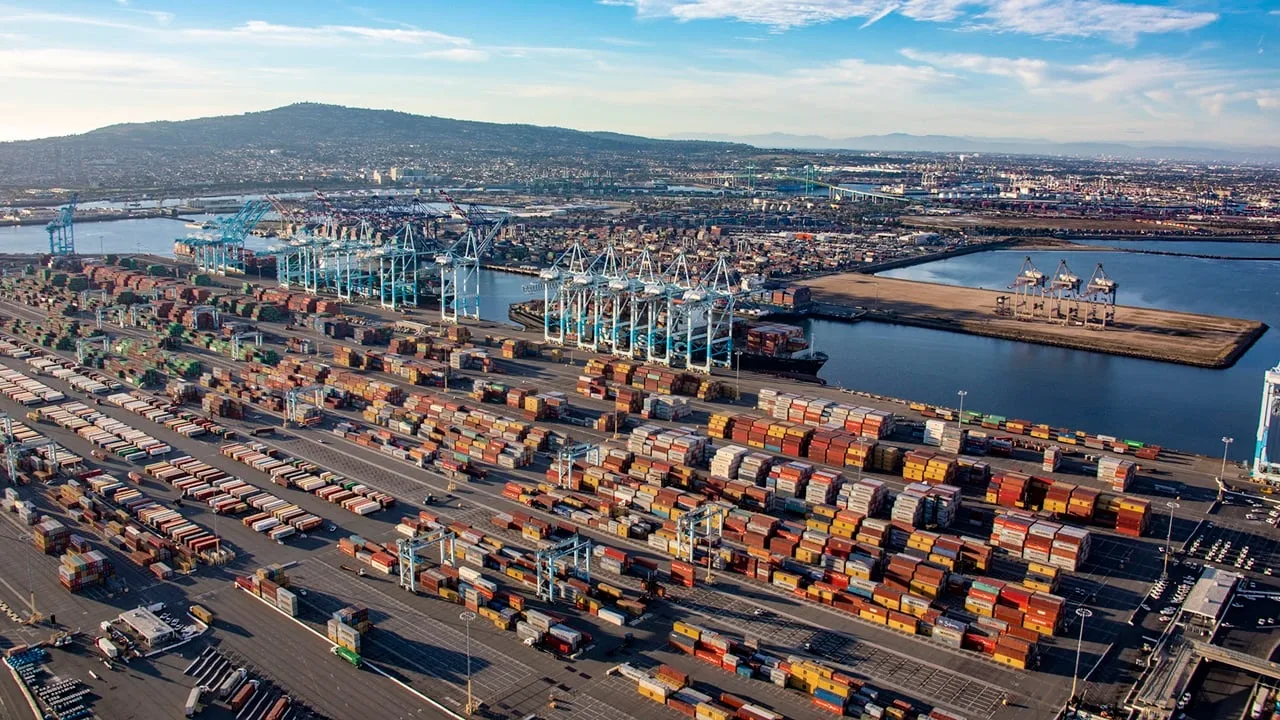
Green also underlined the importance of the Port of Los Angeles as a gateway to California’s economy. In his words, there is virtually nothing that is not at risk, because whatever happens globally matters to the port. That makes it extremely difficult for businesses in any industry to plan future cargo movements with confidence.
Alongside the international trade discussion, Seroka was also asked about the impact of the 60-day Jones Act waiver introduced last month. Focusing on tanker movements along the US West Coast, he said he had seen no evidence of lower gasoline prices or an influx of non-Jones Act tankers moving between US ports.