




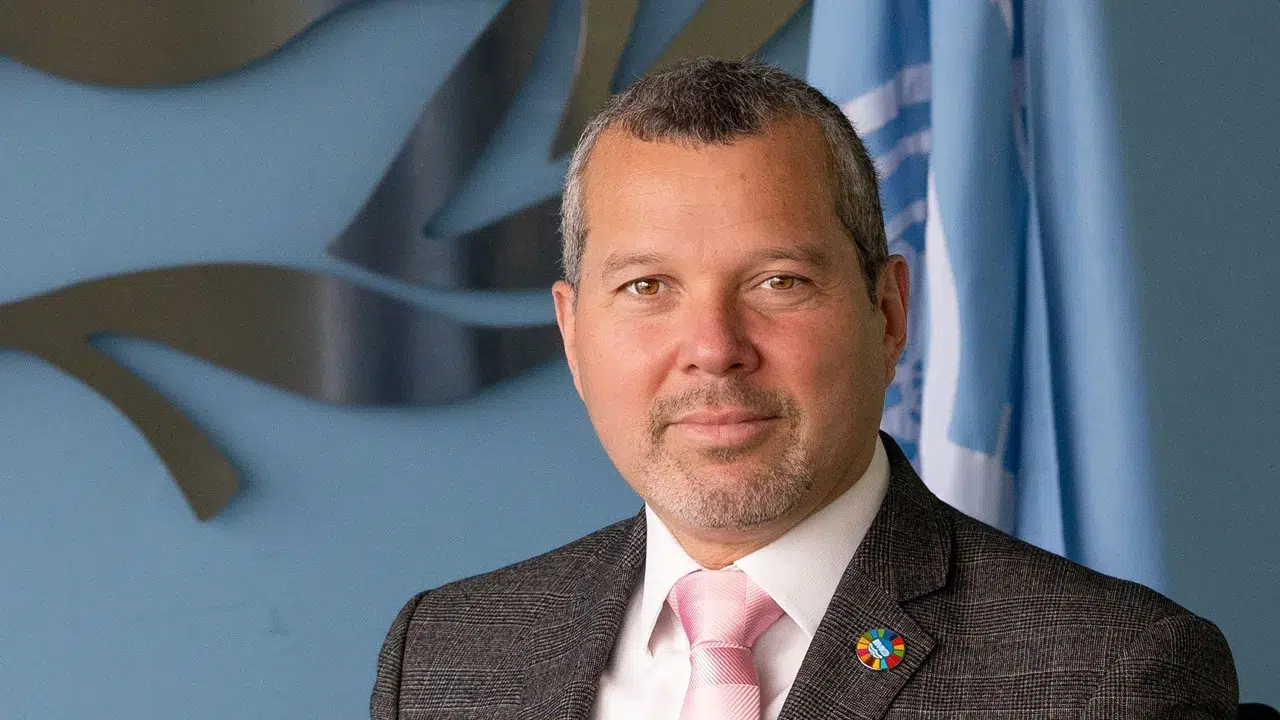
The International Maritime Organization has made it clear that seafarer safety will remain the overriding priority as it prepares evacuation planning for thousands of crew members stranded in the Gulf.
At an extraordinary IMO Council meeting last month on the Middle East situation, the organisation was asked to develop a safe evacuation plan for nearly 1,000 ships and around 20,000 seafarers trapped in the Arabian Gulf following the effective closure of the Strait of Hormuz by Iran.
Speaking during Singapore Maritime Week, IMO Secretary-General Arsenio Dominguez said freedom of navigation is non-negotiable, but insisted that any evacuation plan can only be activated once the necessary security guarantees are in place.
He said the safety of seafarers is paramount and that immediately after the Council session ended, his team moved to prepare a plan that could be implemented as soon as conditions allow.
Dominguez also explained that the IMO wanted to avoid a repeat of last Friday’s confusion, when the Strait of Hormuz was said to be fully open by both Iran and the United States, only for it to emerge that Tehran had attached its own conditions to that reopening.
The organisation subsequently contacted shipping industry representatives and relevant countries in the region, including Iran, in order to clarify exactly what “open” meant in operational terms.
According to Dominguez, it quickly became clear that the situation did not reflect the freedom of navigation the industry is used to, which is why the IMO urged caution.
When vessels attempted to cross the strait on Saturday, only around 10 were able to do so safely before Iran declared the route closed again and fired on three ships attempting transit.
Since then, the waterway has remained effectively closed, while a U.S. blockade covering ships traveling to and from Iranian ports continues at the edge of the Gulf of Oman.