



Global trade is moving into a new phase, one in which supply chains are being redesigned not only for efficiency, but also for resilience, flexibility and continuity.
That is the view of Ganesh Raj, Global COO of Marine Services at DP World, who argues that the maritime sector is now entering a structural transformation. According to him, it is no longer enough to move cargo efficiently between ports. What matters increasingly is how effectively that cargo can continue its journey beyond the terminal gate through coordinated inland connections, with visibility, reliability and speed.
This, he says, is why multimodal corridors are becoming more important.
Recent disruptions have underlined the limitations of traditional linear logistics models. Geopolitical tensions, instability on major maritime routes, port congestion and climate-related pressure have all exposed the weaknesses of point-to-point transport systems.
In response, demand is growing for integrated transport networks capable of adapting quickly when conditions change.
For DP World, this is not a temporary reaction to disruption, but evidence of a deeper shift in how trade is evolving. Supply chains are becoming more regional, more interconnected and increasingly organised around corridor logic rather than isolated transport legs.
Cargo owners want greater optionality, stronger end-to-end visibility and supply chain partners capable of helping them preserve cargo flows when one part of the system comes under pressure.
In this environment, multimodal integration is becoming a defining capability.
Industry projections suggest the multimodal transport market could reach nearly $160 billion by 2032. Raj said that growth reflects more than market expansion. It also signals a change in customer expectations, with shippers increasingly looking for solutions that combine maritime connectivity with inland access across feeder services, rail and road.
He argued that this is changing the role of marine services providers. They are no longer simply moving vessels between ports, but becoming part of broader end-to-end supply chains that connect production centres, ports, inland terminals and final markets.
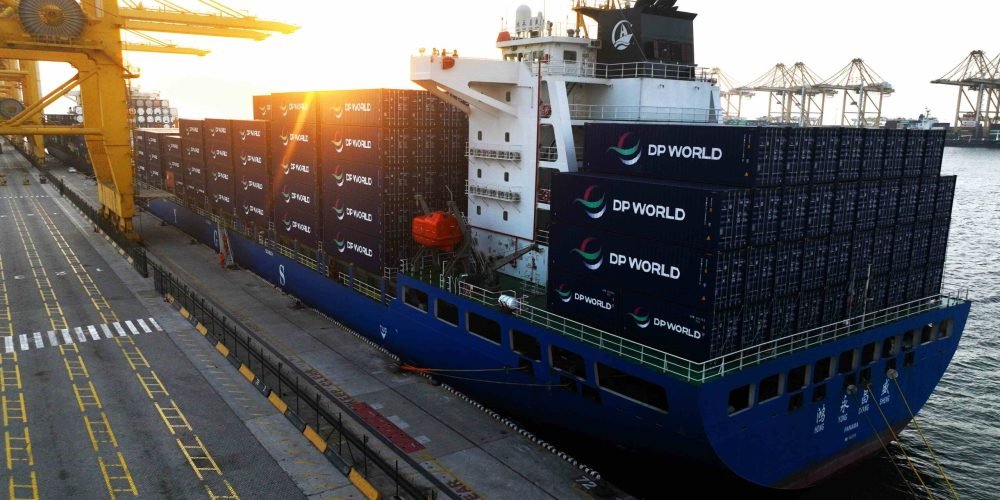
DP World says it is already operating in this direction. Through its Marine Services business, the group connects more than 200 ports globally and completes more than 23,500 sailings annually. Its Shipping Solutions activity handles around 6 million teu every year, supporting coastal and feeder connectivity for both regional and global trade.
Increasingly, those maritime capabilities are being integrated with rail and road solutions to create joined-up cargo journeys that are more resilient, flexible and efficient.
Raj argued that ports on their own are no longer enough. Connectivity beyond the port gate is becoming a major differentiator, and the strongest-performing supply chains will be those capable of combining maritime reach with inland orchestration, digital visibility and the agility to respond quickly when conditions shift.
Technology, he added, is widening the performance gap. Digital integration, predictive logistics and real-time cargo visibility are helping the best supply chains reduce friction, shorten lead times and improve decision-making. In a corridor-based model, physical infrastructure and digital capability must operate together.
Looking ahead, Raj identified three priorities for the decade ahead: continued investment in integrated trade corridors linking ports, inland terminals and logistics networks; stronger coastal and feeder networks that extend connectivity beyond the main hubs; and more robust digital foundations to improve visibility and interoperability across the supply chain.
For customers, he said, the question is no longer whether multimodal logistics matters, but how quickly supply chains can adapt to capture its value. In his view, the sector is moving from pure transport execution toward trade enablement, and future market leaders will be the ones that integrate rather than operate in silos.