



The Marine Insurance Greece conference in Athens became the stage for a major debate on the future of global shipping in an increasingly unstable geopolitical environment.
Yannis Triphyllis, board member of the Hellenic Chamber of Shipping, opened discussions by arguing that the invasion of Donbas marked the beginning of the gradual dismantling of the rules-based global economic order.
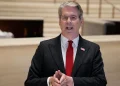
One of the conference’s most closely watched interventions came from Daniel Tadros, COO of the American Club, who outlined the U.S. perspective on a new global economic structure increasingly centered around American strategic interests.
According to Tadros, China’s rapid rise across shipbuilding, electric vehicles, green energy, and Belt and Road infrastructure investments has pushed Washington to fundamentally rethink its maritime and industrial strategy.
He explained that the new U.S. doctrine is now translating into more aggressive trade policies, stronger tariff regimes, and renewed efforts to rebuild American maritime power.
Historically, the United States once controlled nearly 63% of global shipping tonnage. Today, that figure has fallen below 1%, largely due to decades of declining subsidies and higher production costs compared to Asian competitors.
Against this backdrop, geopolitical tensions continue to intensify. Tadros referenced ongoing U.S. efforts to counter Chinese influence across Africa, Europe, and the Middle East while attempting to avoid direct confrontation over Taiwan.
The consequences for shipping are already becoming visible.
George Karkas, Managing Director of Gard Greece, described the situation in the Strait of Hormuz as one of the most significant trade and energy disruptions seen in decades.
Since April, an estimated 20,000 seafarers have reportedly remained stranded aboard between 2,000 and 3,000 vessels in the Arabian Gulf as regional instability continues to impact strategic trade corridors.
Karkas also pointed to a worrying trend in marine insurance: while the overall number of shipping claims is declining, average claim costs are rising sharply. Over a five-year average, claims are now roughly three times more expensive than previously recorded.
According to him, this new reality is being driven by rising geopolitical risks, sanctions, shadow fleets, extreme weather conditions, and the growing criminalization of seafarers in certain jurisdictions.
Despite these challenges, he emphasized that shipping remains one of the world’s most heavily regulated industries thanks to frameworks established by the United Nations and the IMO, which have historically improved safety standards and reduced major incidents.
However, many industry leaders now believe global shipping is entering what they describe as an “era of extremes,” where alliances are increasingly fragile, conflicts more frequent, and operational risks far harder to predict.