



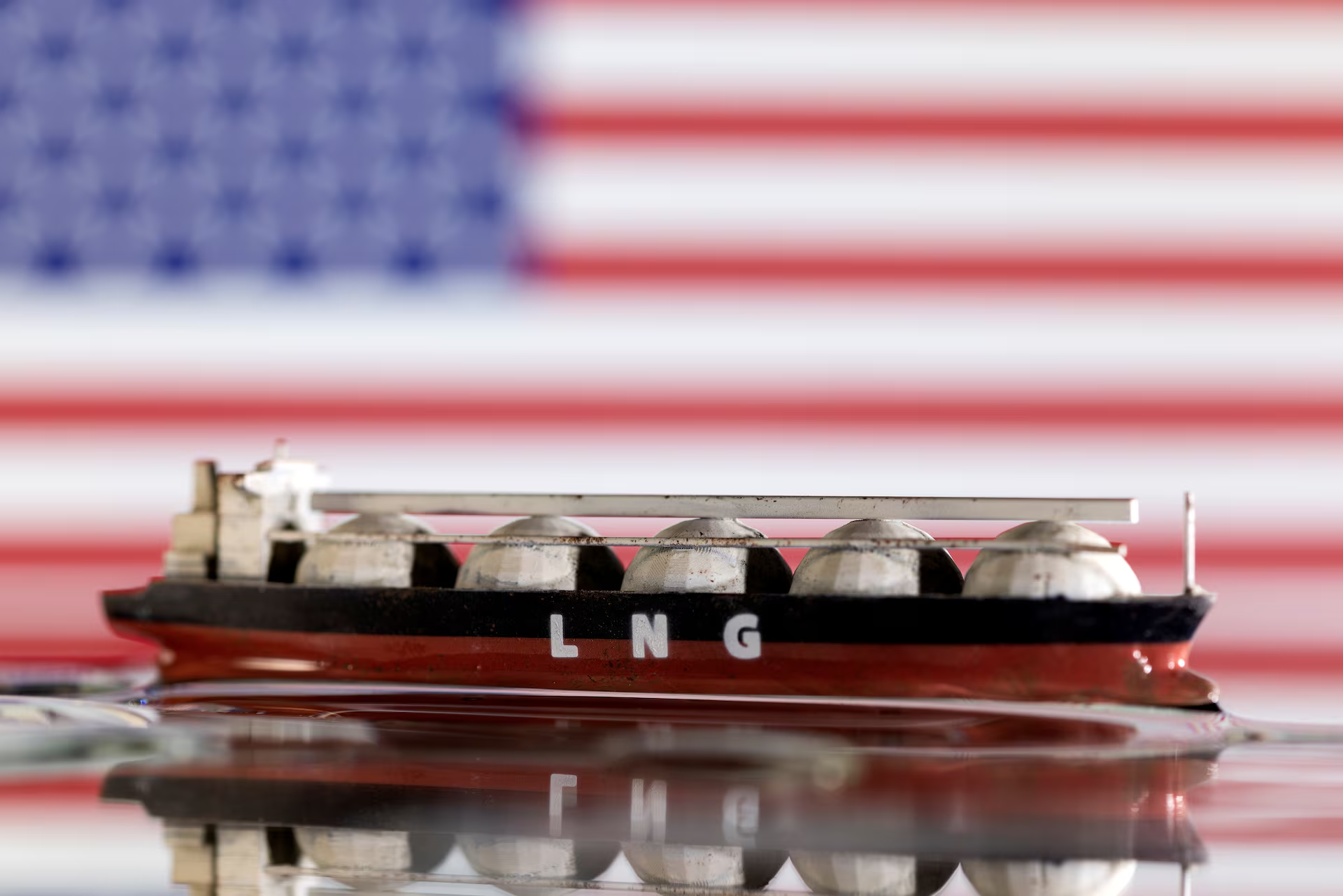
The United States is rapidly strengthening its position in the global LNG trade as geopolitical tensions continue to reshape energy flows.
At the Marine Insurance Greece conference in Athens, Jeff Wilson, Divisional Director at Howden, said the 20-year energy agreement between Greece and the United States represents a major milestone for U.S. gas exports into Europe.
The deal comes as the conflict in the Middle East places significant pressure on liquefaction capacity across the Gulf region.
According to Wilson, around 77 million tonnes of annual capacity in Qatar has been affected, with part of the infrastructure reportedly damaged by drone attacks. Even if operations resume in the coming months, around 20 million tonnes of capacity could remain unavailable.
This disruption is creating a major opening for U.S. producers. Over the past decade, the United States has moved from having almost no liquefaction capacity to becoming one of the world’s leading LNG exporters.
Wilson said the conflict has effectively positioned the U.S. as the leading global liquefaction export market.
The global LNG market now represents around 500 million tonnes per year and is supported by massive investment across Europe, Asia, and North America.
In the United States alone, annual investment has reached around $120 billion over the past three years, as producers expand capacity to meet growing international demand.
The crisis is also changing how investors view LNG infrastructure. Fixed plants in the Middle East are increasingly seen as vulnerable targets, while floating liquefaction and storage solutions may become more attractive due to their flexibility.
Wilson also suggested that the large number of new LNG carriers entering service could create opportunities to repurpose older, less efficient tonnage for floating energy infrastructure.
Europe’s dependence on LNG has also grown sharply since the reduction of Russian gas flows. Germany, for example, moved quickly to deploy floating storage and regasification units to secure energy supply.
Greece is expected to rely heavily on similar infrastructure to receive and distribute U.S. LNG into Eastern Europe, including Ukraine.
The debate around LNG remains highly sensitive in maritime circles, particularly in relation to the IMO’s Net Zero Framework. Several leading Greek LNG shipowners remain among the strongest critics of current environmental regulation.
For many industry observers, LNG is no longer only an energy transition issue. It has become a core geopolitical instrument shaping maritime trade, European security, and future investment decisions.