



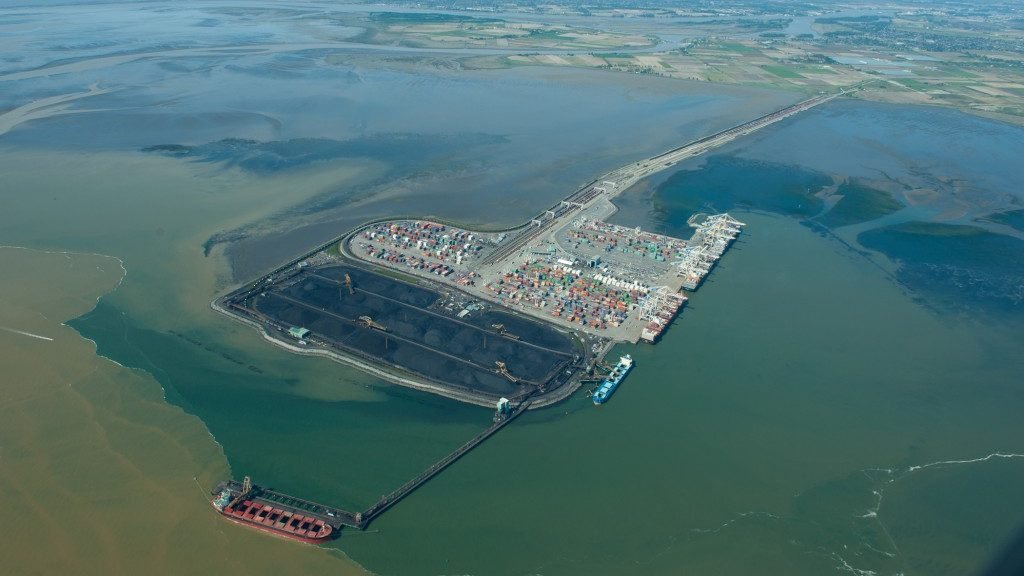
The federal government’s plan to fast-track the Roberts Bank Terminal 2 expansion in Delta, British Columbia, is being welcomed for its economic potential, but it is also reviving concerns about security at Canada’s ports.
Last week, the project was referred to the federal major projects office for possible accelerated approval. If completed, the new three-berth container terminal is expected to increase the Port of Vancouver’s container-handling capacity by 50%, create up to $100 billion in additional annual trade capacity, and contribute an estimated $3 billion each year to Canada’s GDP.
Despite those projections, Delta Mayor George Harvie says questions about port security remain unanswered.
Harvie has spent years calling for stronger protections against organized crime and the movement of illegal goods through British Columbia’s ports. While he supports economic growth, he argues that expanding port capacity should go hand in hand with strengthening security measures.
“We still have not had an upgrade to the security systems that exist in comparable ports in Europe,” Harvie said, questioning how authorities plan to prevent illicit drugs from entering and leaving the country through an expanded terminal.
Canada’s dedicated port police force was dissolved in 1997, leaving responsibility for port security shared among the RCMP, local police services, the Canada Border Services Agency (CBSA), and private security companies.
Harvie does not believe simply restoring a dedicated port police force is the solution. Instead, he says Canada should modernize its ports by introducing advanced security technology similar to systems already used in Europe, including rolling cargo scanners capable of inspecting trucks without disrupting traffic flow.
He also pointed to concerns raised by Australian authorities regarding shipments of illegal drugs leaving Canadian ports. Following discussions with Australian port police, Harvie said he was surprised by their questions about why Canada has not adopted more robust security measures.
The Roberts Bank expansion comes as the federal government seeks to diversify Canada’s international trade and reduce its historical reliance on the United States. By increasing annual container capacity by more than 2 million containers, the terminal would play a key role in supporting future trade growth.
Federal Transport Minister Steven MacKinnon, who announced the project’s referral last week, said port expansion and security should be viewed as separate issues. He added that the federal government continues to invest significant resources in responding to evolving security challenges.
MacKinnon also said he has confidence in the current security regime, saying the RCMP works closely with provincial, municipal and federal partners to protect Canada’s ports.
But critics say that long-standing concerns remain.
In 2023, the City of Delta commissioned an independent review of port policing led by Peter German, a lawyer and former deputy commissioner of the RCMP.
German’s report concluded that the proposed expansion had renewed concerns among provincial and municipal leaders about the effectiveness of policing at Canadian ports.
Speaking this week, German said little has changed since the report was published. He noted that many of the same issues remain, including concerns over contraband entering and leaving Canada, the lack of a permanent police presence inside ports, and the relatively small number of port employees who require security clearances.
While other major ports around the world have embraced more advanced automation and security technology, German pointed out that Canada’s Border Services Agency is responsible for customs enforcement but is not a police force.
“Right now, we have no police officers working within the ports,” he said.
German compared the issue to hosting a major international event such as the FIFA World Cup, arguing that economic success and security must go hand in hand.
“It’s important to expand Canada’s port infrastructure but it’s equally important those facilities are secure and not an afterthought,” he says.