



BUFFALO, N.Y. The Buffalo Bills may have just unveiled the NFL’s newest stadium, but the distinction won’t last long.
Nine other franchises in the league are either in the planning stage or are actually constructing major stadium construction and renovation projects. The combined investments are nearing $20 billion and are part of a broader push by NFL clubs to upgrade their stadiums and construct facilities that can host major sporting and entertainment events.
At least one new or majorly renovated stadium is expected to open in each of the next five seasons. Tennessee has set its sights on 2027, Jacksonville 2028, Cleveland 2029, Carolina 2030 and Kansas City 2031, but other projects are on different schedules.
The projects also signal a changing approach to stadium design. Teams are focusing on premium seating, club areas, improved concessions and amenities and at least six of the nine upcoming projects feature some type of roof, dome or shade structure.
The objective is more than football. They’re building new venues and renovating old ones to attract Super Bowls, international soccer, college football, concerts and other large-scale events.
Buffalo Bills
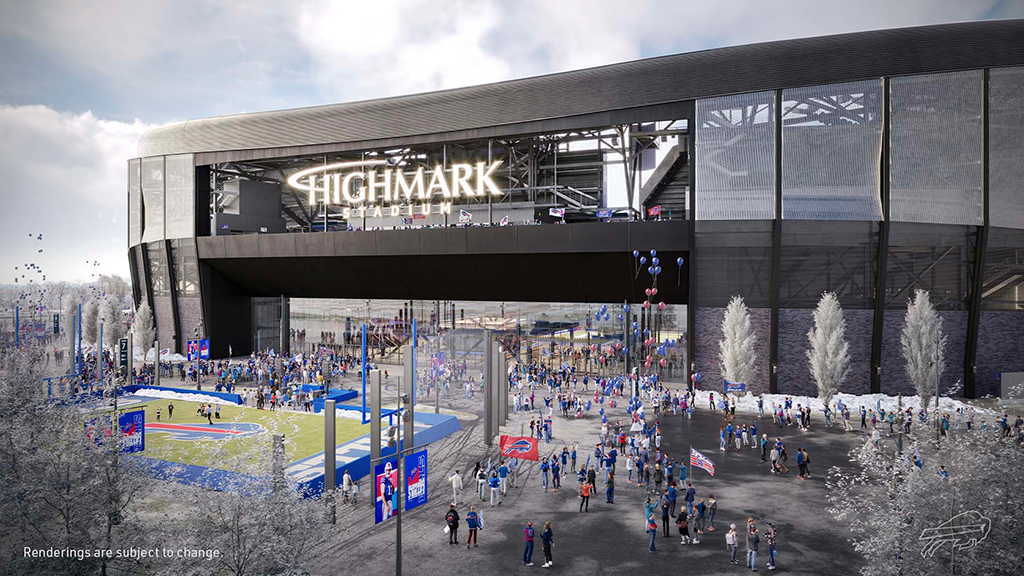
The Bills’ Highmark Stadium already exists and is worth US$2.1 billion. The 60,108-seat venue held its first event Aug. 8, across from the team’s former home.
The state of New York and Erie County are paying $850 million in public funds, with the remainder — including roughly $700 million in cost overruns — covered by owners Terry and Kim Pegula.
The stadium is designed with Kentucky bluegrass and a curved steel canopy that covers around 60% of the seating bowl. The structure is designed to protect fans from Buffalo’s brutal weather, with the NFL’s largest snow-melt system built into the design.
Carolina Panthers
The Panthers are completing a $800-million renovation of Bank of America Stadium, with the total uptown project expected to cost around $1.3 billion.
Charlotte is contributing $650 million and owner David Tepper is putting in another $150 million.
The work is due to be completed by the 2030 season and features a social patio with shaded spaces and standing-room ticket options designed to offer more affordable ways to attend games.
Chicago Bears
The Bears are eyeing a new stadium in Hammond, Indiana, about 25 miles from downtown Chicago.
The project may ultimately cost several billion dollars, though the precise cost has not yet been determined. Indiana has authorized a stadium authority funded by taxes on hotels, restaurants, tolls, and admissions.
The Bears would contribute about US$2 billion, retain stadium revenues and possibly have the option to buy the facility after 40 years.
The team is eyeing a potential start for the 2031 season.
Cincinnati Bengals (8-8)
The Bengals are planning a two-phase, $470 million renovation of Paycor Stadium.
Hamilton County is putting in US$350 million and the team is investing US$120 million.
The first phase has included modernization of suites and club levels, and improvements to concessions and restrooms. A second phase, starting in 2027, will feature new seating and a new videoboard.
The agreement also provides for an 11-year lease with an option for 10 additional years, ensuring the Bengals will remain in downtown Cincinnati through at least 2036.
Cleveland Browns
The Browns are building a new $2.6 billion domed stadium in Brook Park to replace their lakefront stadium.
The Haslam Sports Group is paying about US$1.76 billion, including cost overruns. Ohio has pledged US$600 million, but the funds are currently frozen in a class-action lawsuit. Another US$245 million will come from tax revenues in Brook Park.
The new 67,500-seat venue is to be ready for the 2029 season.
It’ll include a new “Dawg Pound” section that will have a steep 34-degree pitch in an effort to create an atmosphere modeled in part after European football stadiums.
Jacksonville Jaguars Jags
Jaguars to remodel EverBank Stadium for $1.4 billion
Jacksonville is paying $775 million, including $150 million for deferred maintenance, with owner Shad Khan paying $625 million and any overruns.
The 63,000-seat open-air venue is receiving a translucent covering that will provide more protection from the heat and sun of Florida.
Construction will probably be finished for the 2028 season. Jacksonville will play a shortened 2027 season in the current phase with reduced capacity while construction is completed, then move to Orlando for the 2027 season.
Kansas City Chiefs
The Chiefs are building a US$3 billion domed Arrowhead Stadium, with retail and development projects nearby, bringing the overall package to about US$4.5 billion.
The financing structure is 60/40 public-private, with Kansas offering up to US$3 billion in bonds and the Hunt family and the Chiefs covering the rest.
It’s expected to hold about 70,000 fans and is slated to be ready for the 2031 season. The stadium is to be enclosed.
The project will also feature a new team training facility and retail and entertainment space.
Tampa Bay Buccaneers Players
The Buccaneers are seeking about US$1 billion in improvements to Raymond James Stadium, including about US$500 million for a canopy over the lower seating bowl.
The Glazer family has offered to pay about one-third of the cost or about $333 million and is seeking about $667 million in public funds.
The team’s current lease expires after the 2027 season, and plans are still being discussed.
Some of the proposed upgrades are modeled after Miami’s Hard Rock Stadium, aiming to protect fans from Florida’s heat and humidity and provide more entertainment areas.
Tennessee Titans
The Titans are already building a new $2.1 billion Nissan Stadium adjacent to their current stadium.
The team is contributing about $840 million, the state of Tennessee is contributing $500 million, and the remaining $760 million will be funded through bonds backed by stadium-generated revenue and taxes.
The 60,000-seat stadium is to be completed in February 2027, in time for the NFL season, and has already been selected to host the 2030 Super Bowl.
The facility will feature a locker room for female coaches, underground parking for players, frictionless concessions and a stage built into an end zone.
Washington Commanders
Washington plans a new US$4-billion stadium and mixed-use development on the former RFK Stadium site along the Anacostia River.
The 170-acre project will encompass the stadium, housing, green space and a sportsplex.
The Commanders are expected to cost about $2.7 billion, with the city planning to spend about $1.1 billion through 2032.
The stadium will have a roof and will be used as a year-round venue for football, concerts and other major events and is due to be ready before the 2030 season. The stadium will have 65,000 seats.
All of these projects are indicative of the increasing trend of NFL stadiums being built as multipurpose entertainment and commercial destinations, not just places to watch football. The stadium boom is creating a ton of work for the construction and infrastructure industries across North America, with billions of dollars being poured into construction, infrastructure and developments around the stadiums.