



Detroit’s historic Greektown is undergoing a major streetscape transformation as a $20 million revitalization project moves toward completion.
The three-block district, located in the southeastern part of downtown Detroit, has maintained a strong commercial identity through decades of economic challenges. Its restaurants, cafés, shops and family-owned businesses have continued to attract visitors and maintain Greektown’s reputation as a major destination.
The project, funded by the Michigan Economic Development Corp., is approximately two-thirds complete. Hometown Colasanti Group is serving as general contractor.
Focus on pedestrians and public space
The renovation is primarily aimed at improving the pedestrian experience and making the area safer and more attractive.
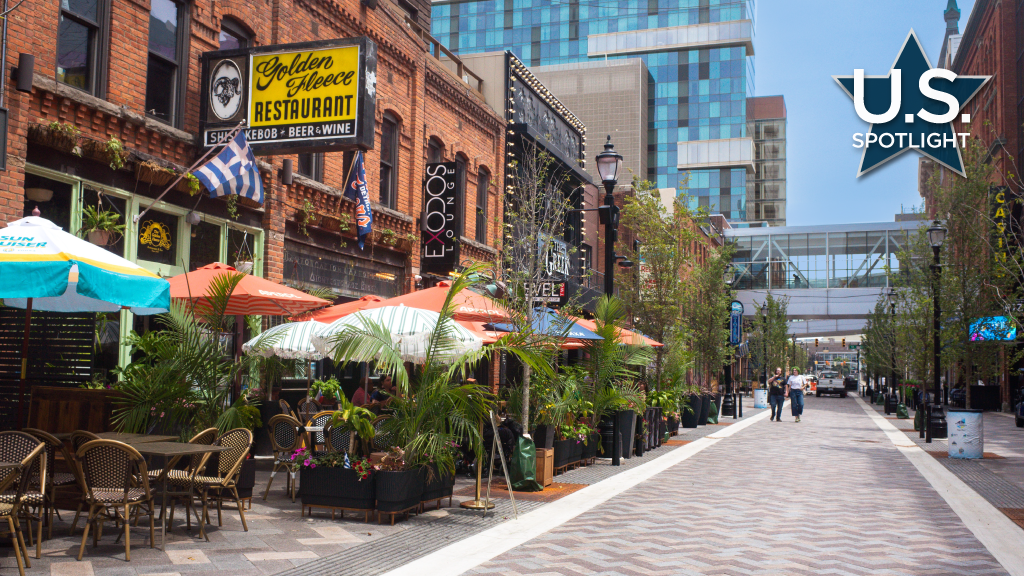
Along Monroe Street, the project includes wider sidewalks, improved lighting and new landscaping, including additional trees. Existing asphalt has also been replaced with premium granite pavers.
A new plaza is being created at the western end of the district near Randolph Street, providing a gateway between Greektown and the wider downtown area.
According to Greektown Neighborhood Partnership executive director Ayesha Maxwell, the improvements are designed to strengthen connections between the district and other major downtown pedestrian destinations.
Work progressing block by block
Construction began in March 2025, with work progressing along the three blocks between Randolph Street and St. Antoine Street.
The 500 block was completed in June, while work on the 400 block is scheduled for completion this month. Construction on the 300 block is expected to finish in November.
Despite the construction activity, businesses in the district have remained open throughout the project.
The 500 block is the main commercial concentration, with more than two dozen businesses. The revitalization is also intended to help address vacant storefronts and attract additional retailers and businesses.
Preserving Greektown’s identity
Greektown’s resilience is closely linked to its long-established independent businesses. Many family-owned establishments have operated in the district for more than 50 years, helping create a loyal customer base.
The opening of the Hollywood Casino in 2000 further strengthened the neighbourhood’s position as a destination within downtown Detroit.
The streetscape project is now intended to build on that foundation by creating a district where visitors can dine, shop, spend time and experience the neighbourhood’s cultural identity.
The Downtown Detroit Partnership has also supported the project through its Urban Innovation Team, providing logistics and security assistance during construction.
Officials say the improvements demonstrate how investment at street level can help reconnect neighbourhoods, support small businesses and preserve the cultural assets that contribute to Detroit’s identity.