



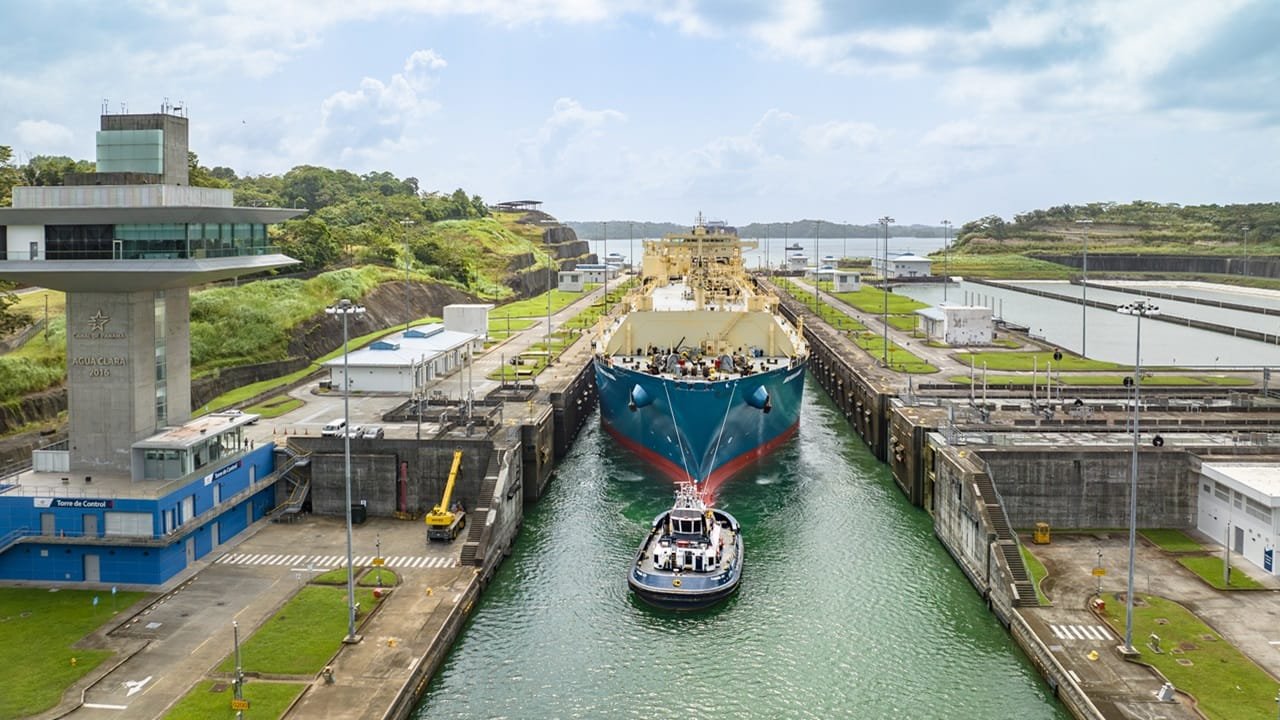
The Panama Canal is cutting the number of vessels allowed to transit the waterway each day as below average rainfall and the effects of El Nino add more pressure to available water resources.
Starting September 3, the maximum number of daily transit slots in the Neo-Panamax locks will be limited to nine, while Panamax locks will have a maximum of 25 vessels per day.
The restrictions will become even tighter on September 15 when the number of Panamax slots will be reduced to 23 per day.
Therefore, the total daily canal capacity will decline from approximately 38 transits normally to 34 from September 3, then to 32 daily transits from September 15.
The decision comes despite the onset of Panama’s rainy season and measures already implemented to conserve water, the Panama Canal Authority said.
“Rainfall in the canal watershed has been below expectations, necessitating additional action to ensure the long-term viability of canal operations,” the authority says.
The operation of the locks in the canal depends largely upon the watershed and freshwater reservoirs. This way, long periods of drought can have a direct effect on the number of vessels that can go through the waterway.
The new restrictions may add to the pressure on transit planning and scheduling for shipping lines, especially vessels that are competing for limited slots.
The Panama Canal remains a vital link between the Atlantic and Pacific oceans and any reduction in capacity can have wider ramifications for global supply chains, vessel deployment and maritime logistics.