



European leaders have rallied behind Germany following the latest attack at Leipzig/Halle Airport, with senior officials across the European Union and NATO describing the incident as part of a wider Russian hybrid campaign.
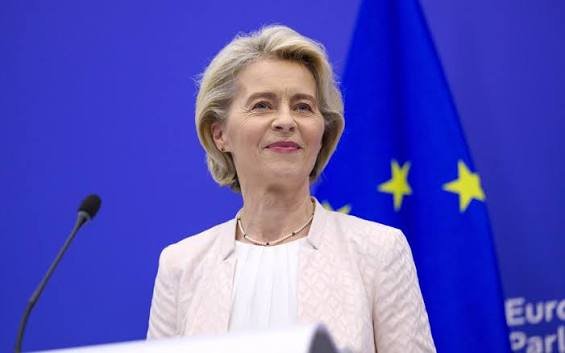
European Commission President Ursula von der Leyen said the EU stood in “full solidarity” with Germany after speaking with German Chancellor Friedrich Merz about the incident. In a statement posted on X on Tuesday, von der Leyen described the attack as an act by Russia and stressed that Europe would respond collectively.
“I assured him that the EU stands in full solidarity with Germany in the face of this attack by Russia,” von der Leyen said.
She stressed that the European Union would remain united despite what she described as a series of increasingly serious acts, adding that Germany had already taken strong measures in response.
“The message is clear: hybrid attacks will not go without a clear response,” she said.
Von der Leyen said European countries were determined to resist what she described as Russian efforts to undermine freedom, security and public confidence across European societies.
“We are united in our resolve to stand against Russian aggression,” she said, adding that Russia was seeking to “sow distrust and fear” but would ultimately fail.
She also reaffirmed the EU’s commitment to Ukraine, saying Europe would “stand by Ukraine for as long as it takes”.
Von der Leyen said she would discuss the issue with NATO Secretary General Mark Rutte and confirmed that the matter, including possible additional sanctions, would be prepared by foreign ministers ahead of their upcoming meeting under the Irish Presidency.
NATO voices full solidarity with Germany
NATO Secretary General Mark Rutte also spoke with Chancellor Friedrich Merz and expressed the alliance’s “full solidarity” with Germany following what he described as the Russian hybrid attack in Leipzig.
Rutte said the evidence surrounding the incident was clear and welcomed the measures announced by the German government.
“The evidence is clear. And I welcome the measures announced by Germany in response,” he said.
He added that NATO would continue strengthening its ability to deter and defend all of its members against threats, including what he called malign actions similar to those seen in Leipzig and elsewhere across the alliance.
According to Rutte, Russia’s attempts to intimidate European countries, weaken allied unity and reduce support for Ukraine would not succeed.
“Russia’s attempts to intimidate us, to undermine our unity and our willingness to support Ukraine are futile and will fail,” he said.
Rutte also reaffirmed NATO’s continued backing for Ukraine and its collective defence commitments.
“Our support to Ukraine is unwavering, as is our ironclad commitment to NATO’s collective defence,” he said.
Sweden backs Germany and announces National Security Council meeting
Swedish Prime Minister Ulf Kristersson said he remained in close contact with German Chancellor Friedrich Merz and had assured him of Sweden’s “full solidarity” following what he also described as the Russian hybrid attack in Leipzig.
“I am in close contact with Chancellor Friedrich Merz. I have assured him that Sweden stands in full solidarity with Germany after the Russian hybrid attack in Leipzig,” Kristersson said.
He said Sweden fully supported the strong measures introduced by the German government and stressed the importance of maintaining unity among allies and neighbours.
“We are united, and we will continue to stand up for our ally and neighbour,” he said.
Kristersson said Russia was attempting to intimidate European countries, weaken their collective deterrence and make them reconsider their support for Ukraine.
“Russia wants to intimidate us, to undermine our united deterrence and scare us into backing down from our support to Ukraine. This will fail,” he said.
Sweden, he added, was determined to work with its allies to increase collective defence efforts and strengthen deterrence.
“In light of the developments, I will chair a meeting of the National Security Council tomorrow morning,” Kristersson said.
Finland reiterates its support for Germany and Ukraine
Finnish President Alexander Stubb likewise expressed “full solidarity” with Germany following what he described as the Russian hybrid attack in Leipzig.
Stubb said the incident reflected a strategy that European countries had seen before.
“We know the Russian playbook. It attempts to intimidate us, to undermine our resolve and our willingness to support Ukraine in its defense against Russia’s invasion. It will not succeed,” he said on X.
The Finnish president said the measures announced by the German government demonstrated that hostile actions against its allies would receive a “clear response”.
Stubb also reiterated Finland’s continued support for Ukraine and said he remained in close contact with Chancellor Friedrich Merz as well as other allies.
“Our commitment to supporting Ukraine in its defense against Russia’s aggression is unwavering,” he said.
Poland stands behind allies targeted by Russia
Poland also voiced its support for Germany, with Foreign Minister Radosław Sikorski saying Warsaw stood firmly behind allies targeted by what he described as Russia’s hybrid war.
“Poland stands foursquare behind every ally attacked by Russia’s hybrid war,” Sikorski said on X.
Sikorski also said collective countermeasures would be discussed during the Gymnich meeting in Ireland, scheduled for Tuesday evening and Wednesday.
The statements from Brussels, NATO, Stockholm, Helsinki and Warsaw underline the broad political support for Germany following the Leipzig/Halle Airport incident, while European governments consider how to respond to what they describe as a wider pattern of Russian hybrid activity.