



Panama has completed the acquisition of 100% of the shares in Petroterminal de Panamá (PTP), taking full control of the strategic oil pipeline after purchasing the remaining 41% private stake for $191.7 million.
The origins of Petroterminal de Panamá can be traced back to the late 1970s, when growing oil production on Alaska’s North Slope created a need to move surplus crude to the US East Coast. The volumes were carried by very large crude carriers (VLCCs), which were too large to pass through the Panama Canal.
PTP was established as a joint venture in September 1977 between the Panamanian government and NIC Holding Corp. Its pipeline subsequently became an important link between the country’s Pacific and Caribbean coasts.
Between 1982 and 1996, more than 2.7 billion barrels of crude oil were transported from Panama’s Pacific coast to its Atlantic coast and subsequently to the US East Coast. The crude originated from the ANS (Alaskan North Slope) oil fields in Alaska.
Operations changed in 1996 after the US government authorised exports of crude from the Alaska North Slope. PTP suspended pipeline operations, although the company continued operating its terminals between 1996 and 2003. Pipeline activity resumed in 2003 following agreements with new customers.
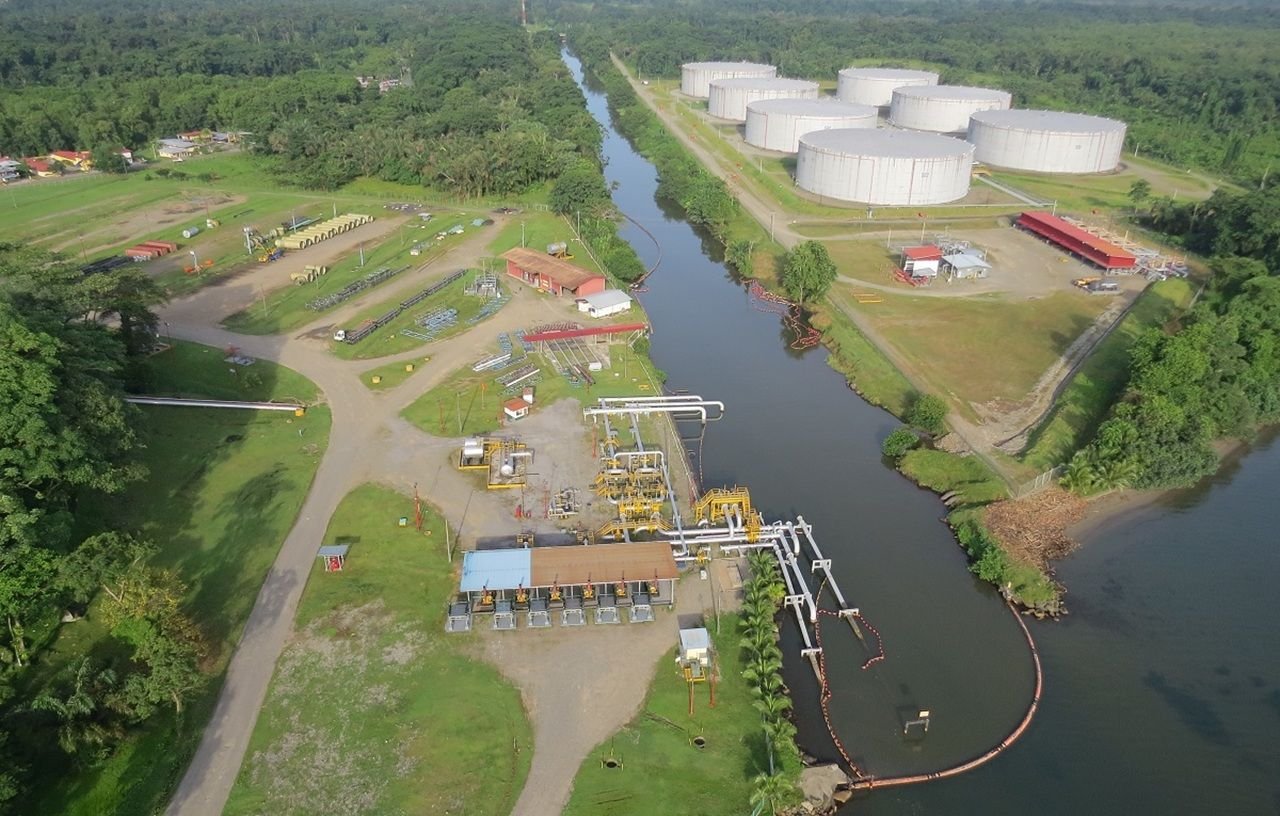
Today, Petroterminal operates two terminals: Chiriquí Grande on Panama’s Caribbean coast and Charco Azul on the Pacific coast. The facilities are connected by a 131 km trans-isthmus pipeline.
The acquisition is being viewed as part of a broader effort to strengthen Panama’s position at the intersection of maritime, logistics and energy trade.
“The acquisition of Petroterminal is part of a broader reconfiguration of Panama’s logistics and maritime ecosystem. Together with the Panama Canal’s port offerings and the future ports projects to be tendered, it strengthens Panama’s value proposition to international trade and energy markets,” Joaquin de Obarrio, a prominent lawyer and former President of the Panama Maritime Law Association, told Seatrade Maritime News.
“The priority now is to ensure world-class management that safeguard both operational continuity and long-term competitiveness,” he added.
According to the Panamanian government, bringing PTP entirely under state control will allow the country to directly “manage, preserve and develop” the strategic infrastructure used for the transport, storage and handling of hydrocarbons.
Authorities describe the system as a specialised second Panama Canal for hydrocarbons, reflecting its importance to interoceanic energy logistics.
The pipeline system has a capacity of around 10 million barrels per month. Meanwhile, the deepwater Charco Azul terminal is capable of handling VLCCs, allowing Panama to play a significant role in the movement of crude oil between the world’s oceans.