



Bureau Veritas (BV) has announced a joint development project with CMA CGM and Shanghai-based SDARI to investigate the possible applications of artificial intelligence and digital decision-support technologies on board container vessels. The goal is clear: improving ship operations without removing people from the decision-making process.
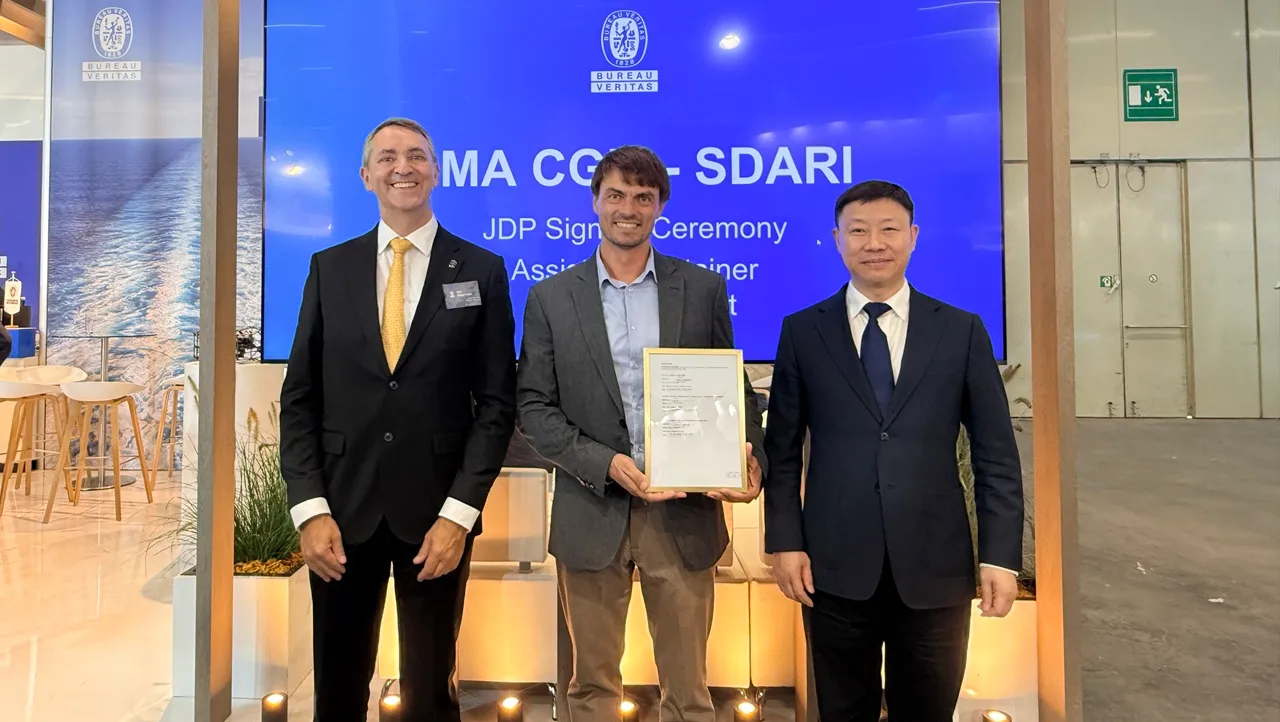
The joint development project (JDP) was signed at SMM and will focus on the development of a “assisted vessel” concept, with the goal of increasing energy efficiency and operational performance, as well as reducing crew workload via digital tools. The partners are placing more emphasis on assistance rather than replacement, keeping human supervision and control at the heart of the way vessels operate.
The three companies will bring different areas of expertise to the project. CMA CGM will provide operational requirements and shipowner perspective, and SDARI will take the lead in ship design and smart systems engineering. Bureau Veritas will provide its expertise in classification, safety assessment and regulatory requirements.
During the course of the project the partners will check which onboard functions can be best supported by means of digital assistance. Based on BV’s risk-based framework for the analysis they will then design a detailed concept for the vessel including crew duties, support on shore and safety considerations.
The project will deliver technical specifications, an Approval in Principle (AiP) application, cost estimates and a development roadmap detailing the next steps for the concept.
Decision-support technologies need to be developed in a “robust, human-centered and risk-based framework” before meaningful improvements in efficiency and safety can be realized, BV’s Alex Gregg-Smith said.
“From the very beginning, it is essential to involve the crews for the success of any technology enhancement,” said Christine Cabau Woehrel of CMA CGM.
For SDARI, Lyu Zhiyong said the initiative could serve as a model for implementing the MASS Code in its experience-building phase, and the role of the project in exploring how increasingly digitalized vessels can evolve while maintaining human control.