




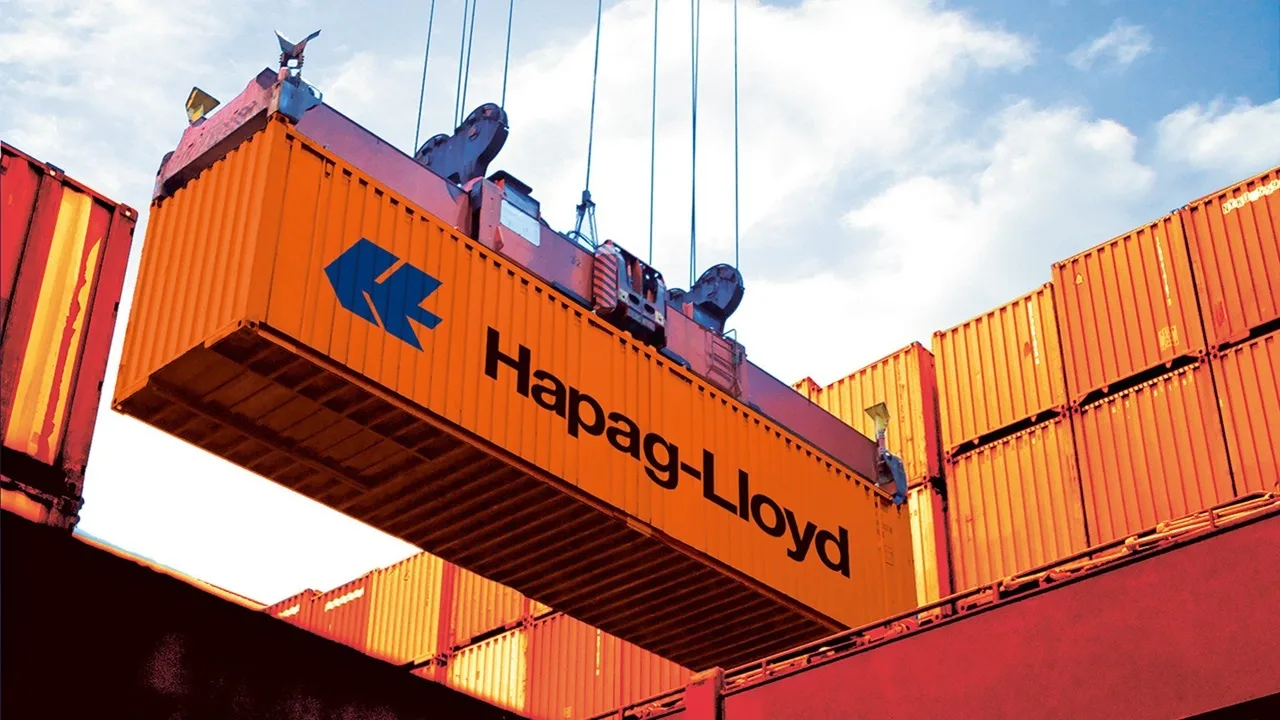
Hapag-Lloyd has made what looks like a first and so far isolated return to the Suez Canal, a major shift from its Red Sea policy of the past three years.
The 14,990 teu Al Jmeliyah of the German carrier has transitted the Bab el Mandeb and is steaming through the Suez Canal toward the Mediterranean. The vessel will be used on the SE1/AE2 Asia-Mediterranean service, a joint loop operated by Hapag-Lloyd and its partner in the Gemini Cooperation, Maersk.
Al Jmeliyah was located some 100km southeast of Sicily at the time of writing, according to AIS tracking from Veson Nautical’s VesselsValue. The ship is expected to arrive at the Spanish port of Algeciras on 12 September.
The move is not a full-scale return to the Suez route yet. Linerlytica described Hapag-Lloyd’s decision as a “ad hoc arrangement” and pointed out that other Gemini-operated vessels on this and other services continue to follow the much longer route around the Cape of Good Hope.
But it could be an early indicator of a wider change in the Gemini network’s strategy. The two Gemini partners are considering a full return to the Suez Canal, with Maersk having already started regular westbound sailings on the NE1/AE2, SE2/AE11, SE3/AE15 and SE4/AE19 services, Linerlytica said.
Hapag-Lloyd’s decision to test the Red Sea and Suez route also follows the path of CMA CGM, which has kept running services through the Red Sea for much of the past three years. Maersk has meanwhile been trying to put more tonnage back on the shorter route.
Other carriers are also beginning to tentatively rethink their routing strategies. In recent times, Wan Hai Line and Cosco Shipping have tentatively revisited the shorter Suez route. Global freight demand remains strong and available shipping capacity is still being impacted by ongoing climatic disruptions.
For now, Al Jmeliyah’s journey looks like a limited experiment rather than a permanent policy shift. But the move highlights growing pressure on carriers to rethink the trade-off between longer voyages via the Cape of Good Hope and the much shorter Suez Canal passage.









Comments 1