



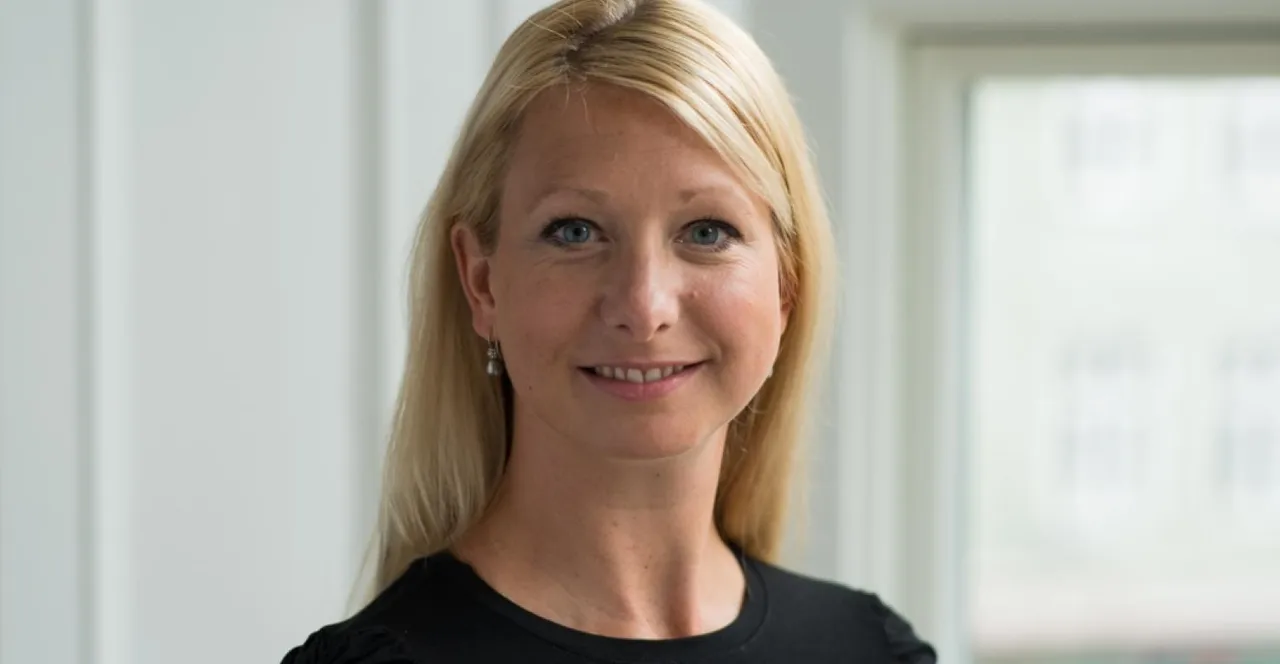
“Fifteen years already?” The question, posted on LinkedIn during the anniversary celebrations of the Maritime Anti-Corruption Network (MACN), prompted a smile from its CEO, Cecilia Müller Torbrand. Looking back on the organisation’s development, she notes how much has been accomplished since its creation and how collective commitment has helped turn an ambitious idea into a wider effort to combat corruption in the maritime industry.
From the outset, MACN was never intended to be the achievement of a single individual or company. Its development has been driven by people and organisations convinced that even deeply rooted corruption could be challenged through sustained cooperation.
The network began with just ten companies, supported by leaders who helped establish its direction and build the foundations for what it would eventually become. Although modest in size, the initial group shared a determination to change established practices across the maritime sector.
An important contribution came from BSR, a non-profit organisation specialising in sustainable business. BSR helped formalise the network and establish a solid organisational framework. Müller Torbrand acknowledges the vision, partnership and support provided by its colleagues during those formative years.
The collaboration also resulted in MACN’s first incident-reporting framework and the launch of its initial collective action programmes in Nigeria and Argentina, providing practical mechanisms to identify corruption risks and develop coordinated responses.
A network built through sustained commitment
MACN’s development has also depended on successive Chairs, Vice Chairs and Board members, whose leadership helped translate the organisation’s ambitions into concrete initiatives and shape its strategic direction.
Their efforts have been complemented by the work of the Secretariat, the commitment of member companies, the involvement of trusted partners and cooperation with government representatives willing to support change.
Today, the network brings together more than 230 member companies and works alongside partners in 11 countries, reflecting the expansion of an initiative that began with a relatively small group of businesses.
Financial support has played a significant role in that growth. Donors and funding organisations backed MACN’s ability to test and expand its approach, including the Siemens Integrity Initiative and the Danish Ministry of Foreign Affairs through Denmark’s development cooperation.
Müller Torbrand acknowledges that the organisation’s original theory of change was relatively straightforward compared with the more sophisticated approaches adopted by some other organisations. Its strength, however, lay in its practical focus: identifying where corruption occurred, bringing relevant stakeholders together and developing solutions through cooperation between the public and private sectors.
That approach enabled MACN to move beyond identifying problems and begin implementing collective responses on the ground.
From Local Experience to Global Impact
For MACN, growth has never been defined by the number of countries in which it is present. Another major goal has been to use local learnings to influence the broader systems that control maritime trade.
Thus, cooperation with international institutions, such as the International Maritime Organization (IMO), has become an important part of the work of the network. It aims to link practical experience in ports and on board ships with the international rules, standards and institutions that regulate the maritime industry.
This level of cooperation is critical to ensuring that improvements are not just made on a project-by-project basis but create long-lasting change across the sector.
Established 15 years ago, the continuing relevance of the MACN is measured by the impact it can deliver for seafarers who experience corruption in their daily work, companies seeking to operate with integrity and countries whose economies depend on efficient and predictable maritime trade.
In the face of uncertainty, political instability and disruption, the organization remains dedicated to creating safer and more predictable operating environments for seafarers. Its wider aims include encouraging more efficient maritime trade and fostering social and economic development.
Countering the idea that corruption can’t be defeated
According to Müller Torbrand, one of the most significant lessons from MACN’s experience is the persistent resistance to the prospect of change.
In many projects and countries the organization has met stakeholders who thought corruption was too deeply embedded to tackle, or an unavoidable aspect of how business was conducted.
But the network has made tangible progress again and again. These results have not come about because reform is easy, but because people and organizations have made the choice to work together in the face of barriers.
Corruption knows no national borders, economic sectors or jurisdictions. Consequently, the problem cannot be solved by any one company, government or institution alone. The need for coordinated action that gave rise to the MACN remains as important today and is likely to become even more important over the years ahead.
The experience of the organization also shows the value of bringing together stakeholders whose interests do not always naturally align. Competitors, governments, international organizations, civil society groups, multinational corporations and small local businesses – all have been part of efforts to pursue a common objective.
It can be challenging to build these partnerships especially in contexts where participants have differing priorities and operational settings. But it is also a strength in that this diversity allows stakeholders to tackle challenges that would be difficult to address through isolated initiatives.
For Müller Torbrand, the ability to bring these different groups together may be MACN’s greatest achievement to date, and one of its most important opportunities going forward.
Here’s to the next fifteen years…
As MACN transitions into its next chapter the focus remains on demonstrating the results of sustained, collective action. Its ambitions are for better operating environments, stronger institutions, protection for crews and practical proof that even long-term systemic problems can be solved.
The first 15 years of the network have shown that real progress needs more than just identifying misconduct or appreciating the size of a challenge. It requires faith and resolve and collaboration and a common purpose among those who would rise up for change.
This approach remains at the heart of creating better, more transparent working conditions for the maritime industry, where corruption can endanger safety, interrupt operations and make international trade more difficult.
Müller Torbrand’s reflections on the anniversary culminate in a more general conclusion: People have more ability to change than they think they do. By bringing together companies, governments, institutions and communities around a common purpose, challenges that once seemed insurmountable can be turned into opportunities for real progress.