



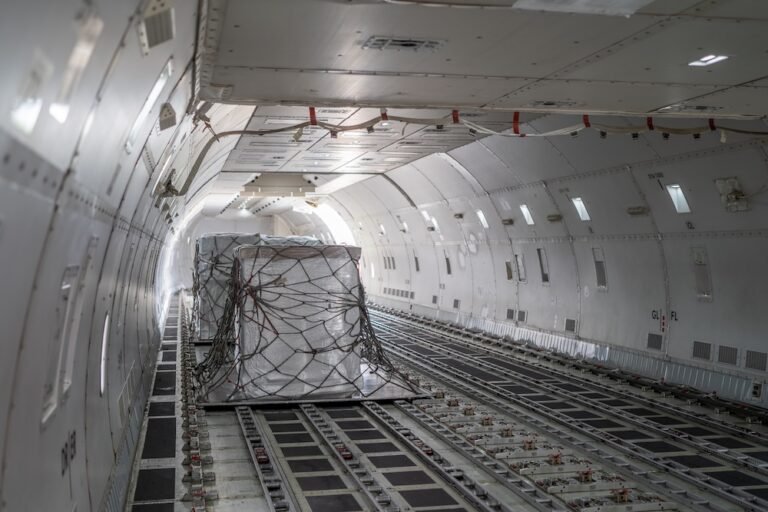
A pallet of consumer electronics is tendered at a US gateway and declared as general cargo. On paper, the declared piece count and battery quantities appear to qualify the shipment for a lithium-battery exception. In reality, however, the packing density exceeds the threshold allowed under that exception.
The result is an undeclared Dangerous Goods shipment sitting in the lower hold of an aircraft preparing for departure.
This is not necessarily a training failure.
In a significant number of cases, the shipper knows exactly what is inside the box. The declaration is not a mistake but a decision and that decision is often influenced by price. While the industry generally approaches Dangerous Goods misdeclaration as a matter of compliance, awareness and training, it may be more accurately understood as a commercial problem.
Why misdeclaration is fundamentally a commercial issue
Three forces are increasingly pushing the industry in the same direction.
First, Dangerous Goods come with a price premium. Carriers and freight forwarders apply DGR surcharges that typically increase the base airfreight rate by between 20 and 40 percent, even before handling and documentation fees are added. For high-volume shippers operating under significant cost pressure, this difference is far from insignificant. It becomes a meaningful line item and therefore an expense worth trying to avoid.
The higher the surcharge, the greater the incentive to escape the DGR classification.
Second, Dangerous Goods are becoming increasingly common across everyday supply chains. Lithium cells are now found in consumer electronics, power tools, medical equipment, e-bikes and industrial machinery. As the number of battery-powered products continues to grow, Dangerous Goods volumes are rising alongside them.
This expansion is also bringing a growing number of shippers with no formal DGR training into the air cargo market for the first time. As a result, the number of companies exposed to DGR surcharges — and potentially tempted to avoid them continues to increase.
Third, cargo acceptance remains heavily dependent on self-declaration and operates under significant time pressure. The system largely relies on the information provided by the shipper, while acceptance decisions often have to be made within minutes.
That combination creates a particularly vulnerable environment: a clear financial incentive to under-declare, a screening process based largely on the shipper’s own declaration, and limited time for deeper verification. It is precisely the type of environment in which commercially motivated misdeclaration can thrive.
Three recurring patterns
Whether at an acceptance counter at DHL, a pricing desk at DB Schenker or within a carrier analytics team at Turkish Airlines Cargo, three recurring patterns can be identified.
Surcharge avoidance
This remains the most common pattern.
The shipper knows that the goods contain regulated batteries but structures the declaration in a way designed to fall below an exception threshold that the shipment does not actually meet. Quantities may be declared in a way that appears compliant, while the actual packing density exceeds the permitted limit.
The commercial motivation can also be visible during pricing discussions. Exporters may request quotations both with and without a DGR classification, compare the resulting prices and then ask whether there is “another way” to classify the goods.
Exploiting classification complexity
The Dangerous Goods rulebook contains more than a thousand pages of requirements. Multi-component products including equipment containing embedded cells, mixed chemical compounds and medical devices can genuinely require trained professionals to classify correctly.
That complexity can also become a shield.
A shipper without in-house DGR expertise may misclassify cargo in good faith. However, a shipper acting deliberately can hide behind the same complexity and ambiguity when the classification is challenged.
Seasonal volume pressure
DGR-related questions and post-acceptance alerts also tend to increase during predictable peak shipping periods.
These include pre-holiday surges in consumer electronics, gift-season shipments involving aerosols and battery-powered toys, and year-end peaks in industrial exports.
As cargo volumes increase, compliance infrastructure comes under greater pressure. Verification processes may become compressed, and the probability of misdeclaration can rise alongside tonnage.
These peaks are predictable, which is precisely why they should also be easier to target through screening.
More than a paperwork mistake
An incorrectly declared tariff code can result in a financial loss.
An incorrectly declared lithium battery can have consequences for an aircraft.
FAA testing has established that once a lithium cell enters thermal runaway inside a cargo compartment, neither depressurization nor standard fire-suppression systems can reliably contain the event. The FAA has also identified the state of charge as the primary controllable factor influencing whether a fire starts in the first place.
Undeclared battery shipments have already been linked to in-flight fires involving cargo aircraft. The FAA has also imposed multi-million-dollar penalties on shippers for undeclared lithium batteries.
Every enforcement case represents an incident that was detected. It does not account for the potentially larger number of shipments that pass through the system without being identified.
The imbalance between the surcharge a shipper attempts to avoid and the scale of the risk created by that decision captures the safety challenge in a single contrast.
What carriers can do
Screen for plausibility, not only prohibited items
Most cargo acceptance systems are designed to identify prohibited commodities and obvious gaps in documentation. Far fewer assess whether a declaration is actually plausible.
A shipment originating from a known electronics manufacturer and declared as generic, non-DGR cargo should, for example, be assessed against the profile of the shipper and the type of products it is known to move.
Plausibility can be screened. It simply has not yet become standard practice across the industry.
Read the AWB signature
Each of the three recurring patterns can leave a statistical footprint on the air waybill.
These signals may include commodity descriptions that are unusually generic for a particular shipper, weight-to-volume ratios that do not match the declared goods, or sudden increases in high-risk commodities originating from high-risk locations during known seasonal peaks.
A carrier capable of scoring these signals at the acceptance stage could identify high-risk declarations before they reach the aircraft, without unnecessarily slowing down compliant shipments.
Score shippers and lanes
Carriers already tend to have an informal understanding of which shippers and trade lanes generate recurring DGR issues.
The challenge is that this knowledge is often not systematically converted into data.
A risk-scoring system based on acceptance history, incident flags and seasonal patterns could allow carriers to focus scrutiny where the commercial incentive to misdeclare is strongest, rather than spreading limited resources evenly across every shipment.
Change the economics of misdeclaration
Avoiding a DGR surcharge only makes financial sense when the probability of being detected before departure remains low.
Once misdeclaration can be reliably identified during acceptance, the commercial logic begins to collapse.
The shipper may ultimately have to pay the DGR surcharge anyway, while also facing reputational consequences and potential enforcement action for attempting to avoid the correct classification.
Detection before acceptance is therefore one of the few interventions capable of directly attacking the incentive behind deliberate misdeclaration rather than simply addressing the paperwork produced by it.
The economics of detection
Decades of investment in Dangerous Goods training have not eliminated this problem because training and deliberate misdeclaration address two different behaviours.
Training helps the shipper who makes a mistake.
It does not necessarily deter the shipper who deliberately chooses to misdeclare cargo for commercial reasons.
These situations require different tools.
A rational commercial decision is unlikely to be deterred simply by offering a better classification course. It becomes less attractive when the financial benefit disappears.
Cargo margins and cargo safety are often presented as competing priorities. Dangerous Goods misdeclaration is one area where the two are closely connected.
Carriers that approach acceptance screening as a form of commercial intelligence rather than as a simple compliance requirement may be better positioned to identify surcharge-driven misdeclaration before it develops into a safety incident.
Misdeclaration is not always an accident.
In many cases, it is a response to a price signal and it can be addressed accordingly.