





Truckload linehaul rates accelerated again in August, while freight shipment volumes posted their first year-over-year increase in three and a half years, according to the latest data from Cass Information Systems.
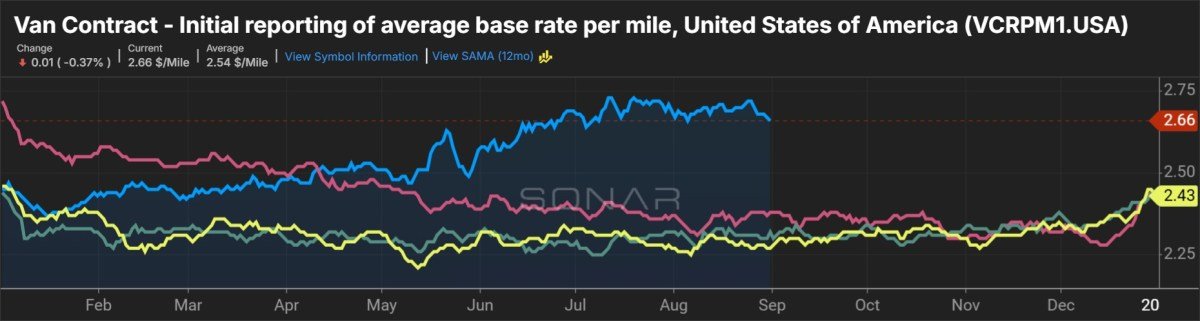
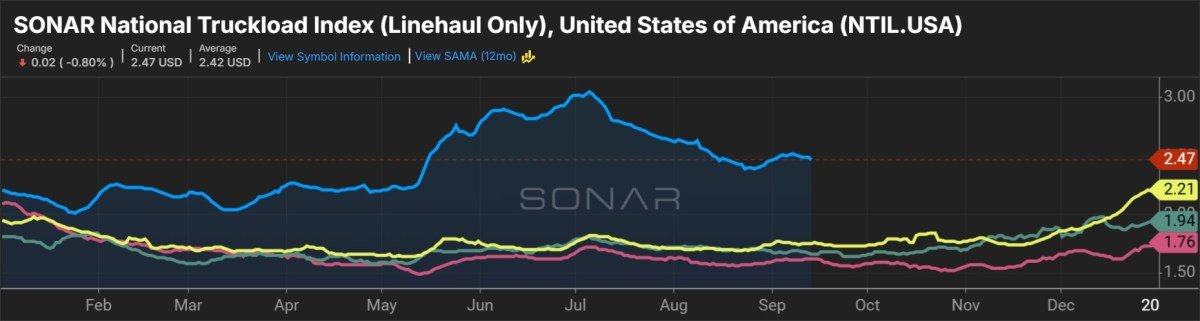
Cass’ TL linehaul index, which measures rates excluding fuel and accessorial surcharges, rose 11.3% year over year in August. That represented a 70-basis-point increase from July and marked the index’s 20th consecutive annual gain. It was also the strongest year-over-year increase since June 2022.
The linehaul index includes for-hire spot rates, although it has historically been weighted heavily toward contract rates.
“The sequential increase is in line with expectations and as indicated by the spot market,” the Monday report said. “Even as spot rates slow with modest sequential declines, the much larger contract market is adjusting higher.”
Freight shipments recorded by Cass ([NASDAQ: CASS]) increased 2.1% year over year in August. It was the first annual increase following 42 consecutive months of declines.
Shipments also rose 5.6% sequentially during August, or 5% on a seasonally adjusted basis.
The Cass index covers all domestic transportation modes, although truckload represents more than 50% of the shipments tracked, while less-than-truckload accounts for approximately 25%.
The shift of freight from road to rail has weighed on the trucking-focused dataset in recent months, particularly as fuel prices have climbed.
Assuming normal seasonal shipping patterns continue through September, the index is expected to rise by approximately 1% year over year, according to the report.
| August 2026 | y/y | 2-year | m/m | m/m (SA) |
|---|---|---|---|---|
| Shipments | 2.1% | -7.4% | 5.6% | 5.0% |
| Expenditures | 18.7% | 18.3% | 5.8% | 6.0% |
| TL Linehaul Index | 11.3% | 12.6% | 0.7% | NM |
Cass’ expenditures index, which tracks total freight spending, including fuel, also moved sharply higher in August. The index surged 18.7% year over year and increased 5.8% from July, or 6% on a seasonally adjusted basis.
The positive year-over-year turn in shipment volumes contributed to the increase, while higher diesel prices provided another significant boost. Diesel prices were up 46% year over year and 10% sequentially.
Despite the improving shipment data, Cass expects freight demand to remain relatively subdued, citing elevated risks surrounding consumer spending.
“With economic growth strong even amid a soft job market, and a restock likely beginning with ocean volumes rising and tariff refunds happening, the bottom is probably in,” the report said. “While likely modest, freight growth should continue.”
The data behind the Cass indexes is drawn from freight bills paid by Cass Information Systems, which provides payment management solutions. The company processes $37 billion in freight payables each year on behalf of its customers.
Why it matters
August’s Cass data points to a continued escalation in truckload contract rates even as overall freight demand remains relatively cool. The figures also highlight the impact of stricter regulatory enforcement on non-compliant capacity, adding further pressure to the available truckload market.