




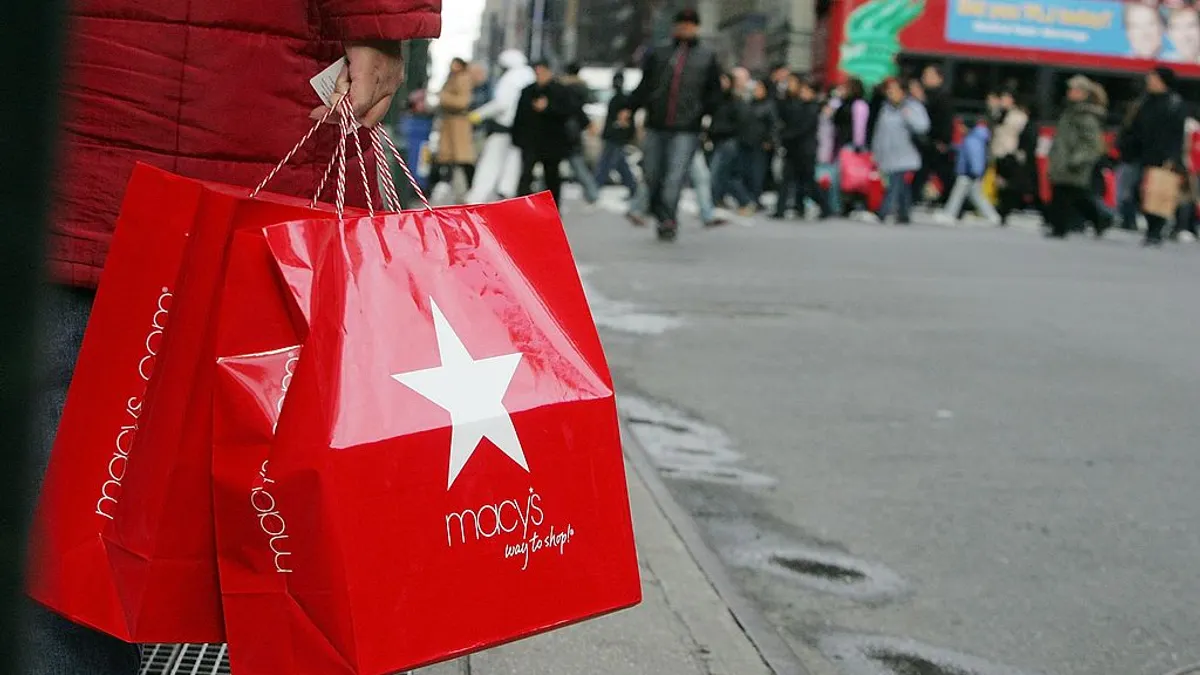
Macy’s is expanding the use of artificial intelligence in its inventory replenishment operations as the retailer moves an AI-based forecasting capability from pilot testing toward broader implementation.
The initiative was highlighted during Macy’s Sept. 10 earnings call, where COO and CFO Tom Edwards said the technology is being introduced as part of a broader effort to strengthen replenishment and ensure the company has “the right product in the right place at the right time.”
According to Edwards, the AI capability is now progressing beyond its pilot stage, with the broader rollout aimed at improving in-stock levels while also creating greater inventory efficiencies across the business.
Macy’s broader transformation strategy has placed supply chain performance at the center of its plans. The company launched its three-point “Bold New Chapter” initiative in 2024, with the program expected to generate $235 million in savings by 2026. The strategy covers end-to-end operational improvements, including the closure of supply chain centers considered “unproductive” and the opening of a new automated facility in North Carolina.
During the earnings call, Edwards told analysts that Macy’s expects to realize supply chain efficiencies during the second half of 2026, with those improvements expected to contribute to gross margin. Looking beyond that period, he said the company believes the initiatives already underway, along with additional measures, can help increase revenue, improve the customer experience and reduce costs.
The retailer is also entering the fall season with what Edwards described as a solid inventory position. Macy’s inventory increased 2.5% in the second quarter, matching the pace of sales growth.
Retailers turn to AI to sharpen inventory decisions
Macy’s move reflects a wider effort among retailers to improve the way inventory is positioned, replenished and allocated. Target, for example, has been concentrating on making better inventory decisions while examining potential applications for artificial intelligence, machine learning and other technologies.
Among Target’s initiatives is a digital twin of its middle-mile inventory positioning system. The technology is intended to improve product availability while helping reduce supply chain disruptions.
Lowe’s is pursuing a similar direction. Through an expanded partnership with Relex Solutions, the retailer plans to use AI to strengthen in-stock levels while analyzing demand trends as part of its inventory planning and replenishment activities.
Kohl’s has also been reshaping its inventory management approach. Earlier this year, the retailer said it was looking for opportunities to adjust inventory depth and allocation. By March, Kohl’s reported that the changes were already delivering benefits, including a smoother transition in its spring receipts.
For Macy’s, the next step is to take the AI forecasting capability beyond experimentation and integrate it more broadly into replenishment operations. The objective is not limited to forecasting demand, but also to translating those forecasts into more efficient inventory decisions across the retail network.