



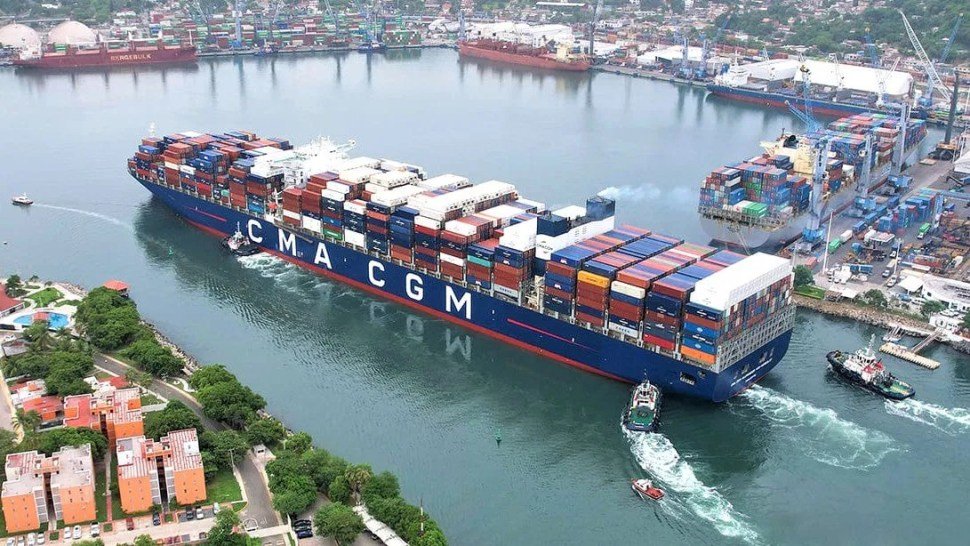
Hurricane Polo is disrupting maritime activity along Mexico’s Pacific coastline, forcing authorities to close or restrict navigation at several ports as the powerful storm brings stronger winds, heavy rainfall and dangerous waves. Despite the restrictions, the country’s largest container gateway, Manzanillo, remains open to large commercial vessels.
Mexico’s Navy closed the Port of Manzanillo in Colima to vessels below 500 gross tonnage at 9 a.m. Tuesday as Polo rapidly intensified offshore. The restriction does not apply to larger commercial ships, meaning container vessel traffic can continue operating at the port.
The Manzanillo Port Captaincy said the decision was taken as deteriorating weather conditions linked to Polo were expected to produce stronger winds, heavier rain and higher waves. Vessels already berthed at the port were advised to reinforce their mooring lines and closely monitor maritime safety and weather bulletins.
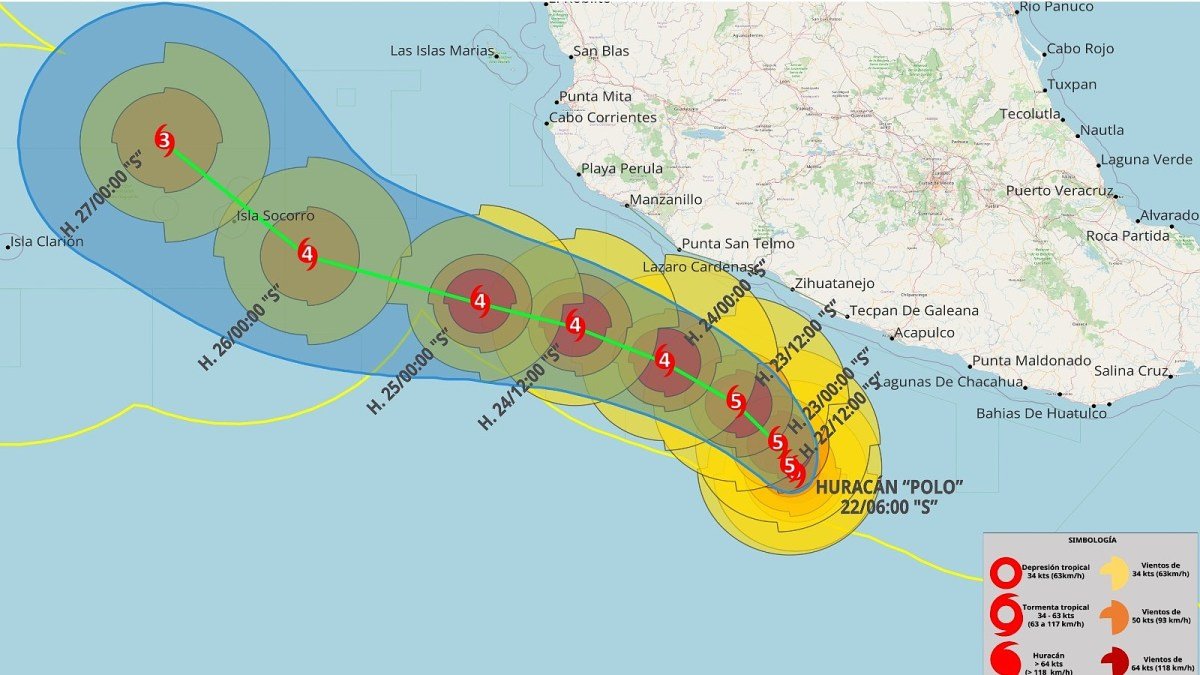
The restrictions come as Polo, which reached Category 5 intensity on Tuesday, weakened slightly to Category 4 early Wednesday while continuing its slow northward movement off southwestern Mexico.
At 6 a.m. CST Wednesday, the hurricane was located about 320 miles southeast of Manzanillo and 165 miles south of Zihuatanejo, Guerrero, according to the National Hurricane Center. Polo had maximum sustained winds of 150 mph and was moving north at just 2 mph.
The storm’s unusually slow movement is extending the threat to Mexico’s Pacific coast. The NHC said Polo’s outer rainbands had already begun reaching southwestern Mexico early Wednesday.
A tropical storm warning was in effect from Técpan de Galeana, Guerrero, to Punta San Telmo, Michoacán, while a tropical storm watch stretched farther northwest.
Port restrictions expand along Mexico’s Pacific coast
The maritime disruptions are not limited to Manzanillo.
Mexico’s National Civil Protection Coordination said Tuesday that the Navy had closed the ports of Acapulco and Zihuatanejo in Guerrero to large vessels. Restrictions on smaller vessels were also imposed at Manzanillo, Acapulco, Puerto Marqués, Zihuatanejo and Lázaro Cárdenas in Michoacán, La Jornada reported.
Reports published Wednesday by Info7 indicated that Acapulco and Zihuatanejo remained closed to all types of vessels. Restrictions at Manzanillo, Puerto Marqués and Lázaro Cárdenas, meanwhile, continued to apply to smaller vessels.
Authorities in Lázaro Cárdenas said the Mexican Navy had activated preventive measures along the Pacific coast as Polo strengthened. Officials warned of heavy rain, strong winds and dangerous waves.
Manzanillo and Lázaro Cárdenas are Mexico’s two major Pacific container gateways. Both handle substantial volumes of Asian imports that move onward to manufacturing and consumer markets across the country.
Polo underwent rapid and extraordinary intensification
Polo strengthened dramatically after forming off Mexico’s Pacific coast.
The storm reached Category 5 intensity on Tuesday, with maximum sustained winds hitting 165 mph during the morning. By 6 p.m., sustained winds had climbed to 175 mph as Polo moved extremely slowly offshore, according to the National Hurricane Center.
Reuters reported Tuesday that Polo had reached the highest level of the Saffir-Simpson scale while hovering off Mexico. Forecasters warned that the hurricane’s slow movement could prolong periods of heavy rain and raise the risk of flooding and mudslides across southwestern Mexico.
By early Wednesday, Polo had started to weaken. The National Hurricane Center downgraded the storm to Category 4 as it continued moving slowly north, although it remained an extremely powerful hurricane with 150 mph winds at 6 a.m.
Why it matters
Manzanillo and Lázaro Cárdenas are vital links between Asian ocean trade and Mexico’s inland supply chains. Any prolonged or broader restrictions at the two ports could therefore put additional pressure on freight flows across the country.