



Most U.S. companies receiving refunds tied to tariffs imposed under the now-invalidated International Emergency Economic Powers Act (IEEPA) are keeping at least part of the money within their businesses, according to a survey by the Federal Reserve Bank of Atlanta.
The survey, which gathered responses from more than 1,100 C-suite executives at U.S. companies, found that roughly 75% of businesses are retaining at least some of their tariff refunds as cash. At the same time, 52.5% said they are directing returned funds toward research and development as well as capital investment projects.
Companies are also using the refunds in other ways. Some are providing rebates to customers, reducing prices, rewarding employees and managers, paying shareholders or using the money to reduce liabilities.
How companies are deploying IEEPA tariff refunds
The Atlanta Fed allowed executives to identify multiple uses for their refunds, meaning companies could select more than one option.
The findings show that keeping the refunds as cash remains the most common strategy, while more than half of the surveyed executives expect their companies to put at least part of the money into R&D or capital projects.
Customer rebates were cited by 17.2% of executives, while 15.6% said their companies would use refunds to pay shareholders. Another 14.8% said the funds would be used to lower prices. Staff bonuses accounted for 12.7%, manager bonuses for 10.1%, and paying down liabilities for 8%. A further 13.2% identified other uses.
Companies decide how to put returned tariff cash to work
The question of what companies would do with the money emerged after the Supreme Court invalidated the IEEPA tariffs in February. The ruling prompted questions over when companies would receive refunds and how the returned funds would ultimately be deployed.
Those questions became more immediate after U.S. Customs and Border Protection launched a dedicated portal to process tariff refunds.
The Atlanta Fed conducted its survey in August, and its findings broadly matched the institution’s expectation that most companies would keep the refund proceeds within their businesses.
Nintendo, for example, has specifically said customers are not entitled to receive the company’s tariff refunds. The video game console manufacturer later launched a “customer appreciation sale,” which it credited in part to the tariff returns.
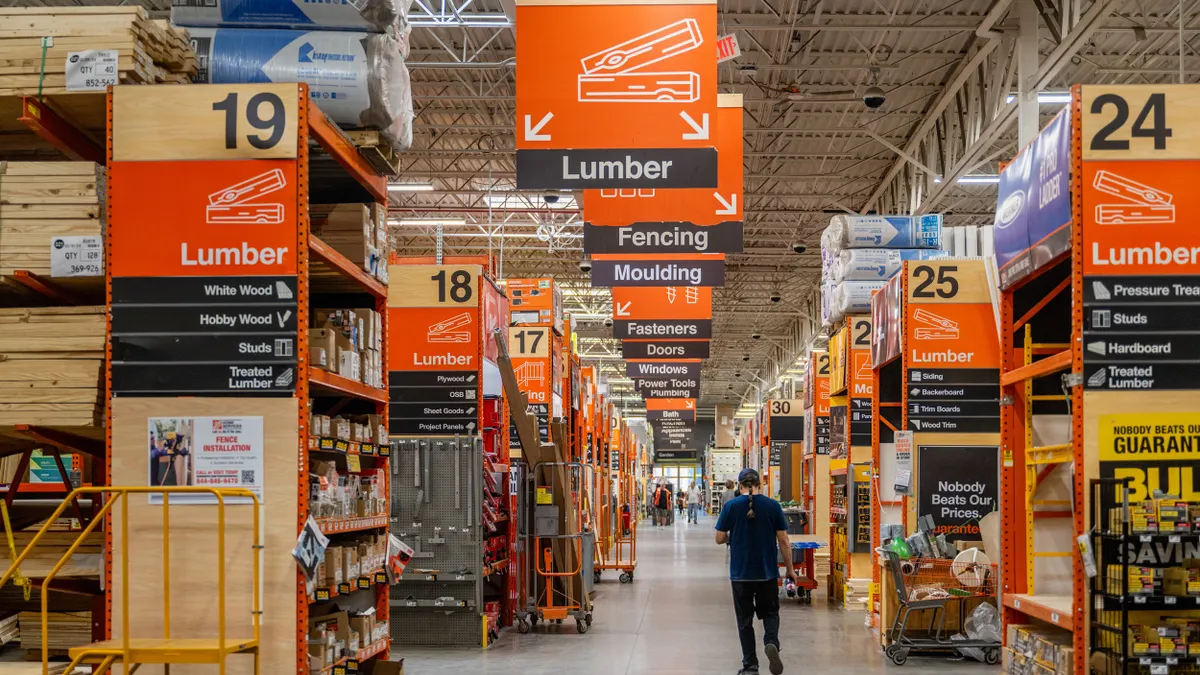
Other companies are taking a different approach. Lowe’s and The Home Depot are using tariff refunds to help offset higher supply chain costs.
Although retaining the refunds remains the dominant strategy, the Atlanta Fed highlighted the share of businesses that said they would pass some of the money through to customers or employees.
“Although these are surprising uses of cash windfalls relative to the predictions of standard models, these results also suggest that a nontrivial portion of tariff refunds directly benefit customers and employees,” the Atlanta Fed said.
Retailers including Walmart and BJ’s Wholesale Club have explicitly said they are using tariff refunds to reduce prices. Burlington, meanwhile, is using the funds to “deliver sharper values” to customers.
Williams-Sonoma is among the companies directing some of its recovered funds toward employees, including workers who helped manage the IEEPA refund process.
Most companies manage refunds internally
The Atlanta Fed survey also examined how businesses are handling the administrative side of the refund process.
Nearly 70% of companies said they rely on internal staff to manage their IEEPA tariff refunds, while roughly 22% have hired a third party.
A smaller share of respondents said they had sold their refund rights instead of waiting for the funds themselves. American Eagle Outfitters and The Children’s Place are among the companies that have sold part of their potential refunds in order to strengthen their cash reserves.
The size of the refund program is substantial. Customs and Border Protection had paid nearly $135 billion in IEEPA tariff refunds as of September 11, with additional payments expected as the agency prepares to expand its processing capabilities.
CBP is scheduled to launch capabilities next month to process finally liquidated entries, meaning the flow of tariff refunds is expected to continue.
The Atlanta Fed’s findings therefore point to a broad range of corporate responses: companies are retaining cash, investing in their operations, offsetting supply chain costs, adjusting prices, rewarding employees and, in some cases, returning part of the benefit to customers.