



Fuel prices continue to make headlines across the United States, and speculation over a possible ban on US diesel exports has been mounting. Analysts warn the move could ultimately have consequences far beyond the domestic diesel market.
Earlier this week, there were rumors of a possible 90-day export ban as the Trump administration comes under increasing political pressure over the cost of petrol, heating oil and diesel. Now that the key midterm elections are six weeks away, US news sites began reporting on internal talks about a ban that would be temporary.
Affordability will be a major issue in the upcoming elections and, in theory, limiting exports could help ease some of the upward pressure on domestic fuel prices.
But the size of the recent increase has already raised concerns among consumers and businesses. The average US diesel price was $6.52 a gallon on Sept. 23, according to the American Automobile Association (AAA), 91 cents higher than a month earlier and more than double the $2.80 a gallon in September 2025.
The timing is especially sensitive. Diesel demand is also being lifted by the start of the U.S. agricultural harvest season but refined products are expected to see higher demand with the coming winter heating season. Transport operators and, increasingly, agricultural producers are worried about higher diesel prices.
Washington is signaling a different approach.
The maritime industry has been closely monitoring developments in Washington, DC as speculation grew over an export ban.
U.S. Secretary of Energy Chris Wright, speaking at one of a number of climate-focused conferences being held in New York, said the Department of Energy would not be issuing a blanket ban on diesel exports after days of growing uncertainty.
Instead, Wright said the department would work closely with U.S. refiners to boost the amount of diesel available to consumers in the U.S.
But the problem doesn’t stop at the U.S. market, because American refiners are already selling massive amounts of diesel to international markets.
Diesel exports boost international markets
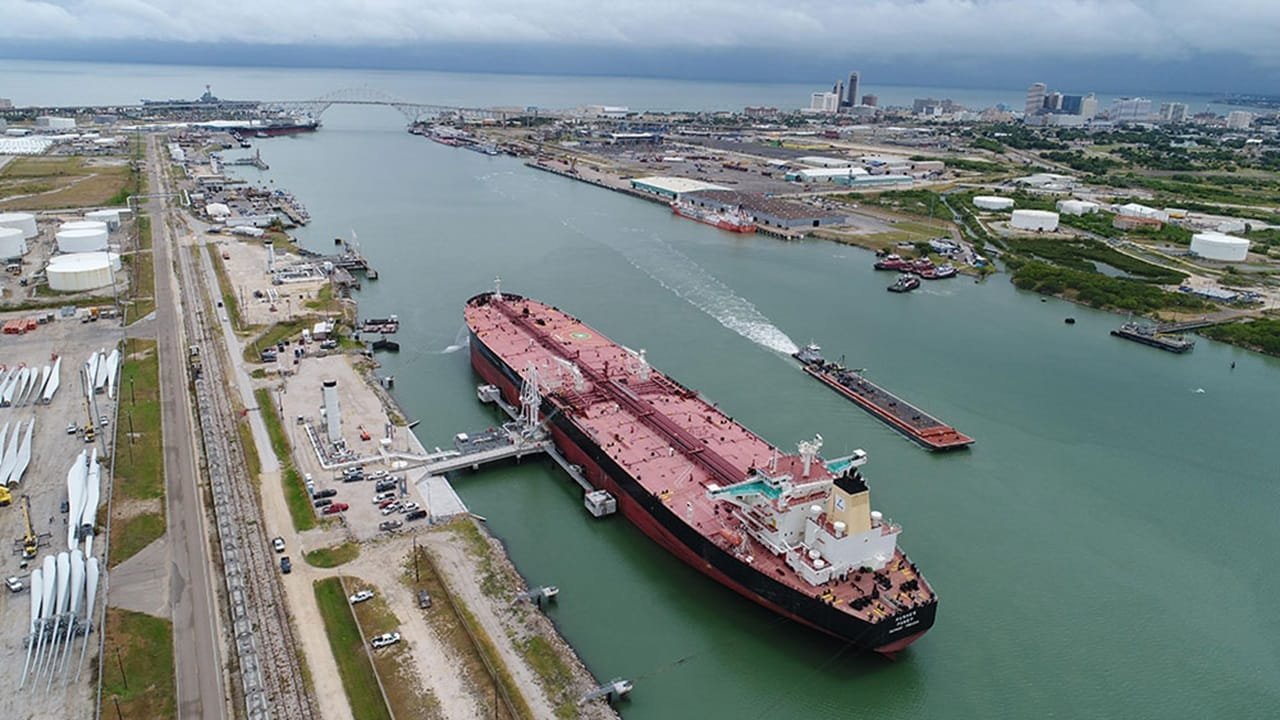
US tanker trades have been carrying big volumes of diesel, including cargoes for Europe where supply disruptions have already tightened availability. The most significant of these disruptions came after the Russian refinery problems.
Diesel consumers are facing a tougher situation now, Rystad Energy said in a market update issued as speculation from Washington was intensifying.
Refinery disruptions in Russia, an export ban by Moscow and the continuing crisis in the Middle East have combined to create difficult market conditions, especially for long-haul transport and agriculture, the consultancy said.
Rystad’s numbers point out the significance of US exports to the global diesel market. The United States is now exporting more than 1.5 million barrels per day of diesel and gasoil.
Of that volume, Europe imports around 400,000 barrels a day, and South America buys another 800,000 barrels a day. Even Africa has recently become an importer of US diesel, something that Rystad says is outside the norm and tied to supply losses from both Russia and the Middle East.
Rystad warns of wider fuel shock
In that context, Rystad says a US ban on diesel exports would not necessarily bring the domestic price relief that proponents hope for.
In its report, the consultancy said the proposed US ban on diesel exports would not play out as the US administration expects. The measure could temporarily lower domestic diesel prices but Rystad warned it would also force US refineries to lower operating rates as they sought to balance diesel production with domestic demand.
That could have implications for other refined products, possibly driving up their prices sharply.
Susan Bell, Rystad’s Senior Vise President of Commodity Markets said a full export ban would likely result in:
US diesel exports would be reduced to nearly zero overnight, but the mismatch would require the volumes shipped to the East Coast to be reduced by 1.1 million bpd to help restore balance to supply and demand, Bell said.
That would be roughly 30 percent of the East Coast supply.
Such a disruption could send gasoline prices soaring across the United States, while also wreaking havoc on the already costlier East Coast fuel market, which struggles to balance supply and demand. Bell warned that could also send gasoline prices skyrocketing across the United States.
So the potential policy has implications for domestic fuel prices, but also for international diesel flows, refinery operations and tanker markets, as a major US export stream could be suddenly yanked from global trade.