

• Latest
  • Trending
Oil and grain exports push Port of Vancouver to record cargo volumes as trade shifts beyond U.S.

Oil and grain exports push Port of Vancouver to record cargo volumes as trade shifts beyond U.S.

September 25, 2026
FMCSA’s “virtual” trucking inspections began under Trump, not Biden

FMCSA’s “virtual” trucking inspections began under Trump, not Biden

September 25, 2026
Hapag-Lloyd revises Zim offer as Israeli approval concerns persist

Hapag-Lloyd revises Zim offer as Israeli approval concerns persist

September 25, 2026
ADVERTISEMENT
E-commerce shippers use USPS lost-and-found system to offload undeliverable packages, audit finds

E-commerce shippers use USPS lost-and-found system to offload undeliverable packages, audit finds

September 25, 2026
WorkSafe Saskatchewan and WCB launch mobile research lab to study workplace risks

WorkSafe Saskatchewan and WCB launch mobile research lab to study workplace risks

September 25, 2026
Alberta to suspend provincial fuel tax from Oct. 1 as government shifts course on affordability

Alberta to suspend provincial fuel tax from Oct. 1 as government shifts course on affordability

September 25, 2026
Maheu highlights career opportunities in B.C.’s trowel trades

Maheu highlights career opportunities in B.C.’s trowel trades

September 25, 2026
Hajdu says proposed labour law changes would shed more ‘sunlight’ on collective bargaining

Hajdu says proposed labour law changes would shed more ‘sunlight’ on collective bargaining

September 25, 2026
AFN chief cautions Carney over use of majority to advance major projects bill

AFN chief cautions Carney over use of majority to advance major projects bill

September 25, 2026
CMA CGM AIR CARGO joins BARIG Air Cargo Community

CMA CGM AIR CARGO joins BARIG Air Cargo Community

September 25, 2026
€2.1 Billion eSAF Scheme Launched by Germany, Austria and Luxembourg

€2.1 Billion eSAF Scheme Launched by Germany, Austria and Luxembourg

September 25, 2026
US Northeast Ground Stops Prompt Call for Stronger FAA Communications Resilience

US Northeast Ground Stops Prompt Call for Stronger FAA Communications Resilience

September 25, 2026
TIACA chair urges collaboration and forward-thinking as industry prepares for October forum

TIACA chair urges collaboration and forward-thinking as industry prepares for October forum

September 25, 2026
  • Home
  • About Us
  • Press Room
  • Podcasts
  • Media Kit
  • Contact Us
  • Careers
Friday, September 25, 2026
  • Login
  • Register
The Logistic News
  • Logistic
  • Air
  • Maritime
  • Land
  • World
  • Business
  • Tech
  • Events
  • Advertise
No Result
View All Result
  • Logistic
  • Air
  • Maritime
  • Land
  • World
  • Business
  • Tech
  • Events
  • Advertise
No Result
View All Result
The Logistic News
No Result
View All Result
Home Business

Oil and grain exports push Port of Vancouver to record cargo volumes as trade shifts beyond U.S.

Record crude oil and grain shipments lifted cargo volumes at Canada’s largest port in the first half of 2026, as exporters increasingly look beyond the U.S. toward Asia and other international markets.

The Logistic News by The Logistic News
September 25, 2026
in Business, Cargo, Logistic, Maritime, World
Reading Time: 4 mins read
0
Oil and grain exports push Port of Vancouver to record cargo volumes as trade shifts beyond U.S.
ADVERTISEMENT

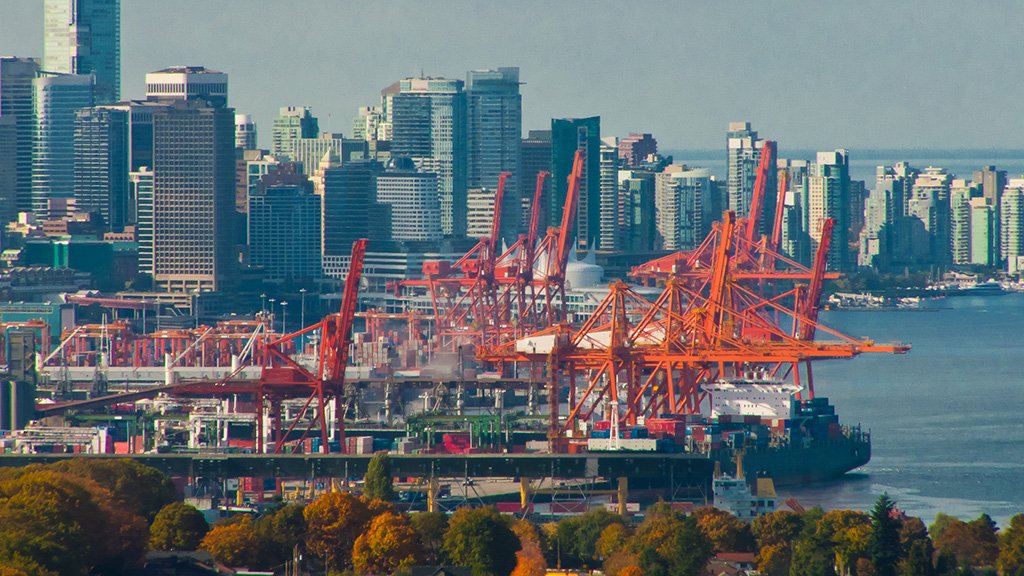
A sharp increase in oil and grain exports helped drive a record volume of cargo through the Port of Vancouver during the first half of 2026, reflecting a broader effort by Canadian traders to reduce their reliance on U.S. markets.

The Vancouver Fraser Port Authority reported a three per cent year-over-year increase in overall freight volumes for the six months ended June 30, with crude oil and canola seed among the main contributors to the gain.

Port authority chief executive Peter Xotta said exporters are showing “a degree of focus and urgency” in moving Canadian commodities to markets outside North America, including fossil fuels.

ADVERTISEMENT

“The U.S. percentage of crude oil shipments is declining … as those global destinations for Alberta crude increase,” Xotta said in a phone interview from Canada Place overlooking Vancouver Harbour.

“China and other Asian destinations are playing a pretty significant role in that.”

The shift is particularly visible in the crude oil trade. Shipments to Asia increased by 24 per cent, while the proportion of Canadian crude moving through Vancouver to the United States fell significantly compared with 2025.

The share of crude exports destined for the U.S. dropped to about one-fifth, from roughly one-third a year earlier, according to Xotta.

Overall crude oil exports through the port increased three per cent year over year in the first half of 2026, reaching a record 12 million tonnes.

The increase comes as the Trans Mountain expansion continues to reshape Vancouver’s export gateway. The expanded, twinned pipeline between Edmonton and Burnaby, B.C., opened in 2024 and significantly increased access to overseas markets, particularly China and South Korea.

“The Trans Mountain expansion is really continuing to be a much more dominant commodity in the gateway than we have experienced historically,” Xotta said.

Crude accounted for the majority of petroleum shipments through the port, while aviation fuel imports also recorded a substantial increase.

Aviation fuel imports rose by 25 per cent as airlines turned increasingly to supplies from outside the Middle East, where the Iran war has sharply disrupted exports.

South Korean aviation fuel shipments alone surged 305 per cent to approximately 160,000 tonnes, bringing them close to half of the port’s total aviation fuel volume, according to the port authority.

Grain was another major driver of Vancouver’s record first-half performance. Bulk grain exports jumped 14 per cent from a year earlier to a record 17.4 million tonnes by the end of June.

“Canadian agriculture is really surging, partly on the back of good crop outcomes in the last year, and frankly the last two years,” Xotta said.

China, Japan and South Korea continued to account for major shares of Canadian bulk grain demand. At the same time, containerized exports of lentils, peas and beans increased by nearly two-thirds, driven by stronger demand from Bangladesh, India and other emerging markets.

Europe and Mexico also increased purchases of canola seed, alongside China.

Canada’s canola trade with China remains complicated by tariffs. Beijing imposed a 100 per cent tariff on Canadian canola oil in March 2025 in retaliation for Canadian duties on Chinese electric vehicles. China then introduced a 76 per cent anti-dumping duty on Canadian canola seed in August 2025.

The seed duty has since been reduced to 15 per cent, although the 100 per cent tariff on canola oil remains in place. The trade barrier is one factor behind a 14 per cent year-over-year decline in vegetable and animal oil volumes moving through Vancouver.

Other commodities faced pressure as well. Shipments of chemicals, basic metals and minerals declined three per cent year over year, partly reflecting the impact of U.S. tariffs on steel and aluminum, Xotta said.

Automotive cargo moved in the opposite direction. Vehicle volumes through the port increased 10 per cent during the first half of 2026 as manufacturers sought alternatives to the U.S. market, while imports from Japan and South Korea increased sharply.

Containerized trade also remained positive. Imports rose two per cent, while exports climbed four per cent, which Xotta described as evidence of “resilience in the face of an uncertain and unpredictable geopolitical landscape.”

The Port of Vancouver handles roughly half of Canada’s two-way container trade, giving its performance a significant role in the country’s broader international freight network.

With the United States adopting a more protectionist trade posture, Xotta said the port wants to support Canada’s ambition of doubling exports to non-U.S. markets over the next decade.

The proportion of Vancouver’s trade linked to the United States is “for sure” not increasing, he said.

Port figures show that the U.S. accounted for less than 15 per cent of all shipments through Vancouver, roughly in line with the first half of 2025.

At the same time, U.S. travelers continued to head north in large numbers.

Cruise operations at the port were on track for their busiest season on record, with 141 ships scheduled to bring about 560,000 passengers between February and June. At least 60 per cent of those passengers were U.S. residents, many traveling through Vancouver on their way to Alaska, Xotta said.


Previous Post

Maheu highlights career opportunities in B.C.’s trowel trades

Next Post

Alberta to suspend provincial fuel tax from Oct. 1 as government shifts course on affordability

Next Post
Alberta to suspend provincial fuel tax from Oct. 1 as government shifts course on affordability

Alberta to suspend provincial fuel tax from Oct. 1 as government shifts course on affordability

Leave a Reply Cancel reply

Your email address will not be published. Required fields are marked *

A D V E R T I S E M E N T

Popular News

  • Drone Delivery Takes Flight: Amazon Partners with UPS for Trial Program

    Drone Delivery Takes Flight: Amazon Partners with UPS for Trial Program

    0 shares
    Share 0 Tweet 0
  • Rail Cargo Group Strengthens European Network with Captrain Netherlands Acquisition

    0 shares
    Share 0 Tweet 0
  • Automotive Inbound Logistics Market: Navigating Future Challenges

    0 shares
    Share 0 Tweet 0
  • Global Inflation Cools to Target After Three Years, Central Banks Face Policy Dilemma

    0 shares
    Share 0 Tweet 0
  • Dubai Mercantile Exchange Rebrands as Gulf Mercantile Exchange Following Saudi Tadawul Group Acquisition

    0 shares
    Share 0 Tweet 0

Recent News

FMCSA’s “virtual” trucking inspections began under Trump, not Biden

FMCSA’s “virtual” trucking inspections began under Trump, not Biden

September 25, 2026
Hapag-Lloyd revises Zim offer as Israeli approval concerns persist

Hapag-Lloyd revises Zim offer as Israeli approval concerns persist

September 25, 2026
E-commerce shippers use USPS lost-and-found system to offload undeliverable packages, audit finds

E-commerce shippers use USPS lost-and-found system to offload undeliverable packages, audit finds

September 25, 2026

Discover a new era of logistics reporting with The Logistic News, your go-to platform for breaking news, insightful features, and exclusive interviews shaping the global logistics and freight landscape. Trust us to deliver accurate, timely, and relevant information that empowers professionals and enthusiasts alike in navigating the intricacies of this vital sector.

Navigation

  • Home
  • About Us
  • Press Room
  • Podcasts
  • Media Kit
  • Contact Us
  • Careers
  • Privacy Policy
  • Terms of Use

© 2024 - thelogisticnews.com

Welcome Back!

Login to your account below

Forgotten Password? Sign Up

Create New Account!

Fill the forms below to register

All fields are required. Log In

Retrieve your password

Please enter your username or email address to reset your password.

Log In

SIgn Up Newsletter

This will close in 20 seconds

Manage Cookie Consent
We use technologies like cookies to store and/or access device information. We do this to improve browsing experience and to show (non-) personalized ads. Consenting to these technologies will allow us to process data such as browsing behavior or unique IDs on this site. Not consenting or withdrawing consent, may adversely affect certain features and functions.
Functional Always active
The technical storage or access is strictly necessary for the legitimate purpose of enabling the use of a specific service explicitly requested by the subscriber or user, or for the sole purpose of carrying out the transmission of a communication over an electronic communications network.
Preferences
The technical storage or access is necessary for the legitimate purpose of storing preferences that are not requested by the subscriber or user.
Statistics
The technical storage or access that is used exclusively for statistical purposes. The technical storage or access that is used exclusively for anonymous statistical purposes. Without a subpoena, voluntary compliance on the part of your Internet Service Provider, or additional records from a third party, information stored or retrieved for this purpose alone cannot usually be used to identify you.
Marketing
The technical storage or access is required to create user profiles to send advertising, or to track the user on a website or across several websites for similar marketing purposes.
Manage options Manage services Manage {vendor_count} vendors Read more about these purposes
View preferences
{title} {title} {title}
No Result
View All Result
  • Logistic
  • Air
  • Maritime
  • Land
  • World
  • Business
  • Tech
  • Events
  • Advertise

© 2024 - thelogisticnews.com