



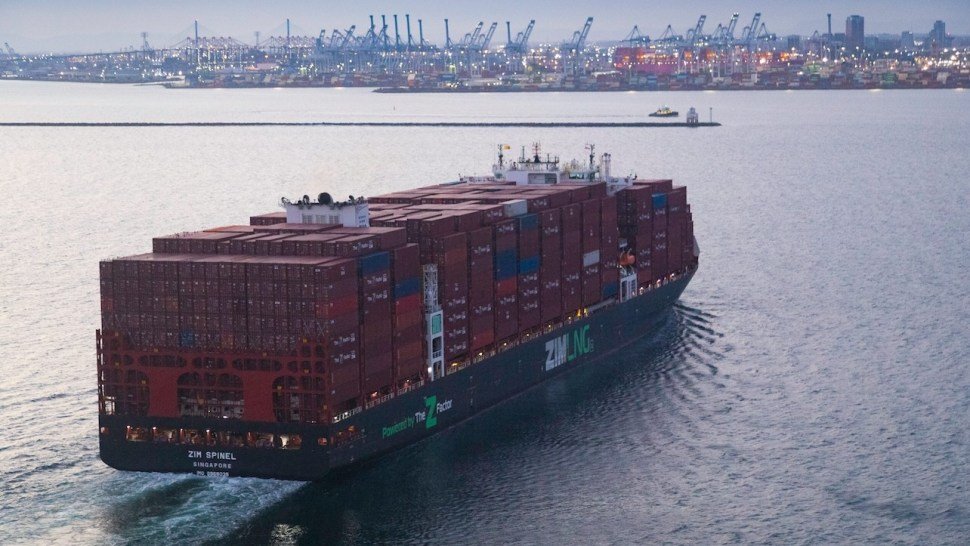
Hapag-Lloyd and Israeli private-equity firm FIMI have submitted revised terms for their planned $4.2 billion acquisition of Zim Integrated Shipping Services, in a renewed effort to address concerns from the Israeli government over maritime security, strategic assets and the country’s continued access to international shipping routes.
Hapag-Lloyd Chief Executive Rolf Habben Jansen travelled to Israel this week ahead of the Sept. 24 submission of the revised proposal. The new terms are designed to respond to objections raised by several government bodies reviewing the transaction, including agencies overseeing defense, state-owned companies, ports and shipping.
Deal structure remains under scrutiny
The original agreement, announced in February, calls for Hapag-Lloyd to acquire Zim (NYSE: ZIM) for $35 per share in cash, putting the total value of the transaction at approximately $4.2 billion. According to Hapag-Lloyd, that price represented a 58% premium to Zim’s Feb. 13 share price.
Zim shareholders have already approved the takeover, but the deal still requires Israeli government and regulatory clearances before it can be completed.
The proposed transaction separates certain strategic Israeli shipping assets from Zim’s international business. Under the structure announced earlier this year, Hapag-Lloyd would take control of Zim’s international operations, while FIMI would create and control a separate Israeli company, known as Zim Israel or New Zim, which would hold assets covered by Israel’s “golden share” protections.
Those protections are intended to preserve the Israeli government’s ability to guarantee maritime services during emergencies while retaining control over designated strategic shipping capabilities.
Revised safeguards focus on security and route access
Earlier this month, Hapag-Lloyd said it was working with Israeli ministries to adjust structural elements of the acquisition and prepare a proposal that would “further strengthen Israel’s maritime security and independence.”
The German carrier said the revised structure would also protect Israel’s access to key international shipping routes, including connections with Asia.
Among the reported changes are stricter limits on foreign ownership of the Israeli successor company. The level at which a foreign investor would trigger government scrutiny or golden-share protections could reportedly fall to 10%, from the current 24%.
FIMI has also reportedly committed to listing any shares in the Israeli company exclusively on Israel’s domestic exchange.
The revised proposal is expected to further strengthen the operating role of the Israeli entity. Earlier reporting indicated that the company would receive 16 vessels, exceeding the 11 ships required under existing golden-share provisions, and would operate without debt.
Those vessels would remain available to the Israeli government, while the company would continue to play a role in maintaining the country’s maritime connections in the event of disruptions.
Why the revisions matter for the U.S. market
For the U.S. market, completion of the transaction would primarily translate into a larger and more integrated Hapag-Lloyd presence across the trans-Pacific and U.S. import supply chain rather than an immediate change in service or pricing.
Until the expected closing in late 2026, Hapag-Lloyd and Zim must continue to operate independently. The acquisition also remains dependent on the outstanding regulatory approvals.
Competitive impact across North American trades
Zim remains an important carrier in Asia–North America trades, with particular significance for the U.S. West Coast, the U.S. East Coast and Pacific Northwest and Canadian gateways serving the U.S. Midwest.
The carrier’s own SEC filing specifically highlights services through Vancouver and Prince Rupert, which provide access to markets in Canada as well as the U.S. Midwest.
For Hapag-Lloyd, obtaining final approval would bring Zim’s network and commercial base into its existing global liner operations.
When the transaction was announced in February, the companies said the combined organization would operate more than 400 vessels, have capacity of more than 3 million TEUs and transport more than 18 million TEUs annually.
Despite that larger combined footprint, the transaction would not alter Hapag-Lloyd’s existing position as the world’s seventh-largest container carrier.