



Federal motor carrier regulators are now moving to restore a stronger in-person element to trucking company investigations after years in which pandemic-era procedures allowed certain reviews to be conducted remotely. But federal records contradict a recent report that attributed the creation of those remote procedures to the Biden administration.
The Daily Wire reported Wednesday that the Federal Motor Carrier Safety Administration (FMCSA) had scrapped in March what it described as a Biden administration policy directing investigators to conduct “virtual” checks of trucking companies instead of visiting their places of business.
According to the report, the policy was introduced in 2020 after the COVID-19 pandemic began and remained in place until the Trump administration reversed it this year.
The timeline, however, does not support the characterization that Biden created the policy. President Joe Biden did not take office until Jan. 20, 2021, while FMCSA records show that the agency expanded the use of remote compliance reviews in spring 2020, during President Donald Trump’s first administration.
On May 19, 2020, FMCSA issued guidance directing the agency to use available technology to conduct motor carrier compliance reviews during the COVID-19 public health emergency in order to reduce exposure risks for carriers and safety investigators.
The guidance allowed investigators to obtain records electronically and communicate with carrier officials through email, telephone and video calls. FMCSA also said it could assign a safety rating after a compliance review even when no onsite review activities had taken place.
FMCSA said at the time that investigators could follow the procedures required under 49 CFR Part 385 without physically visiting a carrier’s business premises. The agency concluded that compliance reviews without an onsite component could reduce COVID-19 exposure risks without compromising its safety mission.
The May 2020 guidance took effect immediately and was initially scheduled to remain in force until the presidentially declared COVID-19 national emergency was revoked.
FMCSA then issued internal guidance on May 22, 2020, allowing investigators to conduct remote focused investigations. In December 2020, the agency expanded the procedures further to permit remote onsite comprehensive investigations, according to a later FMCSA study of its carrier intervention program.
Remote investigations surged during COVID
FMCSA data illustrate how sharply investigative practices changed during the pandemic.
The agency and its state partners conducted 1,013 offsite investigations in fiscal year 2019. That number jumped nearly fivefold to 5,058 in FY2020 and remained elevated at 4,821 in FY2021, according to FMCSA’s Carrier Intervention Effectiveness Model. At the same time, onsite comprehensive investigations declined from 5,494 in FY2019 to 2,908 in FY2020 and 2,064 in FY2021.
FMCSA later acknowledged that COVID disrupted its ability to conduct onsite investigations because those reviews required investigators to visit carriers at their principal places of business.
The Biden administration continued parts of that remote approach after taking office.
In a certification policy that became effective June 1, 2022, FMCSA said that, during COVID, it had waived the requirement for comprehensive investigations to be conducted onsite. Investigators could instead maintain certification through offsite investigations and by tracking the regulatory “parts investigated.”
The agency said it was incorporating lessons learned during the pandemic into its certification policies, including allowing all regulatory parts used to maintain an investigator’s certification to be investigated offsite.
March memo reportedly restores physical presence
The Daily Wire said its report was based on an internal March 2026 FMCSA memorandum from Philip W. Thomas, the agency’s deputy associate administrator for safety.
According to the report, Thomas said remote procedures can “inhibit the ability to fully assess the motor carrier’s compliance and safety measures” and reduce the effectiveness of onsite investigations.
“Now that the public health emergency has ended, FMCSA is reinstating its pre-pandemic standard of conducting investigations with a meaningful physical presence at the motor carrier’s PPOB [principal place of business] per PPOB policy,” Thomas wrote, according to the memo quoted by The Daily Wire.
The reported directive says onsite investigations should involve substantive engagement with carriers rather than brief visits or drive-bys. It also calls for investigators to conduct in-person questioning with company officials.
The Daily Wire reported that investigators could still close investigations virtually in certain extenuating circumstances involving difficult travel or time constraints.
FreightWaves has asked FMCSA for a copy of the March directive, its effective date and clarification about which categories of motor carrier investigations it covers. The agency had not responded as of publication.
FMCSA has not eliminated offsite investigations
The March directive should not be interpreted as an end to all remote investigations.
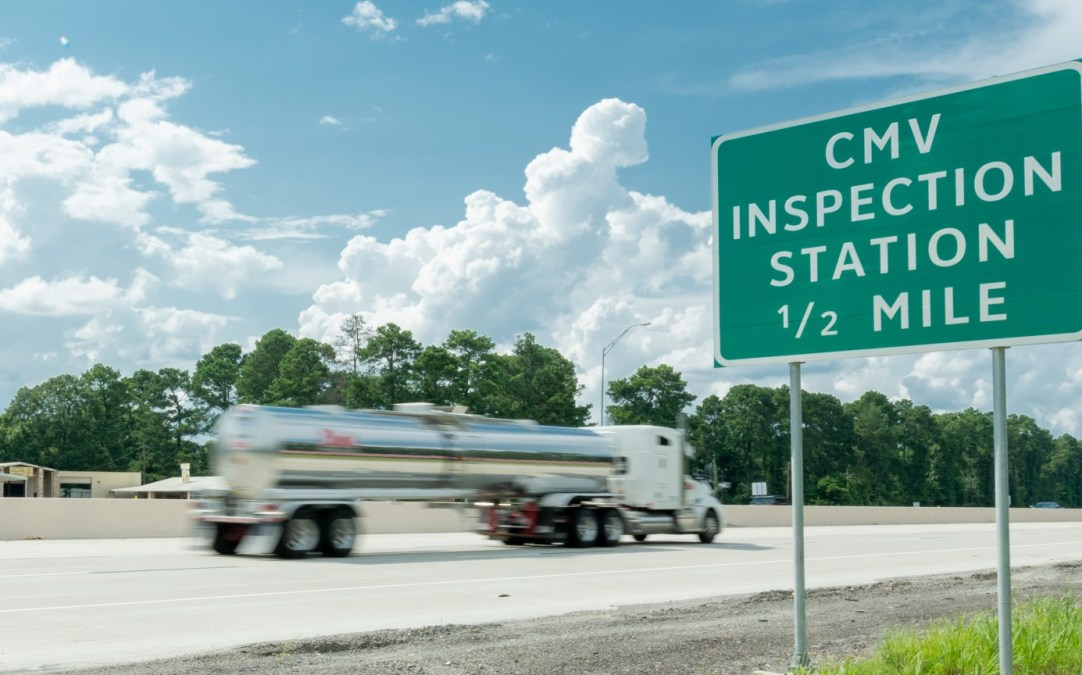
FMCSA continues to list offsite investigations as one of three investigation types under its Compliance, Safety, Accountability enforcement program. An offsite investigation involves a safety investigator requesting documents from a carrier and reviewing them remotely to examine specific safety performance and compliance issues.
The other two categories are onsite focused investigations, which address particular safety or compliance problems at the carrier’s place of business, and onsite comprehensive investigations, which examine the carrier’s broader safety operation at its business location.
Current FMCSA Motor Carrier Management Information System data show that the agency and its state partners conducted 1,538 offsite investigations in FY2025. Another 514 had been recorded in FY2026 through Aug. 28, compared with 4,411 onsite focused investigations and 3,706 onsite comprehensive investigations. FMCSA says the figures come from an MCMIS data snapshot dated Aug. 28, 2026 and remain subject to updates as additional information is reported.
The numbers indicate that FMCSA has already moved substantially away from the pandemic-era reliance on offsite investigations, although remote reviews remain part of its enforcement system.
FMCSA previously defended remote reviews
Another unresolved issue is whether remote investigations proved less effective at identifying safety violations.
During the pandemic, FMCSA publicly defended their effectiveness.
In a March 2021 enforcement presentation, the agency included an analysis titled “Remote Investigations Do not Hamper Ability to Discover Violations.” The presentation compared investigations conducted before and during the COVID-19 period.
Before the pandemic procedures took effect, 88% of offsite investigations identified violations and 24% identified acute or critical violations. During the COVID period examined by FMCSA, 92% of offsite investigations identified violations and 30% identified acute or critical violations.
Those figures do not, by themselves, establish that remote investigations were as effective as physically visiting a carrier. Different carriers and safety issues can be assigned different types of investigations, while a document-based review may fail to reveal conditions that investigators could observe at a carrier’s facility.
Still, FMCSA’s earlier assessment raises a key question about the evidence behind the agency’s 2026 conclusion that remote procedures were limiting investigators’ ability to fully assess carriers.
FreightWaves has asked FMCSA whether it has more recent data comparing remote and onsite investigations, including violation rates, acute or critical violations, enforcement actions and subsequent safety performance.
Fatal Kansas crash cited in report
The Daily Wire pointed to a February 2021 fatal crash near Topeka, Kansas, as an example of what it described as a potential shortcoming of remote investigations.
According to the report, FMCSA conducted a remote investigation of the trucking company involved about a month before the crash and did not physically visit the business.
On Feb. 24, 2021, a tractor-trailer hauling steel pipes lost its load on Interstate 70 near Topeka. The pipes crossed the median and struck multiple vehicles, killing 29-year-old Brooke Rees. Contemporary reporting and a later Missouri Court of Appeals decision confirm that Rees was killed in the multi-vehicle crash after large steel pipes fell from the truck.
The Daily Wire reported that the driver had an expired medical certificate and lacked a required record of duty status. It also said the truck did not have a current annual inspection and had load-securement violations.
The outlet further reported that, during the earlier remote investigation, the carrier told investigators that the driver was not employed by the company but remained on its books because he occasionally worked for it.
FreightWaves has not independently obtained the January 2021 FMCSA investigative report and therefore has not independently verified what investigators examined or discovered before the crash.
FreightWaves has asked FMCSA for records related to that investigation, as well as any subsequent investigation of the carrier following the fatal crash. The Kansas Highway Patrol has also been asked for the crash report, the post-crash commercial vehicle inspection and related investigative records.
The National Transportation Safety Board did not investigate the crash, NTSB officials told FreightWaves.
Those records could help answer a central question surrounding FMCSA’s return to in-person investigations: whether physical visits reveal safety deficiencies that investigators can miss when reviewing a carrier remotely.
Why it matters: FMCSA’s March 2026 move to restore meaningful physical presence during onsite carrier investigations represents a significant shift from COVID-era procedures. However, it does not appear to eliminate the agency’s longstanding offsite investigation program.