



Global terminal operator DP World is taking another step toward a return to U.S. port operations, nearly two decades after its planned takeover of terminals at several major American ports triggered intense national security concerns in Congress.
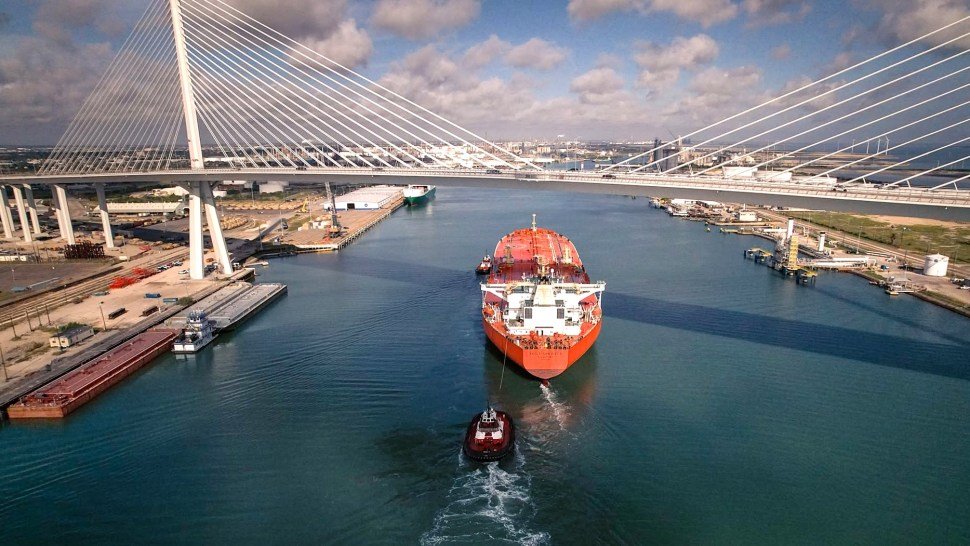
The Dubai-based company has signed a lease option agreement with the Port of Corpus Christi in Texas to develop a container terminal that could ultimately handle approximately 1 million twenty-foot equivalent units (TEUs) per year.
Jeffrey Pollack, chief strategy and sustainability officer for the Port of Corpus Christi Authority, confirmed the agreement during the American Association of Port Authorities annual convention in New Orleans on Sept. 29. He said the port and DP World had agreed on a lease option covering the development of a container terminal at Corpus Christi.
The project would represent a major diversification for Corpus Christi, which currently does not operate as a container port and whose cargo base is heavily concentrated on the energy sector.
Pollack said the planned operation would remain relatively modest compared with the largest container gateways in the United States, with its ultimate capacity expected to reach around 1 million TEUs annually.
DP World prepares for a return to U.S. port operations
The agreement could mark a significant comeback for DP World in the U.S. marine terminal sector.
Owned by the government of Dubai in the United Arab Emirates, DP World became the focus of a major political controversy in 2006 after its acquisition of British terminal operator P&O would have transferred P&O’s leases and operations at several major U.S. ports to the Dubai-based company.
The proposed transaction faced bipartisan opposition in Congress, with lawmakers raising national security concerns. The issue was examined during a Feb. 28, 2006 hearing by the U.S. Senate Commerce Committee titled “Security of Terminal Operations at U.S. Ports.”
DP World ultimately announced in March 2006 that it would divest P&O’s U.S. port operations after lawmakers moved to block the transaction.
The controversy occurred despite support from the administration of President George W. Bush, which backed the deal and maintained that port security would remain under the responsibility of U.S. Customs and Border Protection and the U.S. Coast Guard.
The Corpus Christi project would therefore represent DP World’s first U.S. container terminal development since that episode, as well as its first container terminal development on the U.S. Gulf Coast.
DP World is now one of the world’s largest terminal operators, handling roughly 10% of global container traffic across more than 60 ports and terminals.
Corpus Christi seeks to diversify beyond energy
DP World and the Port of Corpus Christi first announced in June that they had entered exclusive negotiations for a long-term lease for the proposed terminal.
Under the planned arrangement, DP World would be responsible for designing, building and operating the facility.
At the time, the two parties said negotiations would focus on the terminal’s design, capacity planning and the structure of the investment required for the project.
If completed, the development could significantly reshape Corpus Christi’s position in Gulf Coast freight markets.
The Texas port is already one of the largest U.S. gateways by total tonnage. However, its traditional cargo mix has centered on crude oil, liquefied natural gas, refined petroleum products, agricultural commodities and industrial cargo rather than containerized freight.
The port has also recently acquired approximately 2,000 acres located around 8 to 10 miles south of its Inner Harbor. Officials envision the site as an inland port supporting the proposed container operation.
According to Pollack, the property has access to all three Class I railroads serving the port, as well as multiple interstate highway systems. That connectivity could help attract manufacturing, warehousing and other import-export activities around the future container operation.
The container expansion comes as Corpus Christi continues to record strong overall cargo performance.
During the first half of 2026, customers moved 110.3 million tons through the Corpus Christi Ship Channel, a 7.7% increase from the previous first-half record of 102.4 million tons established one year earlier.
Why it matters: The proposed Port of Corpus Christi project could bring DP World back into U.S. container terminal operations nearly 20 years after national security concerns in Congress derailed its acquisition of terminal operations at several major American ports.