



Learning the Business Through Experience
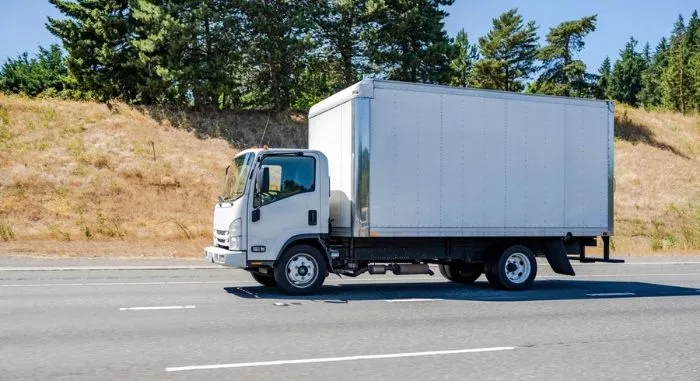
For Telly Arnold, building a successful trucking company has meant navigating several business models, confronting unexpected expenses and learning when to change direction. The founder of Houston-based TLA Group LLC has spent roughly three years operating non-CDL box trucks, moving from rentals and shared ownership to financing a truck of her own. The company has also handled final-mile appliance deliveries before shifting to over-the-road freight.
Her experience has reinforced two principles she believes every new carrier should follow: understand every expense that contributes to cost per mile, and do not hesitate to abandon a business model that fails to deliver sustainable returns.
Arnold entered the trucking industry with a bachelor’s degree in accounting, a master’s degree in business and more than two decades of experience in corporate America. Alongside running her carrier, she works as a small business trainer at the University of Houston Small Business Development Center. She also founded StraightConnect, a platform designed to help new box truck owners navigate the industry, and co-hosts The Box Truck Hustle podcast with business partner Sharif Brooks.
Her original motivation was to create an opportunity for her son while maintaining her full-time job. Brooks, who has more than 20 years of trucking experience and holds a commercial driver’s license (CDL), was expected to handle the driving.
“I thought it was something easy I could do while I work full-time and that you can make a lot of money,” Arnold told FreightWaves. After observing Brooks’ work ethic, she believed the combination of his driving experience and her business knowledge would provide a solid foundation for a trucking operation.
Three tries to get a truck uncovered surprise costs
TLA Group had three different ways to get a truck in the door. The first was to rent a truck, which Arnold thought initially carried less risk because it didn’t require a long-term commitment. But she soon found out that the price of renting could be more than she bargained for.
The company then tried to split ownership of a truck with another party, 50/50. Arnold said that arrangement was a disaster. The third attempt was to finance a truck outright which adds a regular loan payment to the operating obligations of the company.
Insurance costs provided another early lesson. The TLA Group paid an insurance deposit of between $4,000 and $5,000 when the group’s motor carrier authority was active, and about $2,500 each month as a premium.
“That was shocking,” Arnold said, adding she hadn’t expected such a large upfront payment.
When the policy was renewed there was another surprise. The initial deposit was not lost at the end of 1st policy period. Instead, Arnold found that renewing commercial insurance meant paying a deposit again, a recurring expense she hadn’t considered in her initial expectations.
Mechanical breakdowns were even more costly. The first major breakdown of the company cost about $10,000 in repairs. Arnold says truck payments and insurance deposits are big financial commitments, but unexpected mechanical repairs are one of the hardest expenses for a new carrier to absorb.
“The mechanical bills, not maintenance, the mechanical bills,” she said. “If you lose a truck, it’s going to cost you money.”
Appliance Deliveries Revealed the Hazards of Claims and Customer Reviews
The biggest problem Arnold had was getting freight. Once the carrier’s authority is live, they can start looking at load boards and booking available loads. The problem, she said, is that many brokers are not willing to work with new carriers that are just getting their licenses and don’t have a track record.
TLA Group waited about a month and then went after white-glove deliveries, a niche often pitched to would-be box truck owners to make $5,000 to $6,000 a week doing appliance and furniture work.
Arnold said those earnings claims are not consistent with the company’s experience. The TLA Group started with local carrier work and then moved to appliance delivery after Hurricane Beryl hit Texas in July 2024.
From that experience the company learned the financial impact of damaged goods and customer claims. Arnold said new arrivals are often told how to make claims but not enough practical advice on how to avoid them, settle disputes or protect their earnings from being deducted.
She suggests monitoring the condition of each shipment at each stage of delivery. Drivers would need to take photos of the box from all angles at the warehouse, then take more photos after loading the box onto the truck, and then document the box’s condition again at the customer’s property. Packaging can hide damage. So packaging is even more important evidence when someone is disputing responsibility.
TLA Group learned the lesson on day one of business.
We were new. We had no idea. We didn’t take pictures,” Arnold said. If the company has no photographs showing that something like a refrigerator was already damaged before the carrier got it, then the company could have a claim on its hands with no evidence to dispute responsibility.
Customer satisfaction was another area of business risk. In one installation, a stove scratched a customer’s interior door. The TLA Group’s people were working as contractors, so the company had to take the hit for the damage.
Arnold called a contractor within 24 hours to schedule a repair with matching paint. She followed up and did the right things to fix the problem without filing an insurance claim. But the customer still took a bad survey.
The negative feedback had immediate operational results: the next day TLA Group was not given a route.
The incident demonstrated how a relatively minor delivery problem can impact a carrier’s access to future work, regardless of how quickly the company responds.
Moving to Over-the-Road Freight Required a Fast Change of Direction
In February 2025, TLA Group moved away from appliance deliveries and entered the over-the-road freight market. Arnold said the decision reflected a broader lesson about entrepreneurship: remaining in an underperforming business model for too long can deepen financial difficulties.
“We learned that we have to pivot really fast because when you sit in something too long and you’re seeing that is not a good business model for you, it’s best to make those changes quick instead of just drowning,” she said.
For a box truck carrier, over-the-road operations follow many of the same principles as those used by semi-truck operators. The company searches load boards, evaluates available freight and determines how far it is prepared to travel, whether that means 500 miles or 1,000 miles.
Operating out of Houston, TLA Group generally favors shipments heading toward the Midwest, where it can move between successive loads. A shipment booked on Friday, for example, may be scheduled for delivery on Monday.
The company finds freight through platforms including Truckstop and DAT. Equipment requirements vary according to the shipment, but may include a pallet jack, cargo straps and personal protective equipment (PPE).
Brooks drove the company’s first truck and remains the driver of its only truck today. When TLA Group expanded to two vehicles, it hired additional drivers and continued operating one truck locally.
Recruiting qualified personnel created challenges Arnold had not anticipated. Although non-CDL box trucks do not require drivers to hold a commercial driver’s license, she said operators still need essential knowledge associated with commercial driving. This includes hours-of-service requirements, pre-trip and post-trip inspections, and properly securing freight to reduce the risk of claims.
AI Tools Are Simplifying Dispatch and Load Searches
TLA Group manages its own dispatching, and Arnold is increasingly using artificial intelligence tools to make freight searches more efficient.
One of the platforms she uses is Truckstop’s AVA, a voice-based assistant introduced by the load board in July. The tool allows carriers to describe the freight they are seeking through a conversational interface.
Arnold also uses FleetWorks, a company developing AI-powered dispatch agents. Its system contacts the carrier to establish the truck’s location, preferred operating regions and available capacity before helping identify suitable opportunities.
These tools are becoming part of a broader effort to simplify daily operations. Arnold said much of the company’s business can now be managed directly from her phone, including booking loads and arranging freight factoring.
“What I like now is everything I do is on my phone,” she said. “Book a load, factor it, everything is on my phone. I generally rarely have to go to my computer.”
The shift toward mobile and AI-assisted workflows reflects how small carriers can use digital tools to manage administrative tasks without maintaining a large office operation.
Cost Per Mile Remains the Foundation of Every Decision
Arnold recently reviewed TLA Group’s expenses in detail with another person, building on her existing understanding of the company’s cost per mile. The exercise helped her examine the individual costs included in that figure and better understand what each one covers.
That knowledge is particularly important when negotiating freight rates. A rate of $2 per mile, for example, must be assessed against the full range of expenses required to keep the truck operating, rather than treated as revenue that can automatically generate a profit.
Fuel remains one of the most unpredictable elements. Changes in fuel prices can quickly affect margins, making it essential for carriers to monitor their figures even when operating costs appear manageable.
TLA Group manages some of that exposure by splitting fuel purchases between two fuel cards. One withdraws money from the company’s account on Fridays, while the other drafts on Tuesdays. Both cards also provide discounts, helping the company manage fuel spending and the timing of cash outflows.
Arnold said the company has become accustomed to financial pressure and responds by developing practical plans to manage it.
Cost-per-mile calculations also influence decisions about fleet expansion. Arnold would be reluctant to add a second truck while operating under a very young motor carrier authority unless the business had a tightly controlled overhead structure covering insurance, fuel, driver compensation and dispatching.
Before expanding, she recommends working with a bookkeeper who can maintain accurate financial records and produce reports that the owner can understand. Reliable figures help determine whether additional capacity is financially viable rather than simply attractive in terms of potential revenue.
“Before you jump into that second truck, know your numbers. It’s very important for you to know your numbers,” she said.
Driver Stability Can Influence Insurance Costs
Insurance expenses depend on more than the truck itself. Arnold said safety violations can affect premiums, while frequent driver turnover may also make a small carrier appear riskier to insurers.
When TLA Group moved from one truck to two, the company experienced repeated changes in its driving staff. Arnold believes the resulting turnover contributed to the perception that the business represented a higher insurance risk.
After a year of greater stability, with Brooks driving, the company’s latest renewal came in at a substantially better rate. However, Arnold cautioned that she could not establish whether the improved outcome was directly attributable to that stability.
The next renewal will provide another indication of how the company’s insurance costs develop.
“Maybe we’ll see next year,” she said, adding that the premium could potentially rise to three times its current amount.
Despite the uncertainty, TLA Group is considering another expansion, with a second truck targeted for 2027 or 2028. Arnold believes the company is approaching that stage with a more mature motor carrier authority and a stronger reputation.
“I think we’re ready to scale. Our MC is aged. We built a good reputation,” she said.
StraightConnect Aims to Give New Carriers More Reliable Guidance
Arnold’s emphasis on financial discipline contrasts with advice she frequently encounters on social media, where trucking is sometimes presented as an easy route to substantial earnings.
“There are a lot of social media gurus who are out here selling people pipe dreams,” she said. “They concentrate on revenue but you can make six figures in revenue and you need to look at your bottom line.”
For Arnold, high revenue figures alone do not demonstrate that a trucking company is profitable. Owners must understand what remains after insurance, fuel, equipment costs, repairs, driver compensation and other expenses have been paid.
That concern helped motivate the creation of StraightConnect. The platform features verified industry voices and is intended to give aspiring box truck owners access to more practical information about operating a carrier.
Her podcast, The Box Truck Hustle, also brings together dispatchers, box truck operators and factoring companies to discuss the realities of the industry and explain what newcomers should expect.
Arnold said the challenge is not simply finding information, but determining whether the person providing it genuinely wants to help or is primarily interested in selling a course.
“People are really out here struggling for information and you don’t know who’s really trying to just sell you a course or if they’re really just trying to help you,” she said.
Having searched for that kind of resource herself without finding what she needed, Arnold decided to build both the podcast and the platform.
Her experience has ultimately reinforced a central message for aspiring carriers: trucking involves far more than moving freight. Long-term viability depends on controlling expenses, documenting operations, managing risk, choosing the right freight and knowing when a business model needs to change. For owners considering their next truck, understanding the bottom line remains the most important step before scaling.