




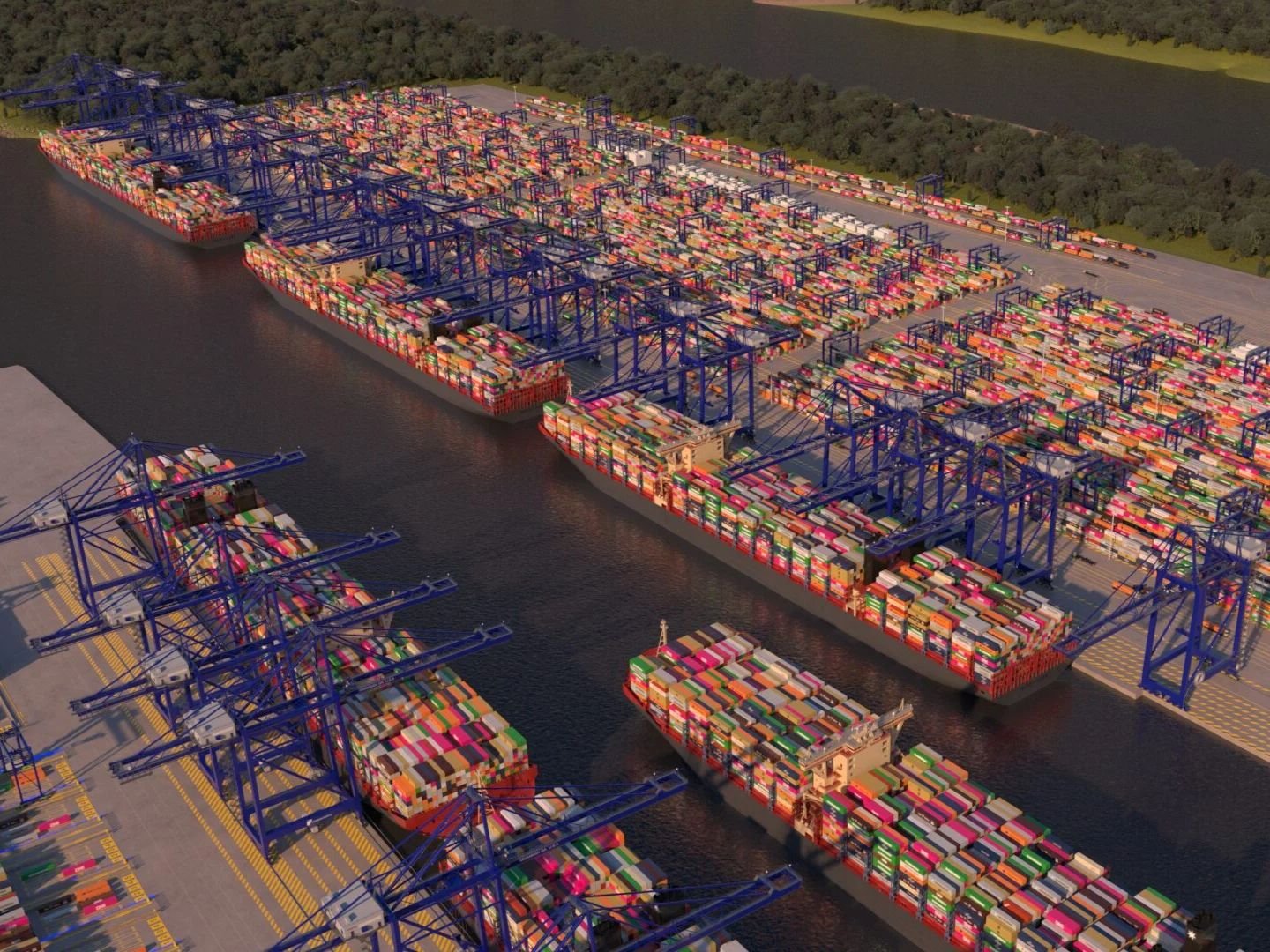
Savannah Port Moves Forward With $2.3B Terminal Project
The Port of Savannah is pushing forward with a massive container infrastructure project after receiving approval from the U.S. Army Corps of Engineers for the Georgia Ports Authority (GPA) to construct a new terminal capable of processing 3.5 million twenty-foot equivalent units (TEUs) per year.
The Georgia Ports Authority announced Oct. 14 that the proposed Savannah Container Terminal would be 350 acres and is slated for a $2.3 billion investment. Construction is set to start in January 2028 and should be finished by the mid-2030s.
When fully operational, the facility will increase the Port of Savannah’s total annual container-handling capacity to 12 million TEUs, making it a premier gateway for international trade.
Long-term investment for regional freight demand
The terminal is a component of the Georgia Ports Authority’s larger plan to add infrastructure to support continued freight growth throughout the state of Georgia and the southeastern U.S.
The GPA board approved $4.13 billion worth of improvements to its infrastructure in the last decade. The investments include construction of a new inland port in Gainesville, Georgia, to ease the movement of commodities and industrial goods by manufacturers, including poultry, heavy equipment and forest products.
The authority’s expansion plans are guided by forecasts of substantial growth in regional demand. The 10-year plan for the authority expects 55% growth in Georgia and the South-east, Tom Boyd, the GPA’s chief communications officer, told Supply Chain Dive in an email.
“We use this figure to work out the capacity of port infrastructure needed to handle this volume of container,” Boyd said.
The projected growth is expected to support the authority’s efforts to ensure port facilities and supporting infrastructure are capable of handling increased cargo volumes over the next decade.
Ocean Terminal expansion also demands more capacity
In addition to the planned Savannah Container Terminal, the port is also moving forward with a separate expansion of its Ocean Terminal. The project is more than 60% complete and will raise the facility’s annual handling capacity to 1.75 million TEUs from 200,000 TEUs.
The Ocean Terminal project should be finished by the end of 2028, adding capacity a few years ahead of the planned commissioning of the new container terminal.
Together, the two projects represent the port’s efforts to manage increasing container volumes and strengthen its infrastructure for future supply chain needs.
Gateway to inland U.S. markets Savannah’s
The port’s location also provides shippers serving major inland destinations with a competitive edge. The Port of Savannah has a significant economic advantage over West Coast routeing options for cargo going to markets like Atlanta and Memphis, Tennessee, says Chris Gaffney, managing director of Georgia Tech’s Supply Chain and Logistics Institute.
Savannah is hoping that the combination of more terminal capacity and continued infrastructure investment will further its role as a connector of international freight flows to the major commercial and manufacturing hubs of the south-east U.S.
The planned capacity of the new terminal, the Ocean Terminal expansion and inland port investments are part of the long-term effort to prepare Georgia’s logistics network for the regional growth that is expected.