




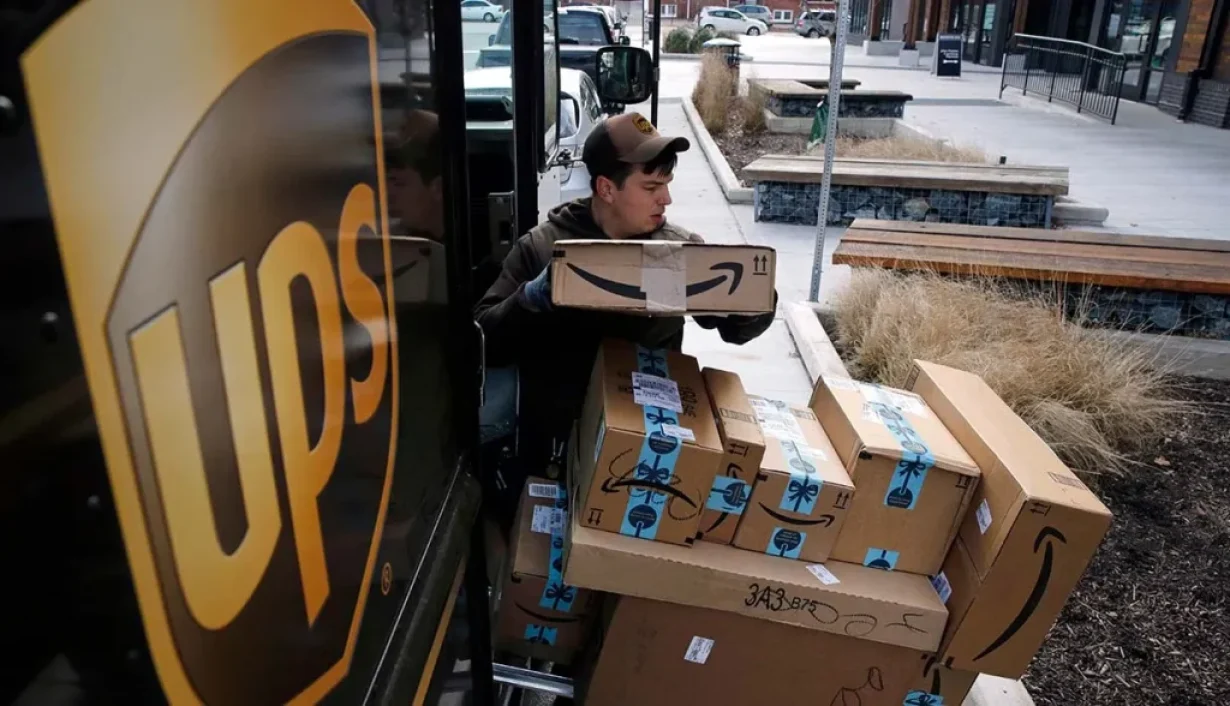
United Parcel Service (UPS) has completed the automation of four additional package sorting facilities as the company prepares for the surge in shipments expected during the holiday peak season. The newly upgraded or enhanced sites are located in Denver, St. Paul, Minnesota, Syracuse, New York, and Portland, Oregon, according to a company announcement released this month.
The latest upgrades form part of UPS’s multiyear effort to reshape its distribution network, reduce structural costs and improve profit margins. As parcel volumes grow more slowly than during the pandemic, the company is seeking greater operational efficiency and a stronger focus on higher-yield business segments, rather than relying as heavily on lightweight business-to-consumer shipments from major retailers.
A redesigned network to reduce operating costs
The UPS plan calls for closing 200 manually operated sort facilities over five years and consolidating operations into larger, more modern sites that can handle more shipments over wider service areas. The restructuring also eliminated 30,000 jobs.
The company is investing in smart package handling technologies such as autonomous guided vehicles, automated sorting equipment and systems that focus on processing based on individual customer requirements without manual intervention. The solutions are designed to speed sorting, improve package flow and accuracy, expand facility capacity and reduce manual handling steps throughout the network.
UPS is targeting $3 billion in annual cost reductions through its restructuring program by 2028.
Automation already makes up a growing share of the company’s U.S. parcel operations. As of July 1, 68.5% of U.S. volume was passing through automated facilities, compared with 64% a year earlier. Executives said during the company’s second-quarter results presentation that the cost to handle each package at an automated facility is 28% less than at a traditional facility that has mechanical systems. Higher throughput helps spread unit costs and increases operating leverage.
Upgrades conducted with operations ongoing
The modernization work was different for the four locations at each location. In an email, UPS spokeswoman Karen Tomaszewski Hill said the Denver, St. Paul and Syracuse facilities remained open as upgrades were being completed in phases.
But at UPS in Portland, the company temporarily closed its Swan Island package facility and moved operations elsewhere for construction work.
The staggered approach is part of a broader effort to modernize the network while preparing facilities for increased demand during the busiest shipping period of the year.
Seasonal recruitment to fill peak demand
In addition to its infrastructure investments, UPS also said it will hire 100,000 seasonal employees across the country as part of its annual recruitment effort to help with the holiday rush.
Amazon, the biggest parcel delivery company in the United States, announced this week that it plans to hire more than 300,000 seasonal, part-time and full-time workers across its U.S. core logistics network for the holiday season.
The recruitment drives are a pointer to the size of the workforce and operational capacity needed by the major parcel carriers as shipment volumes ramp up toward the end of the year.
RFID tracking is rolling out across the delivery network
UPS is also enhancing parcel visibility with radio-frequency identification (RFID) technology. The company expects to deliver more than four billion RFID-enabled packages by the end of 2026 after completing the installation of sensors on all its package delivery vehicles this spring.
The technology had earlier been deployed at locations of UPS Store and U.S. delivery stations. All packages shipped from The UPS Store contain an RFID label.
RFID allows items to be identified and tracked by radio signals. It is especially well-suited for closed-loop logistics environments with a single operator managing an integrated network and able to coordinate the infrastructure to read the tags. RFID labels are cheap, but the readers and related infrastructure are substantially more expensive to put in and maintain.
UPS has already said it has invested more than $100 million to install the technology.
The carrier is continuing to work with customers to install RFID printers at their locations. It is also adding readers at regional hubs and plans to add the devices to its aircraft, expanding the technology’s reach across more stages of its logistics operations.
“Together, automation, seasonal recruitment and RFID deployment are part of UPS’s overall strategy to increase handling capacity, improve shipment visibility and control expenses as the company enters another challenging holiday shipping season.