




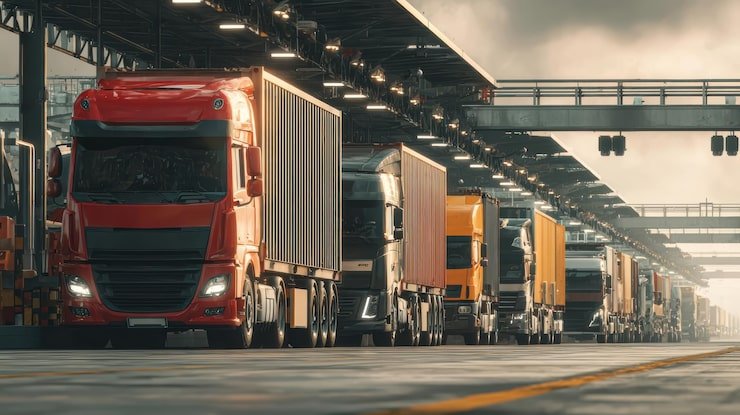
Demand for U.S. trailers accelerated sharply in September to its strongest level in nearly four years. But the North American Class 8 truck market showed a less consistent picture with differing estimates from FTR Transportation Intelligence and ACT Research, highlighting the uncertainty hanging over commercial vehicle manufacturers and fleet operators as they look toward 2027.
The conflicting numbers are appearing at a time of growing concern over national emissions standards, rising equipment costs and evolving fleet investment strategies. As the next model year approaches, carriers are re-evaluating their purchasing decisions and the timing of equipment replacements.
U.S. net trailer orders in September were 43,059 units, according to FTR, which was up 78% from August and 385% compared to the same month last year. That was the most in a month since December 2022 and an unusually strong start to the 2027 trailer ordering season.
But the picture for Class 8 truck orders was more complicated. North American orders of 19,172 in September were down 7% year over year and 15% month over month on a seasonally adjusted basis, according to ACT Research. The early numbers for FTR were more optimistic, reflecting the divergence in market views as the sector gets ready for the next regulatory and pricing cycle.
Trailer demand rebounds as fleets prepare for 2027
The surge in trailer bookings points to renewed replacement activity after an extended period of subdued equipment purchasing. FTR said September’s results reflected considerable pent-up demand, with carriers potentially bringing forward orders in anticipation of higher costs.
The earlier opening of order books for 2027 equipment, combined with expectations of further tariff-related price increases, may be encouraging fleet operators to secure trailers before prices rise further.
September figures published by the two research firms confirm the strength of the rebound, although their estimates differ slightly.
| U.S. trailer orders | September 2026 | Year-over-year change |
|---|---|---|
| FTR | 43,059 units | +385% |
| ACT Research | 42,700 units | +311% |
FTR also highlighted the potential impact of the Class 8 truck pre-buy cycle coming to an end. Uncertainty surrounding the Environmental Protection Agency’s nitrogen oxide emissions requirements for 2027 could be encouraging some carriers to redirect near-term investment towards trailers rather than heavy-duty trucks.
Dan Moyer, FTR’s senior analyst for commercial vehicles, said industry feedback suggested that fleets were becoming more engaged in their equipment planning.
“Rising quote activity and more requests for proposals indicate that fleets are becoming increasingly active in equipment planning,” Moyer said in a statement.
The increase in quotations and requests for proposals suggests that operators are beginning to reassess replacement schedules and prepare for potential changes in equipment costs.
Class 8 truck orders reveal contrasting market assessments
The strong trailer figures did not translate into a consistent outlook for heavy-duty trucks. FTR Transportation Intelligence reported preliminary North American Class 8 net orders of 21,300 units in September, up 18% from August and 3% from a year earlier.
ACT Research’s final estimate was considerably lower. The firm recorded 19,172 orders, representing a 7% annual decline and a 15% monthly decrease on a seasonally adjusted basis.
| Metric | FTR | ACT Research |
|---|---|---|
| September orders | 21,300 units | 19,172 units |
| Year-over-year change | +3% | -7% |
| Month-over-month change | +18% | -15%* |
| Data status | Preliminary | Final |
* ACT Research’s month-over-month change is seasonally adjusted.
The difference between the two estimates illustrates the difficulty of assessing the direction of the market in a time of regulatory uncertainty and changing purchasing behavior. The figures also need to be seen in light of their differing reporting status, with FTR’s being preliminary and ACT’s final.
The two research firms said uncertainty over the Environmental Protection Agency’s 2027 emissions requirements and the potential for higher truck prices were important factors affecting fleet buying decisions, although their assessments differed.
For carriers, the challenge is to balance the immediate operational needs with the risk of committing to equipment that could be more costly as the new regulatory framework comes into play.
Medium-duty trucks still look better
The commercial vehicle market was not uniformly weak in demand. Medium-duty truck orders in North America held their own, outpacing Class 8 orders in September.
Orders for Class 5-7 trucks surged 27 percent to 20,297 in September compared with a year ago, ACT Research said.
The company said the rise may be due to dealers stocking inventory in anticipation of regulatory changes and higher equipment prices in 2027.
This contrasts with the decline in ACT’s Class 8 numbers and suggests differences in buying patterns across commercial vehicle categories. Heavy-duty truck demand continues to be uncertain due to the possibility of future costs and emissions rules, while medium-duty orders are benefiting from the relatively stronger activity.
Fleet investment decisions are hard to predict
The September figures point to a bifurcated commercial vehicle market. Trailer orders have bounced back strongly, signaling that replacement demand is back after a long period of limited buying. Medium-duty trucks are also showing healthy growth, but the Class 8 truck order picture is still fuzzy.
The 2027 model year plays a big role in this uneven performance. Potential tariff-related price increases, changes in emissions requirements and the end of the heavy-duty truck pre-buy cycle are all affecting how carriers are allocating their equipment budgets.”
The ramp-up in trailer orders is a welcome demand signal for manufacturers and suppliers. But with Class 8 numbers diverging and the regulatory environment still unclear, it’s hard to say whether the broader commercial vehicle market is due for a long term turnaround.
Why it matters: Increased demand for trailer replacements is creating an opportunity for manufacturers, but fleets are still grappling with planning for investment and the future of the commercial vehicle industry amid uncertainty around Class 8 truck orders, emissions regulations and future equipment prices.