




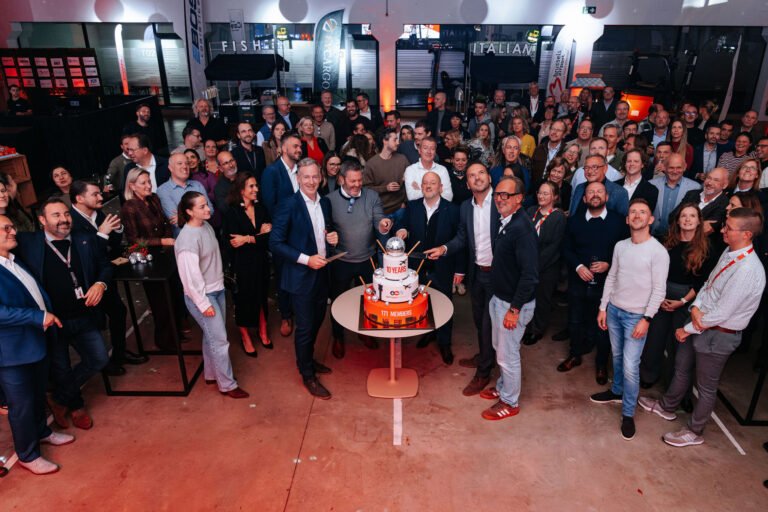
Air Cargo Belgium (ACB), the non-profit organization representing the air cargo community at Brussels Airport (BRU), is celebrating ten years of collaboration and development in the air logistics sector. The ambition of the organization was to gather the different actors of the supply chain. Slowly, a network linking freight handlers, airlines, freight forwarders and logistics service providers has been built up.
Today, ACB, created a decade ago, has more than 170 members. At the same time, Brussels Airport, which calls itself the heart of Europe, handled almost 800,000 tons of cargo last year, highlighting the significance of its air freight activities to the Belgian economy and international logistics networks.
“This collective approach is very important to reinforce the economic contribution of cargo operations in Belgium and to strengthen the position of individual companies in the wider community,” says Geert Aerts, Chairman of Air Cargo Belgium.
Success for organizations is about practical cooperation, not common ambitions, believes Freek de Witte, Director of Air Cargo Belgium. ACB brings together airlines, freight forwarders, handlers and trucking companies, offering opportunities for stakeholders to address common operational challenges and develop projects that provide benefits throughout the supply chain.
This collaborative spirit has enabled the development of projects like the cloud-based Digital Green Lane on Brucloud. The real transformation, according to de Witte, comes from the ability of the community to work together on projects that might initially benefit one stakeholder but that in the end create value for others.

10 years of projects changing air cargo operations
When Air Cargo Belgium and Brussels Airport look back on the past 10 years, they describe the evolution of the organization as the construction of a unique ecosystem built on common challenges and tangible solutions. Several initiatives demonstrate how this model has improved coordination and supported the modernization of air cargo activities.
Animal Care & Inspection Center ACIC
The Animal Care & Inspection Center was established through a collaborative effort by ACB and the cargo handling community to centralize and improve animal welfare during air transportation. Brussels Airport has invested in special infrastructure to receive, care for and inspect live animals in safe, high quality conditions.
A united response to the COVID-19 crisis
The existing collaboration platform and the community’s expertise in pharma logistics were particularly valuable during the COVID-19 pandemic. The first flight in the world carrying COVID-19 vaccines has left from Brussels Airport. The airport was instrumental in the transportation of over three billion vaccine doses during the pandemic, highlighting the necessity for working together to tackle pressing global health issues.
Digitalization on the landside
Air Cargo Belgium is also working on modernizing landside logistics, including projects like the Digital Green Lane in Brucloud. An online booking system for truck drivers helps to reduce waiting times and increase cargo flows efficiency. The initiative combines technology development with change management and training to help the supply chain to adopt new processes.
Precision Therapy Logistics Gateways
ACB is also gearing up for changes in the pharmaceutical supply chain driven by personalized medicine. Its Precision Therapy Logistics Gateway project aims to pave the way for the logistics networks needed to support this new realm of healthcare.
Relationships and pragmatism are at the heart of progress
Besides operational projects, Air Cargo Belgium has spent the last decade building bridges between the air cargo community and public authorities. Recently, this has resulted in a strong and constructive partnership with Belgian Customs.
In this relationship ACB has been acknowledged as the primary communication point for the communication, software testing and other customs related initiatives affecting air freight handling at Brussels Airport. The position would facilitate closer coordination between industry players and those tracking cargo movements.
The organization also has good working relationships with other regulatory stakeholders such as the Belgian Civil Aviation Authority (BCAA) and the Federal Agency for the Safety of the Food Chain (FAVV). These partnerships are helping drive collaboration across the wider air cargo ecosystem, where operational efficiency and regulatory compliance need to go hand-in-hand.
“Another priority of Brussels Airport and ACB is international cooperation. Agreements with major global hubs Changi, Washington, Hyderabad and Shanghai have been signed by the two organizations and they are now working to align processes more closely and establish high-quality, controlled trade lanes connecting BRU with these airports.
Such efforts are indicative of changing needs of international trade and importance of reliable well-coordinated logistics corridors. The announcement of a pharmaceutical Memorandum of Understanding with Hyderabad also acknowledges the increasing importance of India as a key supplier to the pharmaceutical industry.

Creating a more connected air cargo community
Air Cargo Belgium takes a group approach that relies on close relationships across the supply chain rather than individual stakeholders working in isolation. The organization aims to meet legislative requirements and day-to-day operational challenges, by encouraging co-operation between companies, handlers, transport operators and public authorities.
This pragmatic model has allowed ACB to become a key collaboration platform at Brussels Airport. The work it is doing on animal welfare, pharmaceutical logistics, digitalization, customs cooperation and international connectivity is a good example of how coordinated action can help develop the air cargo sector.”
Now in its second decade, the experience of Air Cargo Belgium shows that it is worth bringing the industry’s players together to convert common challenges into tangible projects to strengthen the competitiveness of its members and prepare Brussels Airport for the changing needs of global air freight.