



Maritime Communities Connected Across Borders
Communication and cooperation remain at the heart of the shipping industry, particularly in an industry marked by different time zones, geographical distances and political conditions. Against this backdrop, the UK-based International Association of Maritime Clusters (IAMC) is seeking to bring together maritime business communities around the world with the ambition of creating a collective network that is worth more than the sum of its individual members.
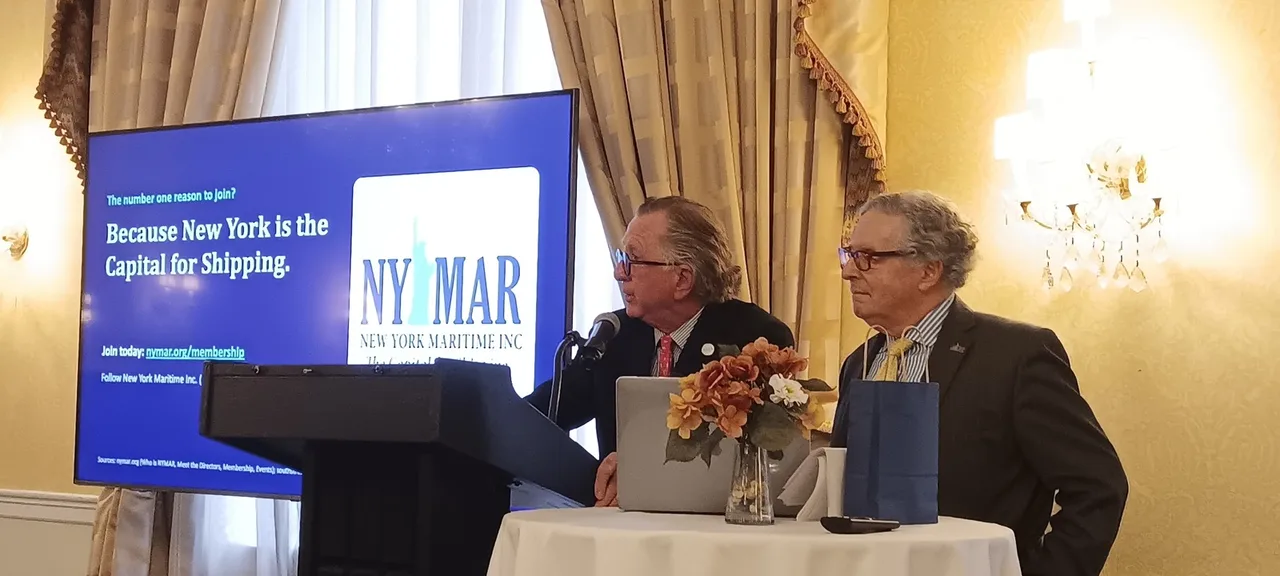
The initiative was highlighted at a recent luncheon organized by the Society of Maritime Arbitrators (SMA) in Midtown Manhattan, New York. The meeting brought together experienced maritime professionals, including representatives from Protection and Indemnity (P&I) clubs and defense organizations. Collaboration and connectivity throughout the industry is important, said IAMC President Peter Shaerf.
In addition to his work at the IAMC, Shaerf also heads AMA Capital Partners and New York Maritime (NYMAR), an organization that connects lawyers, financial institutions, and maritime service providers. The luncheon also attracted members of the Propeller Club of the Port of New York and New Jersey (PONYNJ) whose membership consists of executives working throughout the port’s vast waterfront and companies that serve visiting ships.
Sharing Information and Investment Opportunities
The discussion also included investment opportunities amid record high tanker charter rates and asset values. “There’s a lot of interest from outsiders that can be a red flag when people who have little to do with shipping start asking about tanker rates,” said a US industry insider representing a UK-based institution in New York during the Q&A session.
“There is an increasing need for reliable data on the industry,” Shaerf said. “The organization is getting a lot of calls from different parties looking for numbers, especially in this market,” he said. He believes the interest is because NYMAR is a synergy creator and helps companies to navigate the maritime industry.
One of the reasons for NYMAR’s founding was in response to Maritime London, which was founded in 2001. Shaerf, who headed NYMAR in the years after it was founded, also talked about the organization’s connection to public policy. With the US midterm elections three weeks after the mid-October luncheon, political lobbying was not normally on NYMAR’s radar but it might be in the future, he said.
The organization’s main purpose is to give maritime professionals in New York the opportunity to network, share knowledge and build business relationships. In addition to NYMAR’s strong growth, the association also wants to work more closely with other industry groups, including the local chapter of the Propeller Club, to develop closer working relationships.
Another huge advantage for maritime companies doing business in New York is its proximity to the capital markets. The city’s appeal as a hub for maritime commercial activity is bolstered by access to financing and a network of specialist professionals and service providers.
IAMC aims to bring together over 250 maritime clusters
Then the conversation turned toward the broader ambitions of the International Association of Maritime Clusters. There are more than 250 maritime clusters in the world, Shaerf says, ranging from relatively small communities to large, well established networks. A lot of people are now paying attention to maritime technology.
The IAMC is meant to connect these various groups through increased networking, connectivity and cooperation. Its approach echoes NYMAR’s goals in New York, but on a global level, bringing together maritime communities that might otherwise be isolated from each other.
The association aims to enable clusters to interact with one another to give businesses the opportunity to share information, create partnerships and access a wider pool of industry expertise.
Cargo Growth Outpaces Ports’ Capacity to Keep Up
The New York example can provide lessons for other US ports looking to consolidate their commercial networks and attract maritime business. The cargo throughput and traffic profile for some ports are similar to the Port of New York and New Jersey’s, while other ports are seeing changes in international trade flows influenced by tariff-related changes and disruptions related to conflicts.
These developments can create new opportunities for ports and businesses located around them. The challenge is to transform the momentary surges of activity into more continuous and regular streams of cargo.
Closer ties between maritime clusters, port related businesses, financial institutions and service providers could help ports to react better to changing market conditions. NYMAR and the IAMC have experienced how networking and information exchange can help this process, especially when the industry is facing changing trade patterns and uncertain geopolitical circumstances.
At the end of the day it’s not just a professional networking question that brings maritime communities closer together. It can also help companies to identify opportunities, negotiate complex markets and develop the relationships required to enable long term growth across the global shipping industry.