




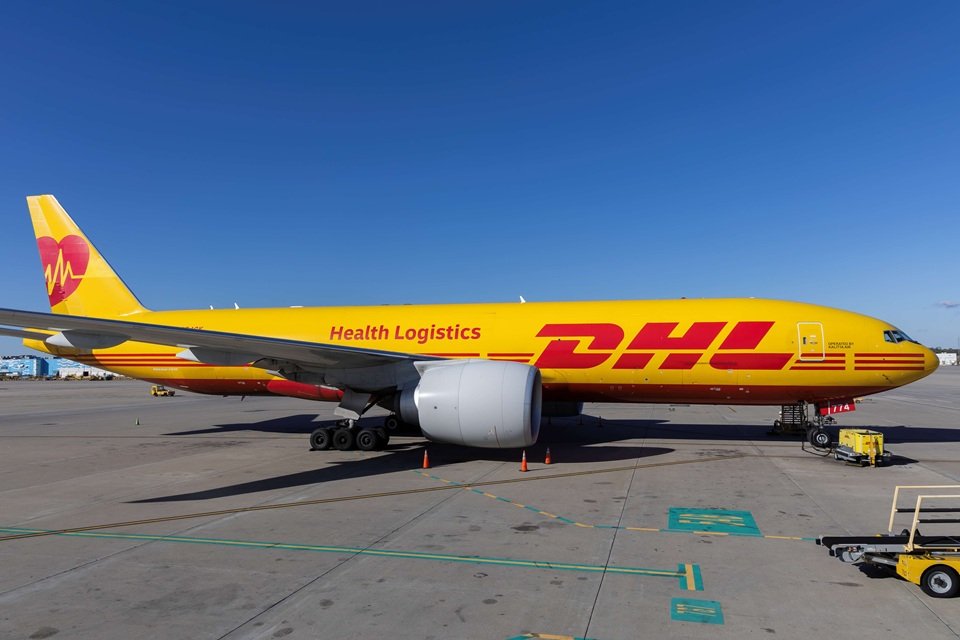
DHL expands healthcare cold chain network
DHL Global Forwarding is expanding its healthcare airfreight network to better link North America, Europe and key pharmaceutical markets in Asia. The initiative establishes six two-way corridors to facilitate the movement of temperature-sensitive healthcare products and offer shippers more routing options.
DHL’s expansion includes three new routes from its hub in Cincinnati (CVG) to Singapore (SIN), Tokyo Narita (NRT) and Seoul Incheon (ICN), according to a press release issued on October 12. These linkages aim to improve access for pharmaceutical companies to temperature-controlled air freight capacity, offering greater consistency in transit times and reduced supply chain risks.
The new corridors are part of the DHL Health Logistics Cold Chain Network, a global network of dedicated routes and specialized infrastructure for the transport of healthcare products in a controlled temperature environment.
Managing increased demand for pharmaceutical shipments to Asia
“The expansion is in response to customer demand for more reliable links between pharmaceutical manufacturing and distribution markets,” DHL Freight spokesperson Laura Lehnen told Supply Chain Dive.
The network uses specific handling procedures and infrastructure for moving various temperature sensitive products such as pharmaceuticals, biologics, vaccines, clinical trial materials and other healthcare products. Operations are designed to provide safe transportation and to comply with all applicable healthcare logistics and regulations.
DHL has also strengthened its cold chain connections this year with the launch of a Brussels (BRU)-Cincinnati (CVG) route in February 2026.
Demand patterns also shape capacity allocation across the extended network. “We see stronger demand for shipments from pharmaceutical manufacturing hubs in North America and Europe to Asia at this time,” Lehnen said. As such, early volume expectations are for inbound shipments to Asia with the bulk of available air freight capacity dedicated to Asia-Pacific trade flows.
The company intends to stay flexible in either direction as customer needs and manufacturing and distribution networks evolve.
“This means DHL can serve both directions of trade as customer demand changes and manufacturing and distribution patterns continue to change,” said Lehnen.
Boeing 777 aircraft for temperature-controlled transport
Most routes are operated by DHL’s Boeing 777 fleet. The company says the planes have three separate compartments with individual temperature controls, allowing it to carry shipments with different temperature requirements.
Cincinnati is a critical hub in the expanded network.” DHL views the airport as one of its established healthcare gateways, providing temperature-controlled storage and handling, facilities that meet Good Distribution Practice (GDP) requirements, and specialized equipment for healthcare logistics, Lehnen explained.
The company said in its announcement that in addition to its operations at Cincinnati/Northern Kentucky International Airport (CVG), DHL also has a life sciences and healthcare-specific site in Indianapolis.
more investment in Cincinnati’s healthcare logistics infrastructure
DHL also has plans for additional investments at CVG to enhance temperature control throughout the handling process.
The company plans to introduce five temperature-controlled dollies soon enough to move healthcare shipments between aircraft and airport facilities. The equipment is designed to protect temperature-sensitive cargo from extreme weather conditions.
Further development is planned for 2027, when DHL expects to begin operating a new airside facility for temperature-controlled storage of inbound and outbound Unit Load Devices (ULDs). The facility is near aircraft operations and will help to maintain the required temperature conditions while the shipment is on the ground.
The company is also investing in a new off airport facility. Its designed capabilities are temperature controlled storage and handling, ULD build-up and breakdown operations, and pallet storage. The two projects aim to improve DHL’s infrastructure for pharmaceutical and life sciences shipments.
Healthcare logistics battle intensifies
The expansion comes as other logistics providers ramp up their focus on healthcare and pharmaceutical supply chains, DHL said.
In June 2026, for example, FedEx established a dedicated organization to support healthcare and pharmaceutical logistics, building on its work in the life sciences sector.
In 2025, the company also launched a dedicated air cargo service for healthcare shipments between Dublin, Ireland (DUB) and Indianapolis (IND).
This is because more investment is being made in specialized logistics capabilities as pharmaceutical companies look for reliable air freight connections, controlled handling environments and infrastructure to support ever more complex global distribution networks.