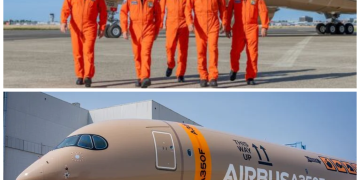




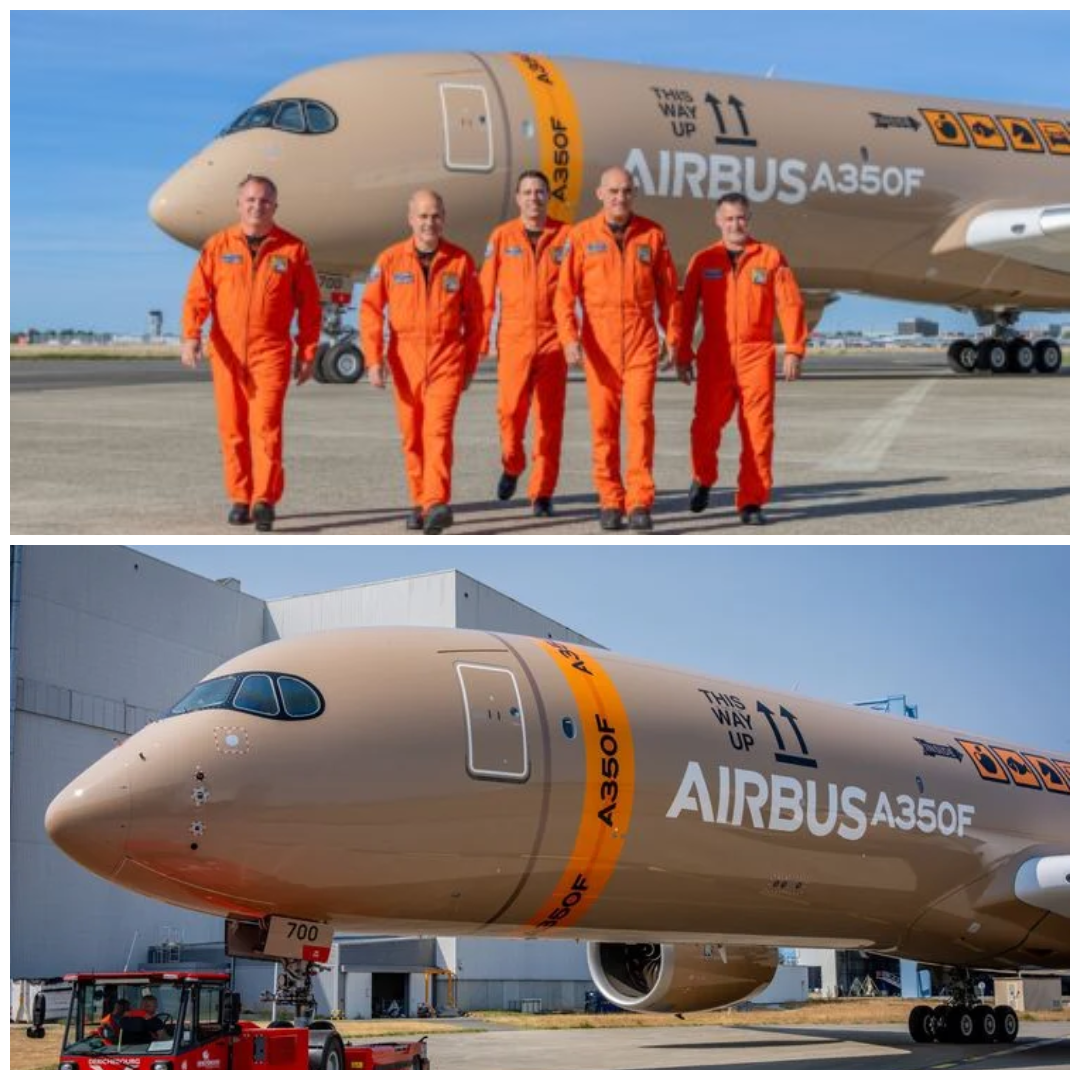
The Airbus A350F has completed its first flight, marking a major milestone for the manufacturer as its new-generation freighter moves from development into an extensive flight-test campaign.
The aircraft departed Airbus’ facility in Toulouse, France, at 10:30am CET for a programme covering taxiing, flight, landing and a range of technical assessments before returning to the airport.
The first flight comes after five years of detailed development work, including component testing and demonstrator programmes, and represents a significant step towards bringing the A350F into service.
“For us, this really represents the culmination of years of activity, going back to the launch and even before that,” said Crawford Hamilton, Head of Freighter Marketing at Airbus. He explained that the programme required Airbus to secure support from multiple internal stakeholders, including its finance teams, before the investment could move ahead.
“It has been a huge team effort, bringing together engineering, programme teams, production teams, marketing and many others across Airbus,” Hamilton said.
The programme has also involved extensive engagement with the air freight sector. Airbus has worked to raise awareness of the aircraft and strengthen relationships across the freight community throughout the development process.
“For those closely involved, you know it’s a village – a small community within the much larger aviation world,” Hamilton added. “It’s a great group of people, and meeting them, hearing their stories and learning about their experiences has been incredibly rewarding.”
The A350F has been developed specifically as a large freighter for modern air cargo operations, rather than as a passenger aircraft destined to be converted later in its life.
Based on the A350 family, the aircraft combines the platform’s aerodynamic characteristics and advanced materials with Rolls-Royce Trent XWB-97 engines, while incorporating a fuselage and cargo systems specifically optimised for freight operations.
Airbus expects the freighter to offer a payload capacity of up to 111 tonnes and a range of up to 4,700 nautical miles, giving it the ability to serve long-haul international cargo markets.
The aircraft is being introduced into a freighter market that continues to depend heavily on converted passenger aircraft alongside older purpose-built freighters. Airbus sees newer-generation aircraft as an increasingly important part of the sector’s evolution, particularly as operators face an ageing fleet and seek improvements in fuel consumption and CO2 emissions compared with previous-generation aircraft.
The A350F also incorporates a dedicated crew area positioned behind the flight deck, featuring large windows on both sides of the aircraft. The configuration is particularly relevant to flights where accompanying personnel may need to be accommodated onboard.
Another specific feature is the aircraft’s ventilation arrangement. Rather than relying solely on recirculated air from the cargo compartment, the dedicated crew area provides access to fresh air.
This configuration means that people accompanying live animals can remain separated from the cargo environment in terms of air circulation, an important consideration during long-distance animal transportation.
The A350F also differs structurally from the passenger aircraft in the A350 family because of its specific freighter configuration.
According to Laurent Bussiere, Lead Flight Test Engineer for the A350F programme, the aircraft combines the forward fuselage length of an A350-900 with the rear fuselage length of an A350-1000, while also using A350-1000 wings.
That combination produces a distinct aerodynamic configuration and introduces different characteristics for both flight control and ground operations.
“The A350F presents unique dimensions due to the freighter’s specific fuselage configuration – which is equivalent to an A350-900 forward fuselage [length] mated to an A350-1000 rear fuselage [length] and A350-1000 wings,” Bussiere said.
“In turn, this creates a new aerodynamic model which affects flight control, while the new geometry for the landing gear affects ground maneuvering.”
Bussiere stressed that the aircraft cannot simply be treated as either an A350-900 or an A350-1000.
“It’s not an A350-1000 and it’s not an A350-900, but rather it’s between both. So we need to look at the behavior of the whole system with this unique model,” he said.
For that reason, Airbus has been using development simulator sessions to prepare its teams for the aircraft’s first flight and the wider test programme that now follows.
The manufacturer is planning approximately 400 flight-test hours as it evaluates the A350F’s overall behaviour, systems and performance across the different stages of the campaign.
With its first flight now completed, the A350F has moved into the next phase of its development, putting Airbus’ dedicated freighter design through real-world testing while validating the aircraft’s distinctive aerodynamic and landing-gear configuration.