



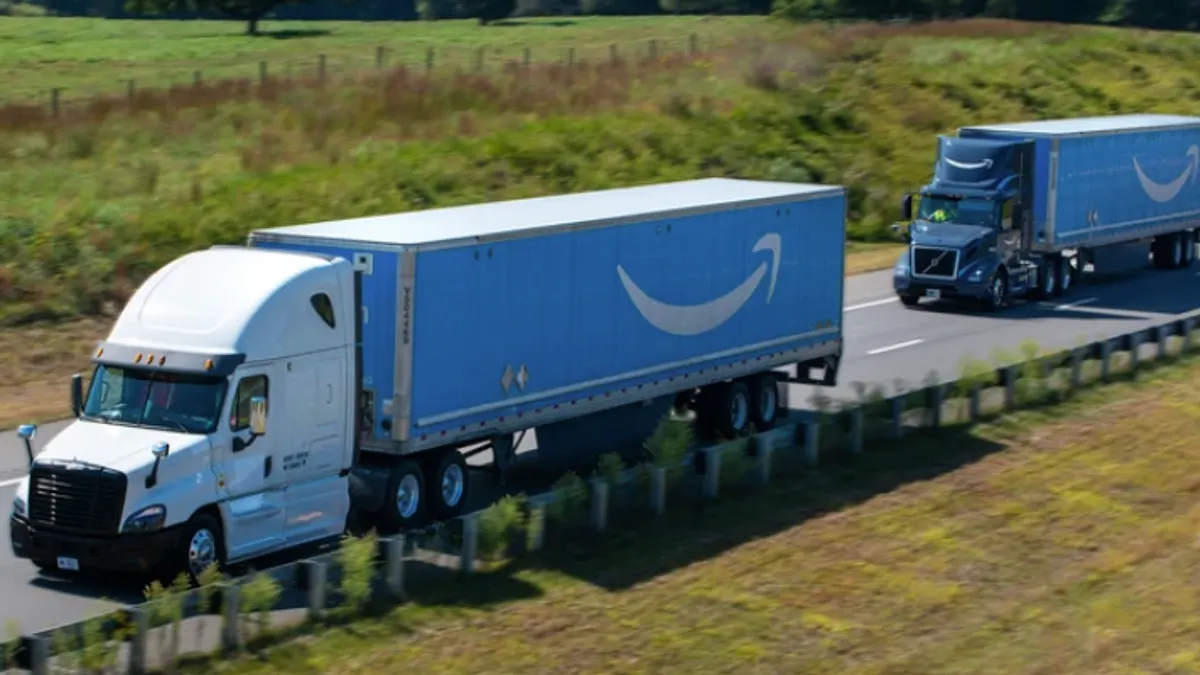
Amazon is expanding its logistics offering for sellers of heavy and bulky products, rolling out a set of new shipping and fulfillment capabilities that will help cut delivery costs and speed up service.
Among new features to come, Ripley MacDonald, vise president of product and software development at Amazon Supply Chain Services, said last week at the Amazon Accelerate 2026 conference that sellers will soon be able to purchase less-than-truckload (LTL) shipping labels for heavy and bulky shipments through Amazon Buy Shipping.
Sellers will be able to buy LTL labels using Amazon Buy Shipping, Amazon’s label purchasing and printing service, starting in October. The option will be available in Seller Central and third-party shipping software.
“When you use LTL through Buy Shipping you’re able to access the special negotiated rates that Amazon has secured and you’re protected against late deliveries,” MacDonald said. “That means lower label costs, fewer disputes eating away at your margins and account health.”
Amazon also preparing another price change for bulky delivery segment. The company will introduce regional delivery pricing for heavy and bulky products in early 2027.
“You can have fees that are region-based rather than a flat rate everyplace. So you can offer free shipping when it makes sense.” MacDonald said.
The company is also working on local delivery options for larger products. Amazon will link sellers of large and bulky products to local carriers that can deliver same or next day within 100 miles of the seller’s warehouse, MacDonald said.
Amazon has also announced a new program called Amazon Seller Flex that will allow sellers to fulfilll heavy and bulky orders from their own warehouses (by invitation only).
With the model, sellers pick, pack and hand over the large order and Amazon does the rest of the logistics operations. “That includes warehouse coordinated pickups, in-home delivery, product placement, installation, customer service and returns,” said MacDonald.
Customers will also get a more accurate delivery promise. “And your customers see a specific delivery date at checkout versus a range,” MacDonald said.
According to MacDonald, program sellers are generating more than 2.5 times the sales of merchants that handle shipping for their heavy and bulky orders themselves.
Amazon is pushing for quicker delivery in one of its “fastest-growing merchant categories,” MacDonald said, with the new services coming as part of that effort. He said, “The goal is to allow sellers to ship heavy and bulky orders at a lower cost and also reduce delivery times.
But Amazon isn’t the only retailer ramping up its oversized product capabilities as consumer demand grows.
Costco said its delivery business, Costco Logistics, for large and bulky merchandise such as appliances and furniture, increased in 2024.
Online furniture retailer Wayfair has also made an investment in its delivery network. The company also expanded its CastleGate logistics service in 2025, marketing it as a third-party logistics option tailored to big and bulky home goods.
Meanwhile, this year The Home Depot has begun tracking big-ticket items such as lumber and appliances in real time. That is driven by handheld delivery devices used by drivers at Home Depot.
With these investments across the retail sector, large-item delivery is becoming an increasing part of the logistics competition, as retailers seek to blend more predictable delivery dates, faster service and lower fulfillment costs for oversized shipments.