



A wave of tropical storms across Asia is creating significant disruption at Chinese ports, with delays now affecting an estimated 2.4 million TEU of container capacity and prompting some major shipping lines to reconsider their use of the Red Sea.
The latest disruption is expected to spread along China’s eastern coastline, from Shanghai and Ningbo to ports in Guangdong. Terminal operations were suspended on 7 and 8 August, and industry analysts expect it could take several weeks for the accumulated backlog to clear.
Typhoon Dolphin, which struck China’s eastern coast on 9 August, was the third and strongest tropical storm to hit the country in just five weeks, according to Linerlytica. The storm forced vessels to seek shelter away from its path, further delaying container operations.
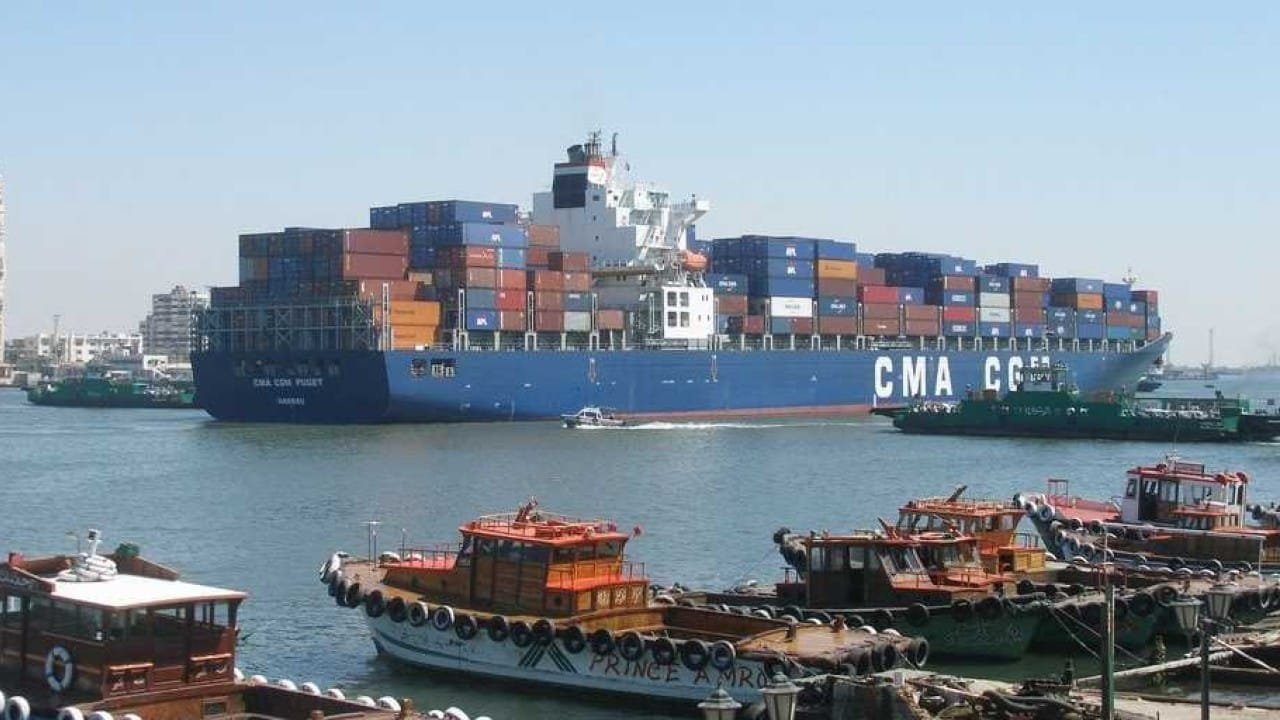
The congestion has already begun affecting vessel availability on major trade lanes. Linerlytica reported that Maersk and CMA CGM are looking to release additional capacity by returning three service loops through the Bab el Mandeb, despite the continuing security risks associated with Houthi attacks. Cosco Shipping is also expected to join the two carriers.
According to Linerlytica’s weekly market report, the move is aimed at addressing shortages of vessels and container equipment that have been intensified by prolonged congestion across North Asia and Europe.
However, the relationship between Asian port congestion and the decision to restore Red Sea services remains uncertain. Peter Sand, Senior Analyst at Xeneta, noted that transits through the Bab el Mandeb had already declined in recent weeks and questioned whether the latest rerouting was directly linked to congestion in Asia.
Sand acknowledged that additional services through the Suez Canal could make sense if congestion were the driver, but warned that such a move would not provide an immediate solution and said he would hesitate to directly connect the two developments.
Xeneta also noted that the size of the Asian backlog should be considered alongside the ability of major ports to recover quickly. Shanghai, for example, has demonstrated the capacity to handle more than 200,000 container moves in a single day.
Cosco Shipping could provide additional capacity on the Suez route by expanding its Red Sea and Mediterranean services through space available on its multi-purpose vessels. The Chinese carrier has 20 such vessels, each capable of carrying up to 3,600 TEU, already operating on these trade lanes.
Despite the tightening of available vessel capacity caused by congestion in Asia, European spot rates have continued to weaken. Linerlytica said softer cargo demand has undermined expectations of a mid-August rate increase.
Spot rates from Asia to North Europe are now estimated at between $4,300 and $4,900 per FEU, with Linerlytica describing the market as having a “downward bias”.
Xeneta’s data points to a similar level for North European spot rates, while Mediterranean cargo is currently around $5,800 per FEU. Both markets are expected to remain broadly flat through mid-to-late August after losing ground at the beginning of the month.
The situation leaves carriers balancing two competing pressures: recovering delayed capacity from Asian ports while responding to weaker demand and falling spot rates in the European market. Whether the return of more services through the Red Sea will provide meaningful relief will depend on how quickly Asian terminals clear their accumulated backlog and how trade demand develops in the coming weeks.