


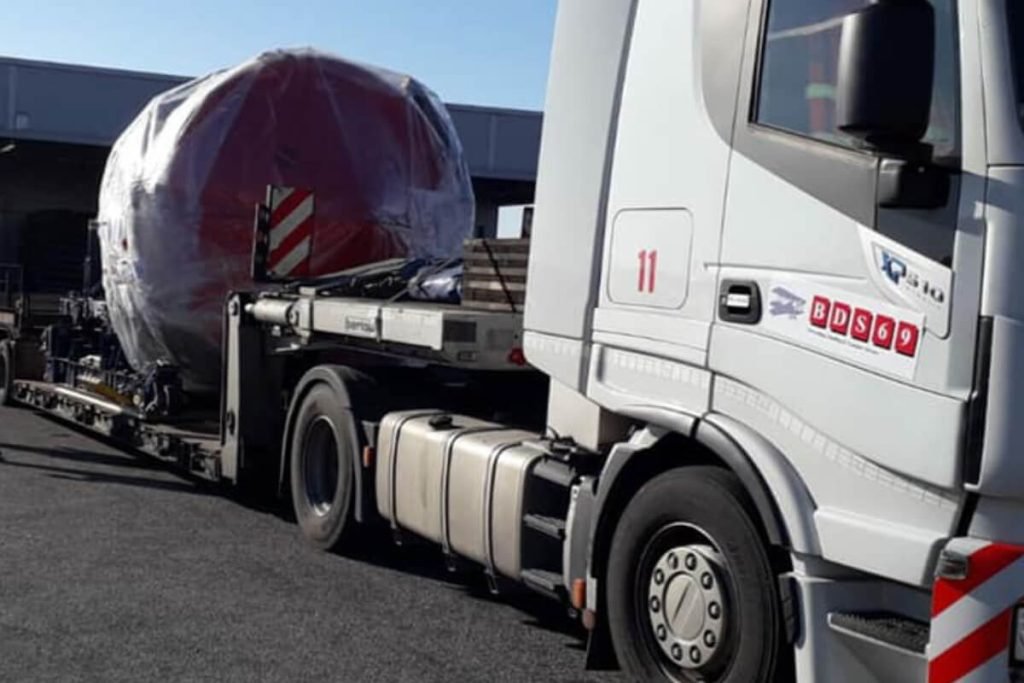
In today’s logistics market, size alone is no longer enough to define relevance. What increasingly matters is the ability to respond quickly, manage complexity and deliver tailor-made execution when cargo falls outside standard patterns. That is precisely the space where Italy-based B.D.S. 69 SRL, led by managing director Anthony Bianchi, is positioning itself. The company describes itself as an independent shipping, transport and airport assistance specialist, founded by sector professionals with more than 30 years of experience, with operations running 24/7, 365 days a year. Its footprint is strategically built around Rome Fiumicino and Milan Malpensa, the two airports that give it direct access to the country’s most important international airfreight gateways. 
That positioning is not accidental. Public information on B.D.S. 69 shows a company focused on non-standard, urgent and operationally sensitive flows, rather than commoditised forwarding. Its published areas of specialisation include AOG and aeronautical spare parts, ADR/DGR materials excluding classes 1 and 7, temperature-controlled perishables, dedicated critical-delivery vehicles, and on-board courier services. The company also highlights integrated capabilities spanning import-export operations, transport, customs, warehousing, cold storage, dangerous goods handling, customs assistance and airport-linked logistics support. For a market increasingly shaped by disruption, these are not side services; they are the core capabilities that distinguish operational specialists from generalists. 
B.D.S. 69’s model also reflects a deliberate service philosophy. On its own positioning pages, the company stresses continuity of contact, saying customers deal with the same operator from initial request through shipment completion. It presents this as part of a wider value proposition built around speed, reliability, confidentiality, flexibility and proximity, supported by a stated mission to provide tailor-made logistics solutions for Italy and the world with a strong quality-to-price ratio. That service-driven approach is especially relevant in sectors where delays, handover failures or weak communication can have commercial consequences far beyond transport cost alone. 
The broader Italian market makes that niche even more meaningful. According to Fedespedi, Italy’s GDP rose 0.7% in the first ten months of 2025, while exports increased 3.5% and exports to the United States jumped 9.1%, driven in part by a 62.7% surge in pharmaceuticals. Those numbers point to an export base that remains active and internationally exposed, even as geopolitical and trade tensions continue to complicate global flows. For operators active in airport-driven, time-critical or regulated cargo, this is exactly the kind of environment where specialised handling gains value. 
Italy’s transport infrastructure also reinforces the strategic logic behind B.D.S. 69’s location choices. Rome Fiumicino handled 232,412 tonnes of cargo in 2025, while industry reporting indicates that Fiumicino and Malpensa together account for roughly 81% of Italy’s air cargo traffic, confirming how concentrated and gateway-driven the country’s airfreight structure remains. At the same time, Italian airports moved about 102,000 tonnes of cargo in April 2025 alone, according to Assaeroporti traffic reporting. For a company with warehousing and airport-linked capabilities in both Rome and Milan, this creates natural relevance in a market where control of the main nodes matters as much as national reach. 
The maritime side of the Italian system tells a similar story about why agility matters. Assoporti and SRM reported that Italian ports handled almost 250 million tonnes of goods in the first half of 2025, while their logistics outlook notes that geopolitics and tariff policies are actively reshaping routes, volumes and trade geography. In parallel, Fedespedi’s outlook underlines that uncertainty has become a structural feature of international freight rather than a temporary exception. In that context, logistics providers able to bridge airport operations, customs knowledge, special cargo handling and responsive road execution are well placed to capture higher-value flows. 
This is where B.D.S. 69’s real positioning becomes clear. It is not trying to compete as a mass-market operator. Its public profile suggests a company built for shipments where urgency, compliance, handling integrity and direct operational control matter more than scale rhetoric. Its partner references on the website, including airport operators and logistics brands, also reinforce that image of a business embedded in airport and specialist logistics ecosystems. While no public financial data appears readily available, the operational signals are clear: B.D.S. 69 is positioning itself as a responsive Italian specialist for customers who cannot afford standard treatment for non-standard cargo. 
In the current market, that may be one of the most relevant positions to hold. Global supply chains are not simply looking for capacity; they are looking for certainty under pressure. Italy remains a key export and logistics platform in Europe, but the operating environment is being shaped by airspace constraints, tariff risk, compliance pressure, modal volatility and tighter customer expectations. In such a market, companies that combine local control with specialised execution can punch above their weight. B.D.S. 69 appears to be building exactly in that direction.





