Land Nov 9, 2026
BNSF boosts third-quarter earnings by 19.3% on stronger rail freight activity
Higher freight volumes and improved operational efficiency lifted BNSF’s quarterly net earnings to $1.73 billion, while revenue growth outpaced shipment increases despite rising fuel expenses.
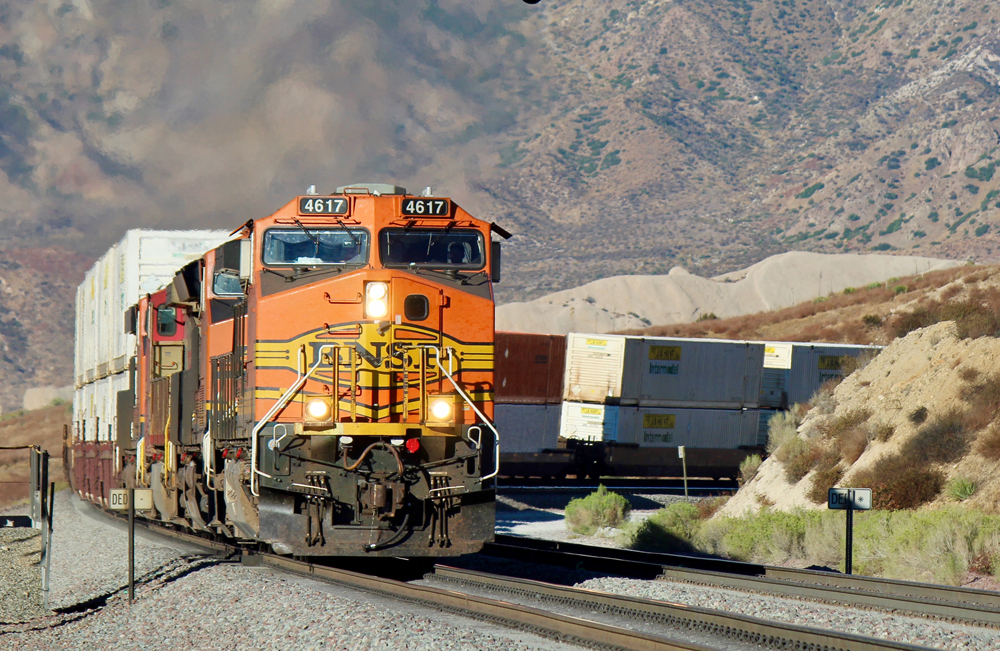
BNSF’s third-quarter 2026 financial performance was stronger, with net earnings up 19.3% to $1.73 billion, thanks to higher freight volumes and better operating efficiency. Higher fuel costs were absorbed by the railroad, which posted stronger revenue and profitability.
The results compare with net earnings of $1.45 billion for the same quarter in 2025, parent company Berkshire Hathaway (NYSE: BRK-B) said. Railroad operating revenue increased 14.7% year over year to $6.87 billion, while carload and unit volumes increased 3.9% for the three months ended September 30.
The latest numbers also cement the railroad’s strong performance in 2026. BNSF generated net earnings of $4.66 billion in the first nine months of the year, up 13% from $4.13 billion reported in the comparable period of 2025. Improved freight activity and operational efficiencies were the main drivers of the gains, but they were partially offset by higher fuel costs, Berkshire Hathaway said.
Higher costs, but operating profitability improves
BNSF's railroad operating earnings rose to $2.48 billion in the third quarter, up from $2.15 billion a year ago. Operating expenses also rose to $4.39 billion from $3.84 billion.
However, the increase in expenses was behind the additional revenues realized during the quarter, allowing the railroad to improve its operating profitability.
BNSF’s pretax earnings after interest expenses and other net revenues and expenses were $2.27 billion, up from $1.91 billion in the third quarter of 2025.
Interest expense moved in the opposite direction, dropping slightly to $273 million from $279 million.
Taxes helped the bottom line a little bit as well. BNSF's effective income tax rate was 23.7% as compared to 24.2% in the third quarter last year. Total income tax expenses rose to $537 million from $463 million, reflecting the increased level of pretax earnings.
Coal traffic drops but revenue stays level
Coal remained BNSF’s weakest business within its freight operations in the quarter. Shipments fell 8.4 percent from the third quarter of 2025, but operating revenue from coal rose slightly to about $800 million.
Higher average revenue per car or unit helped offset the volume decline, the railroad said. The segment’s financial performance was mainly driven by higher fuel surcharge revenue and improved yields.
The same trend was observed in the first nine months of 2026. Coal volumes fell 6.3% but operating revenue from coal nonetheless crept up to about $2.3 billion.
The numbers show BNSF’s ability to keep growing revenues even as shipment volumes fall in some freight segments.
Nine months: revenue growth outpacing freight volumes
The railroad’s overall performance reveals a growing gap between revenue growth and shipment growth.
BNSF’s operating revenue from rail rose 11.5% to $19.39 billion in the first nine months of the year. Carload and unit volumes rose 4.2% in the same period.
Railroad operating revenues were higher, $6.80 billion versus $5.98 billion in the first nine months of 2025.
The revenue growth was greater than the volume growth, showing that increased average revenue per shipment coupled with better operational performance were important drivers of the railroad's improved financial results.
BNSF gives Berkshire Hathaway more support
The gains came in a more challenging quarter for BNSF’s parent company. Berkshire Hathaway said total operating earnings for the quarter were $12.71 billion, compared with $13.49 billion in the third quarter of 2025.
In this setting, BNSF was responsible for more of the group's operational results. Its quarterly contribution rose to $1.73 billion from $1.45 billion a year earlier, providing an important source of support as Berkshire Hathaway’s overall operating earnings weakened.
Why it’s important: BNSF’s third quarter results underscore the importance of freight volume growth, revenue management and operating efficiency in overcoming higher fuel costs and maintaining profitability. The railroad’s ability to grow earnings faster than shipment volumes also signals its stronger revenue generation, making it a more important contributor to Berkshire Hathaway’s financial performance during a quarter when group-wide operating earnings fell.
END OF REPORT