



BuildForce Canada expects British Columbia’s construction industry to experience slower growth over the next decade, with residential construction facing sustained declines while non-residential activity remains supported in the short term by major infrastructure and institutional projects.
According to the organization’s latest Construction and Maintenance Looking Forward reports, covering the period from 2026 to 2035, both residential and non-residential construction are projected to ease over time. However, the two sectors are expected to follow different paths.
The residential market is forecast to weaken across most of the decade as demand for new housing declines. BuildForce notes that housing starts, which reached a peak in 2023 due to elevated international migration, are expected to fall sharply during the early years of the forecast before stabilizing below historical averages between 2029 and 2033. Single-detached housing is expected to experience the largest decline.
As a result, residential construction employment is projected to fall by 13% by 2035 compared with 2025 levels, with job losses concentrated in new-home construction.
By contrast, non-residential construction is entering the forecast period from a position of strength. Investment is expected to continue rising before reaching a peak in 2027, supported by major engineering, infrastructure and institutional, commercial and industrial (ICI) projects.
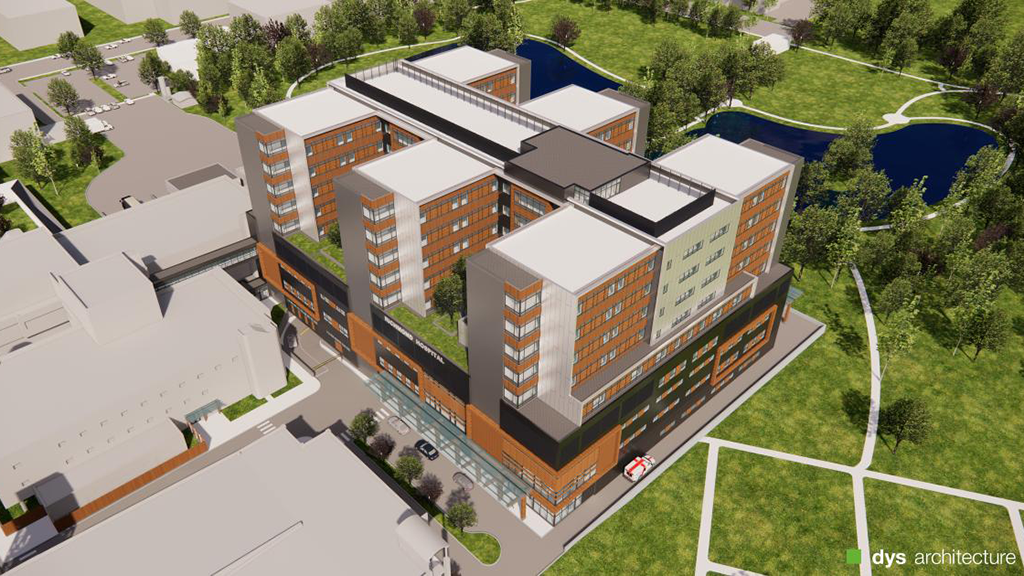
Among the projects contributing to near-term growth are the Richmond Hospital expansion and the construction of the new acute care tower at the University Hospital of Northern British Columbia. Mining, energy and infrastructure developments, including four federally backed nation-building projects, are also expected to drive activity before investment gradually moderates in the early 2030s.
Despite that slowdown, non-residential construction employment is forecast to be 5% higher in 2035 than in 2025, with the strongest gains expected in ICI building construction and non-residential maintenance.
BuildForce Executive Director Irwin Bess noted that the forecast does not include numerous proposed resource development projects that have yet to move forward. If approved, those projects could create additional demand for construction workers and place further pressure on labour availability in the non-residential sector.
He also did not view the forecast decline in residential construction as a crash in the housing market, but as a normalization of what has been a very robust market over the last few years.
The supply of labour continues to be a major challenge for the province. BuildForce projects that B.C.’s construction industry will have to add 48,200 workers to its workforce between now and 2035. At the same time, an estimated 46,700 workers (or 22% of the current construction workforce) are projected to retire in this period.
Without stronger recruitment efforts, the province could face a shortage of approximately 7,400 construction workers by 2035.
British Columbia Construction Association President Chris Atchison said the expected increase in non-residential construction over the next few years makes workforce development a priority. He added that the industry should continue attracting new skilled trades workers while creating opportunities for workers affected by the slowdown in residential construction to transition into non-residential projects.
Regional outlook
Lower Mainland
The Lower Mainland, which includes Greater Vancouver, the Fraser Valley, the Sunshine Coast, Squamish and Lillooet, recorded overall construction growth in 2025, driven primarily by stronger non-residential activity alongside modest residential gains.
Looking ahead, both sectors are expected to slow. Residential construction employment is projected to decline by 15% by 2035, while non-residential employment is expected to decrease by 3% over the same period.
Thompson-Okanagan
The Thompson-Okanagan region, newly included in this year’s forecast and covering communities such as Kelowna, Kamloops, Penticton, Salmon Arm, Vernon, Golden and Revelstoke, experienced lower construction investment during 2025.
Residential activity is expected to keep falling, which would lead to an 11% decrease in residential employment by 2035. But the growth in ICI construction and non-residential maintenance should boost non-residential employment by 6%, somewhat offsetting the residential slowdown.
Vancouver Island Total construction investment across Vancouver Island, including the Capital Region, Cowichan Valley, Nanaimo, Alberni-Clayoquot, Strathcona, Comox Valley, Powell River, Mount Waddington and the Central Coast, is forecast to trend lower through 2035. Declines are mostly concentrated in residential construction.
Employment in residential construction is forecast to fall by 15% while employment in non-residential construction is expected to be relatively flat. Gains in ICI construction and maintenance activities are forecast to offset weaker engineering construction, helping to sustain overall employment levels in the non-residential sector.