Logistic Nov 9, 2026
Central Asia is becoming an alternative Asia-Europe cargo route amid Middle East disruption
Shippers are taking a closer look at Central Asian routes. Air freight rates have climbed, the Middle Eastern hubs are still unsettled, and space gets tight every peak season. Still, patchy infrastructure, costly fuel and certification hurdles keep these corridors from catching on more widely.
The disruption of traditional air cargo routes through the Middle East has put Central Asia in the spotlight as an alternative for shipments moving between Asia and Europe. With peak shipping season on the horizon, airlines and freight forwarders are looking for alternative routes as rising fuel costs, limited airspace and reduced capacity disrupt established supply chains.
Yet Central Asia will not become a major transit hub on the basis of geography alone. Issues regarding operational reliability, capacity availability, customs clearance and overall transportation costs remain open.
Imagine a pallet of electronic equipment, shipped from Zhengzhou, China, to a European destination and required to arrive before Christmas. In normal circumstances a freight forwarder would choose the fastest available route. But this year, every decision requires trade-offs.
Air freight is substantially more expensive, with jet fuel more than double what it was a year ago and the BAI00 global index up 26.4%. Even as ships are slowly coming back to the Suez Canal, shipping is still slower. Meanwhile, Middle Eastern aviation hubs, which used to be vital links between Asia, Europe, Africa and the Americas, are still reeling from months of conflict.
Against this backdrop, Central Asian airports are establishing themselves as possible alternatives. Whether they can take on a meaningful amount of redirected cargo is an open question.
A peak season driven by specific industries rather than broad consumer demand
The current peak season is developing differently from previous years. Although freight rates have already exceeded levels recorded during the two preceding peak seasons, demand is not increasing uniformly across all markets.
Neil Wilson, Editor at TAC Index, notes that the traditional acceleration ahead of Thanksgiving in the United States and Christmas in Europe has barely started. Nevertheless, the BAI00 global index is already trading above the levels recorded during the previous two peak periods.
The strength of the market is largely concentrated in a handful of sectors rather than being driven by widespread consumer demand.
Yngve Ruud, EVP Air Logistics at Kuehne+Nagel, identifies artificial intelligence infrastructure, semiconductors, high-tech products, pharmaceuticals and perishables as the principal sources of demand. These industries are generating specific trade flows that are placing considerable pressure on selected air cargo routes.
Data-centre equipment originating in Taiwan, Vietnam and Thailand is particularly important for transpacific transportation. Kuehne+Nagel currently operates 14 weekly flights between Vietnam and the United States to serve this demand.
The situation is equally challenging on certain Asian export routes. Dimerco's November Asia Pacific Freight Report describes the Taiwan–United States air cargo market as extremely tight, recommending that shippers secure bookings one to two weeks in advance.
Europe, however, is another story Wilson said volumes on major Asia-Europe routes, including shipments out of Hong Kong, have fallen an estimated 30% since July.
The reduction is being made as the EU has scrapped its old de minimis exemption on small parcels and introduced a temporary flat-rate customs duty. The change has hit e-commerce shipments, which previously generated significant cargo volumes on Europe-bound flights.
Lower demand might normally mean more affordable air freight. In some markets, it’s already happening. Air freight rates between China and Europe dropped 7% week on week as demand weakened faster than airlines reduced freighter capacity, Dimerco said.
But the market has not been able to open up much either, because of the reduction in available aircraft. Airlines have re-routed freighters to more profitable lanes and retired older, fuel-guzzling planes, tightening the amount of capacity available even as demand weakens.
There are still some very competitive routes. Bookings are strong from East China to Europe in mid-November, says Dimerco, with shipments of consumer electronics and fast-fashion competing for limited space.
Winter flight schedules, which came into effect on 25 October, also cut available belly capacity just as Black Friday approached, adding to the pressure on the market.
Kathy Liu, VP Global Sales and Marketing of Dimerco Express Group, doesn’t see any major relief before year-end.
There is no new freighter capacity coming in before the end of the year, so rates are more likely to stay high than fall,” she says. Even relatively quiet routes to Europe could tighten quickly as Christmas inventory replenishment ramps up and fuel costs go up.
Wilson also flags another possible source of pressure – big tech companies spending a lot of money on data centres. Sources say many e-commerce players booked capacity early, but some hyperscalers have not yet finalised their bookings. Their needs could drive freight rates much higher at the year-end.
So even on routes with relatively weak demand, expensive and limited capacity is a concern. For freight forwarders, it is becoming ever harder to rely just on the traditional Asia–Europe links.
Middle Eastern aviation hubs are recovering, but the network remains vulnerable
For many years, Middle Eastern airports have served as essential transfer points for international air cargo. Their geographical position and extensive airline networks have allowed them to connect markets across Asia, Europe, Africa and the Americas through both dedicated freighters and passenger aircraft.
Disruptions to airspace in the region therefore affect much more than shipments travelling directly to or from the Middle East. Any interruption to these hubs can have consequences across multiple international trade routes.
Judah Levine, Head of Research at Freightos, traces the latest disruption back to March, when the conflict began and the Strait of Hormuz was closed. Freight rates increased sharply before easing during April and May, although they never returned to their pre-conflict levels.
Freightos booking data indicates that activity declined during the first quarter before returning to growth in the third quarter. The major Gulf carriers experienced the most significant impact.
At the height of the disruption, approximately 18% of global aviation capacity was affected by cancellations, according to Ruud.
He explains that the crisis demonstrated how quickly available capacity can disappear when airspace restrictions coincide with disruption at major international transit hubs.
Although the recovery is progressing, normal operations have not yet been fully restored. Citing Rotate data, Ruud estimates that throughput at the principal Middle Eastern hubs has recovered to between 80% and 90% of pre-conflict levels. Regional airlines have regained approximately 90% to 100% of their previous capacity.
However, the situation remains unpredictable. Airports in Saudi Arabia have recently experienced further temporary closures, demonstrating that the regional network remains exposed to renewed disruption.
India is among the markets experiencing particularly strong consequences because a significant proportion of its export cargo traditionally travelled through Gulf hubs.
TAC Index estimates that air freight rates on routes originating in India have increased by 70% to 80% year on year. On Europe–Middle East connections, including services from Amsterdam and London, increases have reached approximately 100% or more.
Stephanie Pöhn-Helbig, Head of Region Middle East, Africa, South Asia and CIS at Lufthansa Cargo, says longer flight routings are creating additional operational complexity and redirecting cargo flows away from markets that previously depended on Middle Eastern connections.
Demand from India remains strong, particularly for pharmaceuticals and time-critical general cargo.
Lufthansa Cargo has responded by deploying additional freighter capacity on selected routes, especially those originating in India, while increasing flight frequencies under its winter schedule. The company is also planning additional freighter services between Egypt and Europe to support the seasonal movement of perishable goods.

The disruption has also encouraged freight forwarders to reconsider how they manage international transportation risks.
Kuehne+Nagel is maintaining a diversified carrier portfolio, securing capacity on strategic routes and avoiding excessive dependence on any single transit hub, according to Ruud.
The company has also relied on air-road solutions to maintain cargo movements during airport closures. In addition, it relocated its sea-air hub from Dubai to Los Angeles.
For customers, the company's recommendations depend largely on the financial consequences of delivery delays. Shippers with predictable volumes should secure capacity in advance, while those facing more volatile demand should maintain flexibility. Direct services may also justify a higher price when the cost of late delivery exceeds the additional transportation expense.
With the traditional Middle Eastern network still recovering, forwarders are increasingly considering other geographical alternatives. Central Asia is emerging as one of the most frequently discussed possibilities.
Central Asia in the limelight, but expected wave of cargo yet to arrive
Central Asia holds a strategically interesting position between China and Europe. In recent years, a number of airports in the region have invested in upgrading their infrastructure and attempting to become international logistics and cargo hubs, not just technical stopovers.
The disruption to aviation in the Middle East has strengthened the argument for developing such alternative links.
“But the market data available so far does not yet show a significant shift of cargo volumes in the region.”
After the conflict began, Levine checked Freightos data to see if Central Asian airports were experiencing a spike in activity.
The results showed no expected rise in the results. Freightos only has sporadic rate information for Central Asian hubs, and the available numbers have mostly followed overall market trends, with fuel costs still a significant factor.
Regional airlines’ booking patterns have also mirrored the industry trend: a slowdown in activity among Gulf carriers and growth among other operators, without a major spike linked to Central Asia.
Levine acknowledges Freightos is not taking the whole market. But he points out a trend that has already been set before the conflict. Regional airports have been making more and more investments to turn traditional technical stopovers into real east-west transhipment centres.
A technical stop is a stop where the plane lands for fuel but the cargo remains on the plane. But transhipment operations provide opportunities to move freight between different flights and to link up several markets.
Levine expects the shift to be gradual, as it was before the conflict, but he said the current conditions could strengthen the commercial case for building these facilities.
He also says that the current lower Asia-Europe e-commerce volumes might be limiting potential gains from alternative corridors.
The Central Asian airports aren’t the only ones trying to get in on this traffic. Saudi Arabia is also investing in its ambition to become a logistics hub between east and west despite the direct impact of the regional conflict.
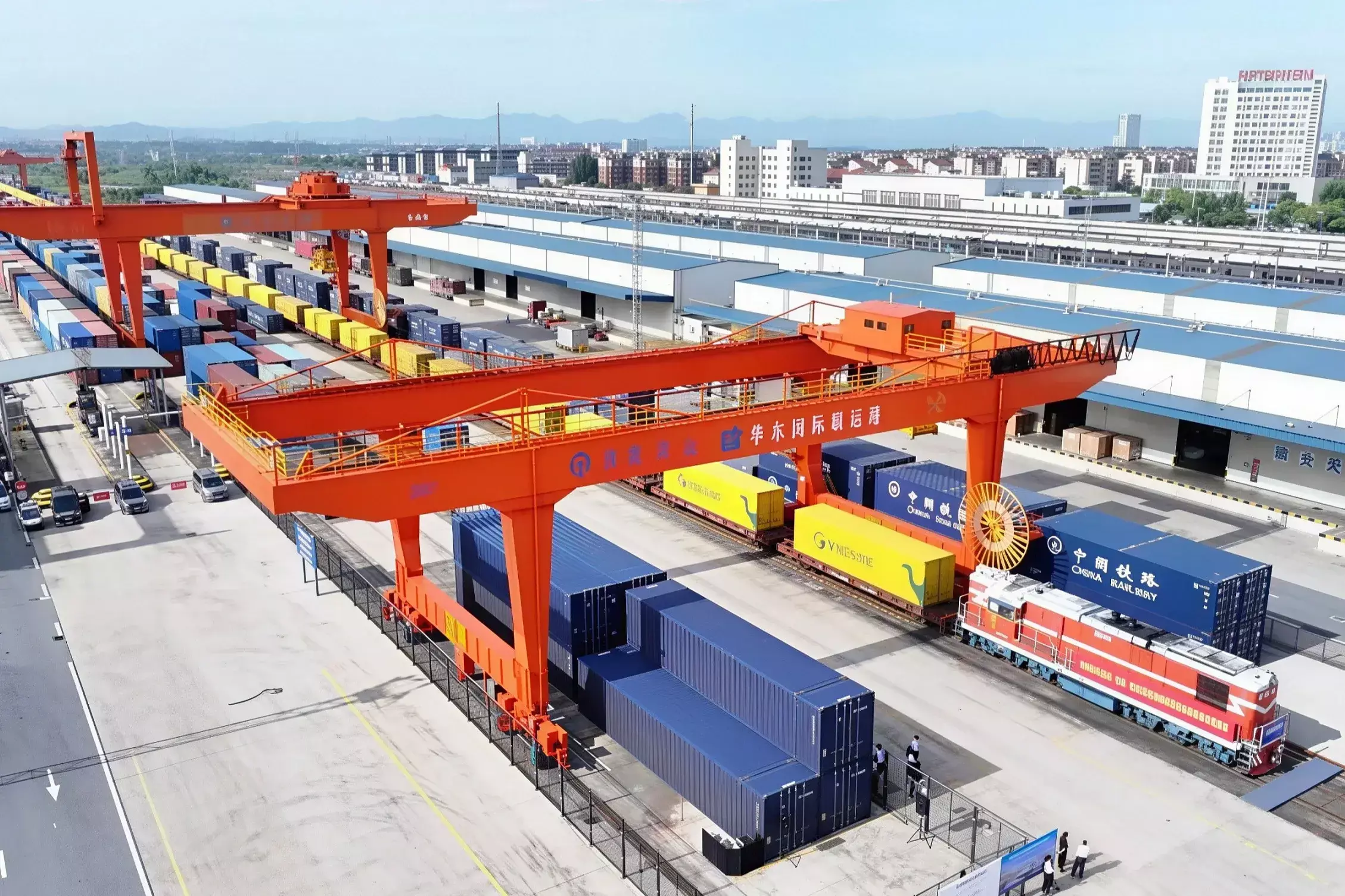
The railway and multimodal freight sectors are approaching the opportunity with similar caution.
Thomas Kowitzki, VP, Global Head of China Rail/Multimodal and ICC Europe at DHL Global Forwarding, says the Middle East disruption encouraged some customers to consider rail and multimodal services, including DHL's OceanExpress product.
Also, the situation has driven interest in the Middle Corridor, particularly from companies looking for alternatives to routes via Russia due to sanctions or other restrictions.
One example shows that the route is viable operationally. An Electrolux block train with 50 containers went from Turkey to China via Central Asia, covering the distance in 35 days.
But individual successful shipments are not yet proof that the corridor can handle significantly higher volumes.
“There’s been no big shift in China–Europe freight movements to the Middle Corridor,” Kowitzki says. Much of the additional activity has instead gone to OceanExpress and rail services going through Russia.
He says there are a number of obstacles that continue to hamper development of the corridor, such as uncertainty and insufficient capacity to ensure predictable door-to-door delivery times.
Companies looking to cut transportation costs are increasingly exploring rail options, as well as combined road and air options via Almaty and Tashkent.
The slow restoration of sea routes might also reduce the urgency of these alternatives.
Dimerco says 63% of Far East–Europe ocean capacity has already returned to routes via the Suez Canal. The full return is anticipated in the first quarter of 2027.
As more vessels return to the traditional maritime corridor, some of the commercial pressure driving companies to alternative transport solutions is likely to ease.
Kowitzki thinks shippers watching their costs will drift back to the traditional routes sooner or later. Cargo that can’t afford delays is a different story, though: where reliable transit times matter most, alternatives should still find buyers.
Central Asia is left with a more niche opportunity, especially in the transportation of urgent and high-value goods.
One of the airports in Uzbekistan is targeting this segment.
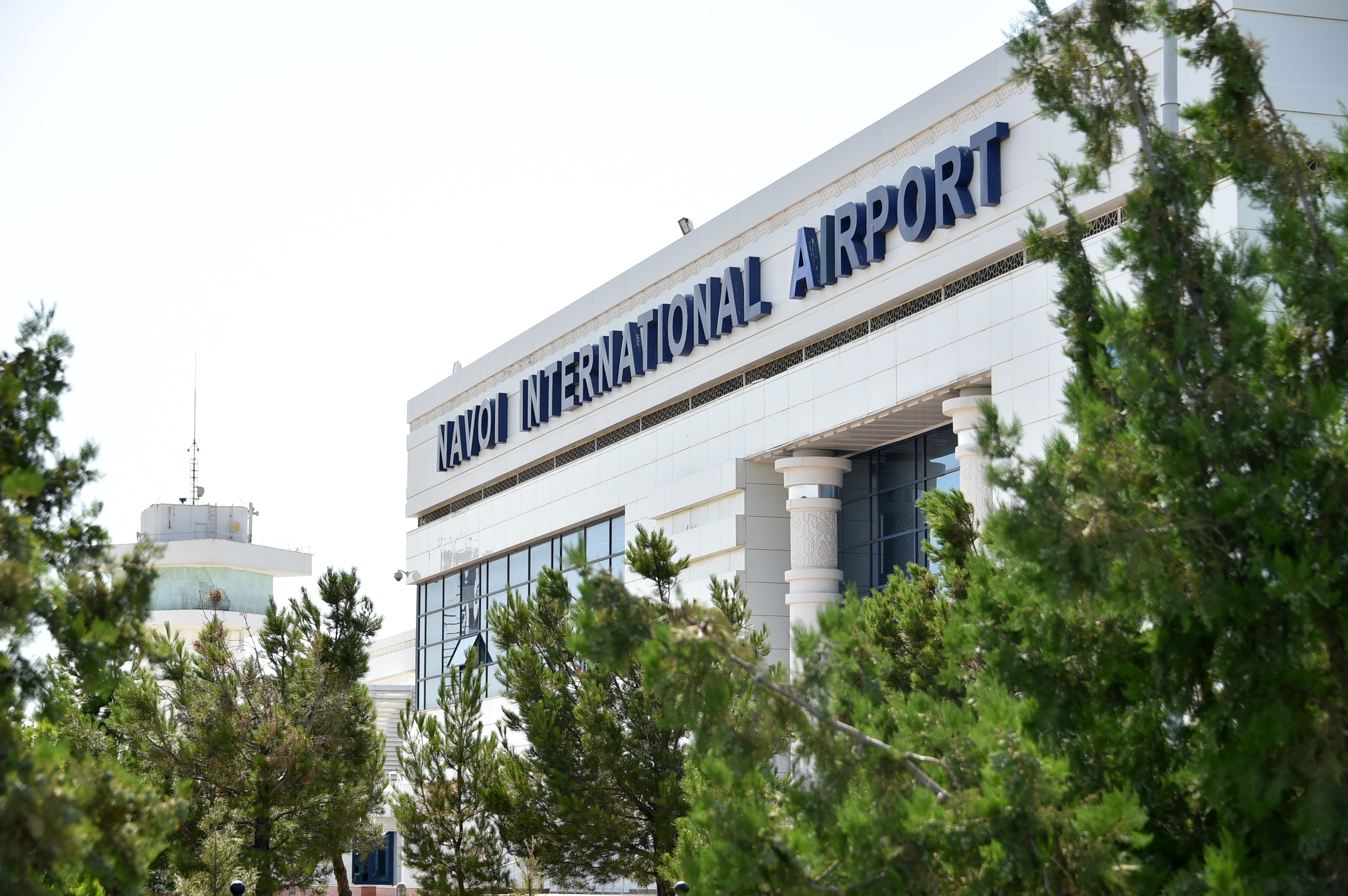
Navoi International Airport looks to capture urgent China–Europe shipments
Navoi International Airport in Uzbekistan is positioning itself to benefit from the changing dynamics of international air cargo.
Alisher Klichev, Airport Director, says restrictions on Middle Eastern airspace and longer flight routings have significantly increased interest in alternative corridors connecting Asia and Europe.
Nevertheless, he remains cautious about the scale of the opportunity.
According to Klichev, approximately 30% to 35% of new enquiries received from airlines and freight forwarders have progressed to practical planning stages. Most concern urgent, high-value shipments travelling from China to Europe.

Some operators have already begun using the airport.
Fly Meta has launched services between Zhengzhou and Budapest via Navoi and is increasing its frequency to seven or eight flights per week.
Galistair operates twice a week with a technical stop and charter carriers Abakan, Camex and Volga-Dnepr are also beginning to use the airport.
Navoi is targeting shipments of electronics, e-commerce products, clothing and Christmas gifts from major Chinese commercial centres including Shanghai, Guangzhou and Zhengzhou during the peak season.
These are precisely the kind of shipments that the electronics pallet travelling from Zhengzhou to Europe represents.
The airport is also working on a commercial proposition around operational and regulatory benefits.
Fifth and seventh freedom traffic rights allow airlines to pick up cargo in China, load and unload freight at Navoi and fly to European destinations.
Courier shipments will also benefit from a reduced customs fee, which will be available until the end of 2028.
The airport’s free economic zone includes road and rail connections. The airport’s operational development programme includes hiring more loaders and unit load device operators, updating equipment and creating a fuel reserve.
Uzbekistan’s government has also outlined ambitious long-term goals.
Resolution PQ-50, signed by the country’s President on February 9, 2026, sets development goals for Navoi by 2030. They are:
7,000 flights per year.
150,000 passengers a year.
45,000 tons of cargo throughput per year
The programme also provides for the establishment of a maintenance centre by the end of 2028 and the introduction of a Porto Franco regime supported by a free customs zone.
Navoi has made these investments, but now faces two major obstacles that could delay its emergence as a fully operational international cargo hub.
The first is European security certification.
For years, Navoi has been regarded more as a technical refuelling stop than a major cargo transfer centre. “The airport doesn’t have RA3 certification, which is necessary for shipping cargo to Europe,” Klichev says.
«The certification is at the end of the process and we hope to have the approval in the next few months,» he says.
The airport can still take flights for technical stops until it gets certification, but the possibilities for broader European cargo operations are limited.
The second problem is fuel for aviation.
Uzbekistan imports petroleum products, and consequently, aviation fuel is much more expensive than in neighbouring countries.
The fuel reserve at the airport is intended to improve supply security but does not eliminate the inherent price disadvantage.
Central Asia remains a contingency rather than a mainstream cargo corridor
The prospects for Central Asia are closely linked to how the global air cargo market develops over the coming months.
For the pallet of electronics waiting in Zhengzhou, Navoi is unlikely to become the preferred route during this winter's peak season.
The airport's expected RA3 certification may arrive after the busiest period has passed. Meanwhile, Middle Eastern hubs have already recovered between 80% and 90% of their previous throughput, meaning that established connections remain available, even if they are not operating at full strength.
The decline in e-commerce volumes on key Asia–Europe routes also complicates the commercial outlook for airports seeking to attract redirected shipments.
For freight forwarders, Central Asia therefore represents an alternative worth testing rather than a corridor around which large-scale transportation plans can already be built.
The assessments from both Levine and Kowitzki point towards gradual development rather than an immediate transformation of international freight flows.
The Middle East conflict has increased visibility for Central Asian airports and highlighted the risks of depending too heavily on a limited number of major transit hubs.
However, long-term success will depend on more than geographical positioning or the availability of alternative airspace.
Airports will need to demonstrate consistent operational performance, competitive fuel costs, sufficient handling capacity, appropriate certifications and dependable connections with road, rail and air networks.
Navoi has begun developing the infrastructure and commercial arrangements needed to attract international cargo operators. Whether these investments translate into sustained freight volumes will depend on its ability to overcome the remaining operational barriers.
Central Asia has gained an opportunity to strengthen its position in the Asia–Europe logistics market. Turning that opportunity into a lasting business will ultimately depend on reliability.
END OF REPORT