Logistic Nov 5, 2026
Lloyd’s Register introduces a new service to strengthen supply chain resilience
LR Advisory launches a dedicated support service to help governments, logistics operators and ports anticipate disruptions, maintain cargo flows and identify alternative transport routes in response to geopolitical tensions, congestion, extreme weather and infrastructure failures.

Lloyd’s Register (LR) is extending its advisory work with the introduction of a new Supply Chain Resilience Service to help governments and logistics stakeholders better navigate disruptions and sustain the continuity of international trade.
The initiative is being developed by LR Advisory, the professional services arm of the organisation, and is aimed at governments, logistics operators and port authorities. It is designed to help them to keep cargo moving when trade routes are disrupted by geopolitical developments, port congestion, extreme weather events or infrastructure failures.
The LR service is designed to provide clients with a clearer picture of where goods need to be rerouted, what alternative routes are still operationally possible and when contingency measures need to be activated.
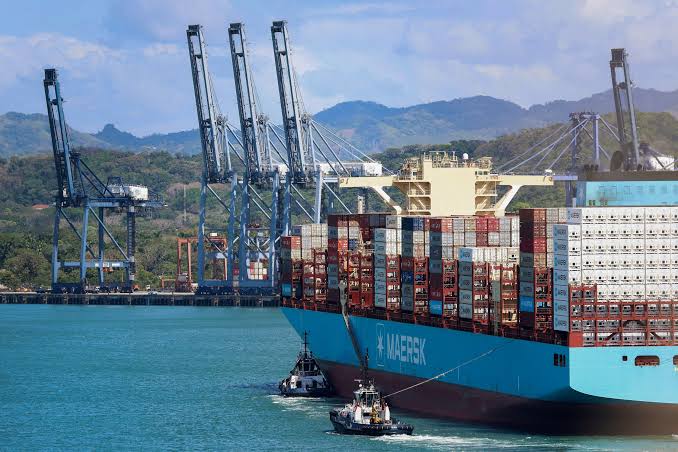
The initiative comes at a time when international maritime transport and global supply chains are still significantly unstable. Since the COVID-19 pandemic, repeated disruptions have demonstrated how vulnerable global trade networks are. Energy products, dry bulk commodities and containerised cargoes are particularly exposed to volatility related to the closure of the Strait of Hormuz and security threats to shipping in the Bab El Mandeb. Meanwhile, Asian container ports are facing congestion and delays, partly because of the resumption of services via the Red Sea by major shipping lines.
LR notes that a constraint at one point in the supply chain can quickly have broader impacts on transport modes and logistics networks. The new advisory service will therefore examine how pressure on one logistics hub can cause bottlenecks elsewhere. Its assessments will cover ports, airports, road border crossings and rail links.
The analysis will also identify alternative gateways and transportation corridors via land, sea and air. These will be judged against a range of operational criteria, such as cost, available capacity, risk exposure and potential cargo delays.
A structured response within the first 90 days
LR Advisory will provide an initial assessment of affected routes in the first 0-90 days after a disruption. As part of this effort, a 30-60-90 day response plan will be developed, outlining practical steps to help clients navigate changing conditions.
LR says that the measures proposed could include alternative routing arrangements, cargo prioritisation, diversion triggers, deployment of additional capacity and clearly defined operating procedures. The goal is to provide organizations with the agility needed to react to changing disruptions.
We will give special attention to urgent and time-sensitive shipments. Cargo types that might need to be treated as a priority include food, medicines and energy supplies. The service will also evaluate the best use of available logistics capacity to ensure continued movement of these critical goods.
In addition to short-term crisis response, LR hopes to support longer-term improvements in supply chain resilience. Its advisory teams can help to identify opportunities for route diversification and infrastructure development over a time horizon of between three months and five years, with a view to reducing exposure to future disruptions.
Finding alternatives before bottlenecks spread
Kamran Ul Haq, Senior Vice President of LR Ports Advisory, said: “And if you don’t have established trade routes, it’s difficult to redirect cargo.
“Redirecting cargo is rarely as simple as choosing a different port. Capacity, inland connections, border processes, cost and availability all play a role. “Our role is to help clients get a clear view of those trade-offs, to identify workable alternatives and to set the triggers for action before disruption spreads further through the network,” he said.
Ul Haq also insisted that resilience should not be about predicting the next crisis. "You have to know in detail what vulnerabilities are out there and you have to identify credible alternatives before you need them."
He said the decisions made during disruption can also be beneficial to future investment. Looking beyond immediate cargo diversions may help identify where additional infrastructure, greater capacity or more diversified transport corridors would strengthen the durability of the wider logistics network.
With this new service Lloyd’s Register is looking to combine short-term operational responses with longer-term strategic planning to help supply chain stakeholders to keep trade moving whilst preparing their networks for future challenges.
END OF REPORT