Maritime Nov 26, 2026
Combined Rail-Road Transport Now Accounts for One-Third of Europe's Rail Freight Market
Intermodal freight transport produced 147 billion tonne-kilometres in Europe in 2025, increasing its share of total rail freight to 34%. But the growth prospects for the sector are still being hampered by worsening punctuality, longer journey times and infrastructure constraints.
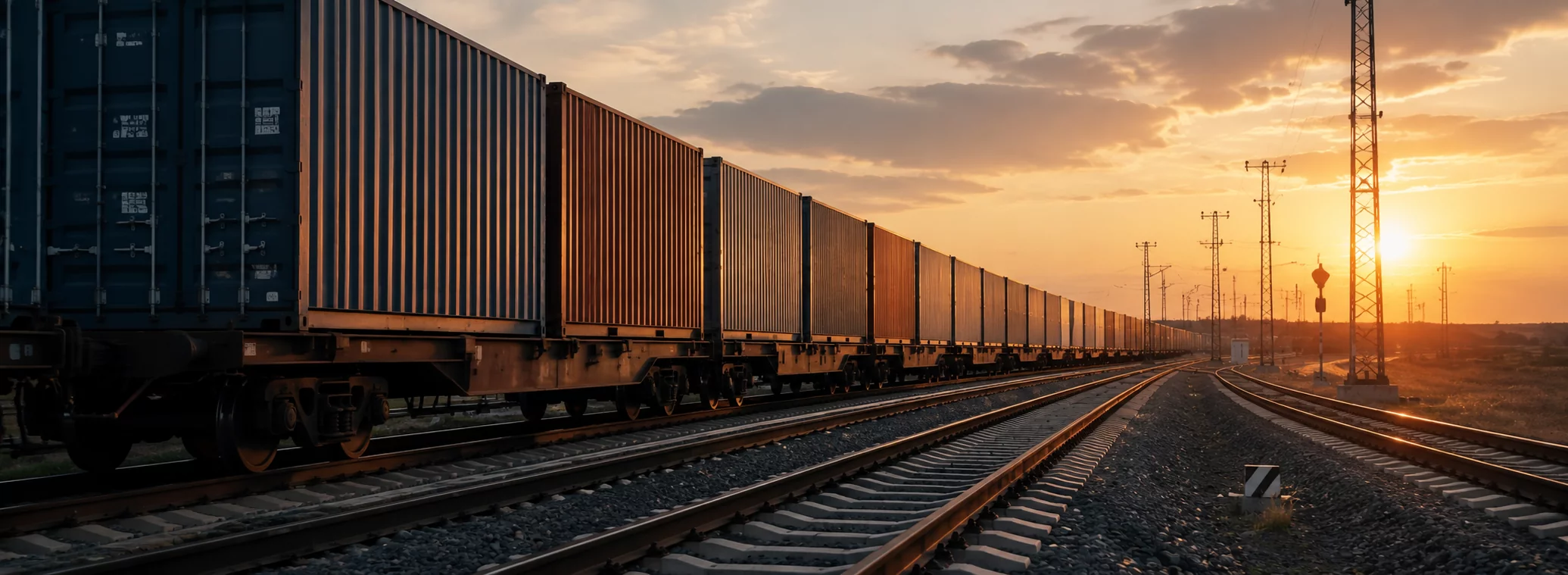
Rail-road transport in Europe has increased its share of the continent’s freight market, now accounting for more than a third of all rail freight activity. It is becoming increasingly important, but the sector remains challenged by serious operational issues – in particular, reliability, network capacity and journey times.
The 2026 Report on Combined Transport in Europe, published on 20 November 2026 by the International Union of Railroads (UIC) and the International Union for Road-Rail Combined Transport (UIRR), prepared by German consultancy Sci Verkehr, said combined transport accounted for 34% of European rail freight tonne-kilometres in 2025. That is up from 23 percent in 2019.
Total rail freight performance decreased by 10.4% over the same period. Combined transport increased cumulatively by 4.1% during the same period. The figures underline the durability of intermodal in the face of a wider contraction in the European rail freight market.
147 billion tonne-kilometres produced in 2025
Combined rail-road transport amounted to some 147 billion tonne-kilometres in 2025, a little more than the 146 billion in 2024, but less than the 154 billion in 2022.
In 2023 the sector contracted by 7%, while total European rail freight fell by almost 10%, confronted with inflation and the economic slowdown after the energy crisis.
The biggest category is still unaccompanied maritime combined transport with 114 billion tonne-kilometres. This category mainly consists of containers moved between seaports and inland terminals. However, it had an average annual decrease of 1.8% from 2022 to 2025.
The haulage of swap bodies and semi-trailers without a driver by land accounted for 31 billion tonne-kilometres. It was the only segment to have recorded positive average annual growth over the period, at 0.4 per cent.
Accompanied combined transport, mainly using rolling freeways that carry trucks on rail wagons, stayed at about 2 billion tonne-kilometres, down an average of 8% per year.
International traffic encourages unescorted transport
Combined transport without accompanying drivers is of particular importance for the international freight movements, which account for 29% of its activity. Long-distance continental connections are also significant, such as between the Adriatic region and Belgium, and between Luxembourg and Poland.
Cross-border maritime combined transport has increased by almost 19% since 2020, from 53 billion to 62 billion tonne-kilometres. It has therefore surpassed domestic maritime combined transport, which dropped to 52 billion tonne-kilometres.
But the growth in tonne-kilometres has not been accompanied by an equivalent increase in the physical volume of freight. tonnage carried only increased to 59 million from 55 million.
Similar patterns can be observed in cross-border land-based combined transport. Tonne-kilometres rose by some 15%, freight volume was flat at 34 million tons.
The discrepancy is mainly due to longer routes because of infrastructure works and diversions across the European rail network, and not a significant increase in demand or the introduction of new services, Sci Verkehr analysts said.
Combined transport supports the modal share of rail
Since 2020, combined transport has prevented any further decline in rail’s share of the European freight market, but has not been able to increase that share significantly.
Latest complete figures for road freight in 2024 show rail accounted for 17% of European land-based freight tonne-kilometres. Road haulage contributed 78 per cent and inland waterways 5 per cent.
Rail is thus still well short of the European Union's target of a 30% share by 2030.
Its activity in combined transport across rail, inland waterways and road sections increased by 16%, from 228 billion tonne-kilometres in 2014 to 263 billion in 2024. But its overall market share remained at about 10%.
Conventional road freight was the best performer, gaining 19% over the decade and adding five percentage points to market share. By comparison, conventional rail freight fell 12% and conventional inland waterway transport 18%.
The report connects the long-term weakness of these traditional segments to their reliance on bulk commodities such as coal and petroleum products, which are expected to decline gradually in the years ahead.
The land-based combined transport has had a more positive evolution, with a growth of 30% between 2015 and 2025, outperforming the maritime combined transport.
This growth is attributed to the development of new terminals and loading units, the shortage of truck drivers and lower maintenance costs of semi-trailers carried by rail, the report says.
Germany remains the largest combined transport market in Europe
Germany is still the leading country in the European combined rail-road freight market.
In 2025, rail freight activity in the country amounted to 131 billion tonne-kilometres in total, corresponding to 41% of the rail freight total. Poland was second, with 56 billion tonne-kilometres and a 17% share, followed by France with 33 billion and 43%.
Italy and Sweden tied for fourth place on 23 billion tonne-kilometres each. They are the only major European markets where combined transport accounts for about half of all rail freight activity.
But the highest modal shares are found in a number of smaller markets. Leading the list is Greece with 94%. Ireland is next at 78%, followed by Norway 62%, Switzerland 59% and Spain 58%.
The structure of freight traffic in Eastern Europe still bears the stamp of rail networks built originally for the transport of coal, minerals and timber.
The report also points out that the recent growth in combined transport shares observed in Germany, the Netherlands and Ireland since 2023 is largely the result of a sharp decline in conventional bulk and chemical freight and not a parallel increase in intermodal volumes.
The Alpine corridor remains central to European flows
The Alpine axis continues to represent one of the most important geographical corridors for European combined transport.
A RailNetEurope (RNE) sample covering 1,188 international trains between 13 and 20 September 2025 shows that 32% of cross-border services operated between Central Europe, comprising Germany, Austria and Switzerland, and Southern Europe, including Italy, Slovenia and Croatia.
A further 23% connected Central Europe with Eastern Europe, while 16% operated between Central Europe and the Benelux countries.
Overall, 76% of international trains either originated in or were destined for the Central European region.
Data from the Cesar-Next platform for November 2025 further confirm the importance of the Germany-Italy connection. This corridor accounted for 37% of combined trains in Central Europe, with 128 weekly departures from Italy towards Germany and 108 in the opposite direction.
More than 65 trains per day operated on average across transalpine connections between Italy and Central Europe.
The busiest individual routes connected German terminals with northern Italy:
Cologne Eifeltor–Verona Quadrante Europa: 31 trains per week.
Gallarate–Ludwigshafen: 26 trains per week.
Rostock–Verona: 22 trains per week.
Segrate–Zeebrugge: 22 trains per week.
Across approximately 340 connections recorded by the same platform, 23% offered at least four weekly departures, while another 25% provided between two and three.
Among international connections, approximately one in seven offered a daily service.
The biggest weakness of the sector is reliability
Though the market share of combined rail-road transport is growing, problems with punctuality still remain.
In Germany, 55% of freight trains arrived less than 15 minutes late in 2024, 45% in Italy and 33% in the Czech Republic. France did significantly better at 76% and Ireland achieved 98%.
Only Poland and Portugal have shown significant improvements in the period 2022-2024. Poland's punctuality rate increased to 52% from 44% and Portugal improved from 71% to 83%.
Part of Germany’s weaker performance, the report says, is due to the tolerance allowed for departure delays, which can keep a train’s assigned track booked for up to 20 hours.
Even more alarming results are revealed by RNE’s September 2025 monitoring exercise. The chosen week was supposed to have no exceptional external events. About 1,800 combined trains were evaluated in this week.
Only 2% were on time. Another 22 per cent were early and 56 per cent were delayed by over an hour.
On average, 85 trains a day were delayed by more than three hours, with nearly half delayed by more than six hours.
There was also a great deal of variation in the performance between the individual routes. One in five trains on the Verona-Cologne link was early, but half were delayed by more than an hour. On the route from Gliwice to Piacenza, 80% of trains were delayed by more than an hour.
Such operational uncertainty, the report’s authors say, throws delivery schedules off and increases the chance of freight reverting to road transport.
Longer journey times add to operational pressure
Punctuality is not the only concern. The speed and duration of combined freight journeys have also deteriorated.
On the corridor linking Central Europe with Southern Europe, the average distance covered by the sampled trains decreased from 525 kilometres in the 2023 assessment to 475 kilometres in 2025.
Despite the shorter distances, average journey times increased from 11 hours to 11 hours and 50 minutes. Average operating speed consequently fell from 48 km/h to 41 km/h.
The deterioration was particularly pronounced on connections between Central Europe and Northern Europe, where average speeds dropped from 84 km/h to 45 km/h. The number of trains monitored on these routes also fell sharply, from 65 to 15.
Sci Verkehr interprets the reduction in average journey distances as a possible market response to the growing unreliability of longer routes, particularly those affected by infrastructure works and diversions.
The report identifies several factors behind the continuing difficulties. These include maintenance-related line closures in Germany and Italy, as well as the closure of the Gotthard railway tunnel following a derailment.
Accompanied combined transport has also suffered from the discontinuation of the Freiburg-Novara rolling motorway service at the end of 2025.
Meanwhile, horizontal transshipment connections for semi-trailers between Western and Southern Europe have not resumed, despite the reopening of the Fréjus railway tunnel.
Terminal capacity unable to match traffic volume
Another structural issue is the capacity of infrastructure.
European intermodal terminal capacity increased 11% and traffic increased 26% between 2015 and 2025. This imbalance led to saturation on the network in 2021 and 2022, but the situation has been improving little by little since then.
Germany has about 26% of Europe’s transshipment capacity and over 35% of the total transportation market.
Italy has 16% of the European capacity available, Poland comes next with 9%, then Spain with 6%. In these markets, terminal capacity exceeds their traffic shares, perhaps opening the door for further expansion.
DUSS is Europe’s largest terminal operator, with 24 sites in Germany. Contargo follows with 22. In third place is MSC Group with 19.
MSC has expanded its network, especially in the Iberian Peninsula and the United Kingdom, with Medlog and Maritime Transport, and now has more facilities and total capacity than Metrans.
The European intermodal wagon fleet has increased by 37% over the last 10 years, whereas other wagon categories have decreased by 20%.
The leasing companies now own more intermodal wagons than all the traditional railroad undertakings combined. This illustrates the increasing importance of specialized rolling stock providers.
Private rail operators make headway
The market structure is also being reshaped by increasing competition in rail traction.
Former national railroad monopolies continue to lose combined transport market shares. In 2024 their respective shares were 30% in Italy, 25% in Germany and Austria, 20% in Poland and 15% in Switzerland.
The five largest private operators together account for almost 20% of the European market, with Metrans in the lead.
France, too, has undergone considerable restructuring. SNCF Fret’s withdrawal from combined transport in 2025 was part of agreement with the European Commission.
However, its parent company, Rail Logistics Europe, still holds around 35% of the French national market and is looking for a minority investment partner.
Growth forecasts cut to 2040
Based on the Economic Outlook of the International Monetary Fund, Sci Verkehr’s long-term forecasts show that unaccompanied combined transport will continue to grow, but more slowly than before.
The consultancy now forecasts average annual growth of 2.1% to 2040, compared to the 3% it predicted in its 2023 assessment.
By 2040, the European market could amount to about 200 billion tonne-kilometres, with 155 billion in maritime combined transport and 45 billion in land activities.
That would be a 35% increase from 2025.
Continental network expansion is expected to be mostly concentrated on Spain, France and Poland. However, the report points to delays in new infrastructure projects in the first two countries and a limited capacity on Germany’s network for transit freight.
By 2035, combined transport should represent 39% of European rail freight activity.
EU regulatory reform is still up in the air
The regulatory framework is another key element in determining the future of the sector.
The proposal of the European Commission of November 2023 to amend Directive 92/106/EEC on combined transport is still under discussion.
The proposed legislation includes a definition of combined transport based on a minimum 40% reduction in external costs compared to road-only transport. Each shipment would need to be checked for compliance via the digital platforms envisaged under the Electronic Freight Transport Information (eFTI) Regulation.
Trilogue negotiations are also underway on the revision of the Weights and Dimensions Directive.
The report also stresses the need to harmonize the 44-tonne limit for road sections of combined transport. It warns that giving the same weight allowance to all road freight activity could change the economic balance between transport modes.
At the same time, Regulation 2026/1184 on railroad capacity is also being implemented. It provides for coordinated allocation of train paths and terminal time slots through one-stop-shops with the objective of improving management of railroad capacity.
Public support rises to €1.081 billion in 2026
Financial support is still an important element of the EU's combined transport policy.
The report said public support to the sector across the surveyed countries amounted to €1.081 billion in 2026. Of this, €639 million was allocated to terminal infrastructure.
Italy’s contribution comprised €55 million in terminal investments and €22 million in operating assistance under the Ferrobonus scheme.
The figures show the continuing commitment of public authorities to the development of intermodal freight transport, despite the continuing infrastructure and operational difficulties of the sector.
The combined rail-road market in Europe has shown that it can be more important than the general weakness of conventional rail freight would suggest. But its future competitiveness will depend not just on new terminals, rolling stock and finance, but also on delivering the reliability, journey times and network capacity to make rail a credible alternative to long-distance road transport.
END OF REPORT