Maritime Nov 26, 2026
Maersk expands its fleet with an order for 12 ultra-large container ships
The Danish shipping group confirms the acquisition of twelve 24,000 TEU dual-fuel vessels, scheduled for delivery in 2030 and 2031, as it prepares to strengthen its position on major east-west trade routes amid a rapidly expanding global container ship orderbook.
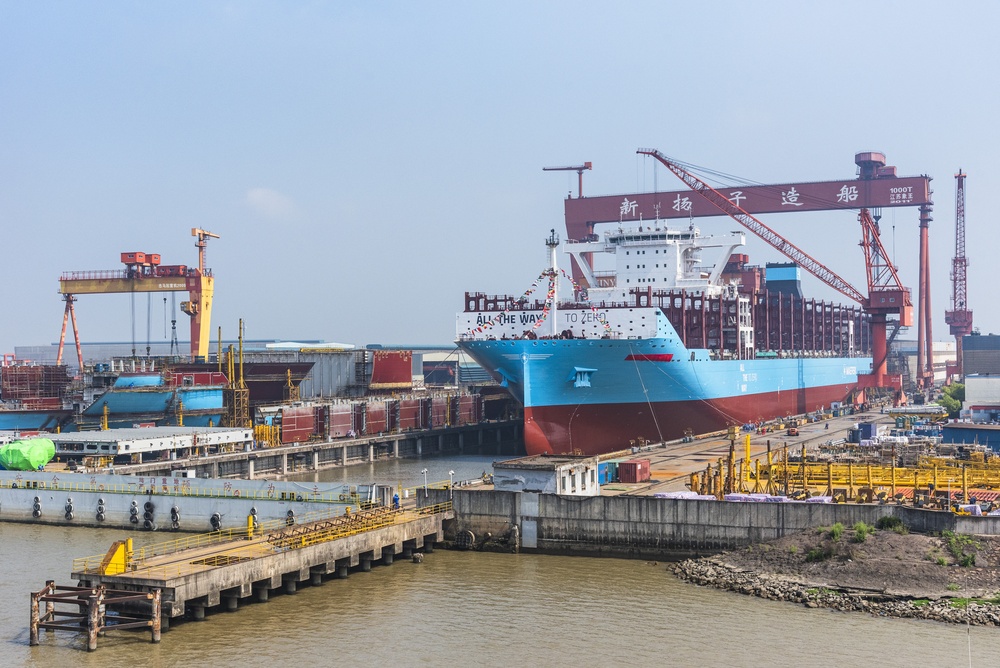
Maersk has officially confirmed an order for twelve ultra-large container ships (ULCS), ending months of speculation about the Danish shipping group's plans to expand its fleet with a new generation of high-capacity vessels.
The twelve vessels will each have a capacity of 24,000 TEU and are suitable for deployment on the world’s busiest container shipping routes. The investment is part of Maersk’s ongoing fleet renewal strategy and is intended to enhance its competitiveness in the global container shipping market, the company said.
The company has confirmed the order, but has not revealed which shipyard will build the vessels.
Deliveries are forecast for 2030 and 2031. The new containerships will be equipped with dual-fuel propulsion systems that allow them to run on conventional marine bunker fuel or liquefied gas. This flexibility will provide Maersk with additional options to manage the energy needs of its fleet as the shipping industry continues to transition to alternative fuels.
Possibility of a return to the Asia-Europe route via Suez
The entry into service of the twelve vessels could have a particular impact on the Asia-Europe trade where ultra-large container vessels are key to serving the high-volume cargo flows.
The vessels are likely to be used on services between Asia and Europe via the Suez Canal. The prospect comes as Gemini Cooperation partners Maersk and Hapag-Lloyd have confirmed plans for a full return to the Red Sea route next year.
Such a development would increase the strategic importance of large-capacity vessels on these services, assuming that operating conditions allow for the resumption of normal traffic through the region.
A growing orderbook raises questions about future capacity
Maersk's latest investment comes at a time when the global containership orderbook is already reaching substantial levels.
Earlier this month, maritime consultancy Linerlytica estimated that the orderbook represented 48% of the existing fleet, equivalent to approximately 16.78 million TEU. Alphaliner, meanwhile, placed the figure at nearly 16 million TEU, even under its more conservative estimates.
The additional twelve vessels will therefore contribute to an already significant pipeline of new capacity scheduled to enter the market over the coming years.
Maersk and CMA CGM continue to fight for the number two spot
The order is also a sign of Maersk's efforts to protect its competitive edge against its main international competitors, besides fleet modernization.
MSC remains well ahead of the competition with a market share of 21.6%, supported by a fleet of 1,031 vessels with a capacity of some 7.5 million TEU.
The battle for second place is much tighter, with Maersk under direct pressure from France's CMA CGM.
According to Alphaliner figures, Maersk currently operates a fleet of 4.7 million TEU, or 13.5% of the market. CMA CGM trails with 4.48 million TEU and 12.9% share.
Maersk’s orderbook is bigger than its French rival, but the timing of new vessel deliveries could change the order. Linerlytica expects CMA CGM to surpass Maersk in fleet size sometime in 2027.
Maersk is gearing up for the next phase of competition in global container shipping as the industry faces increasing questions about future capacity and market balance, with twelve more 24,000 TEU vessels joining its fleet from 2030 onward.
END OF REPORT