Land Nov 27, 2026
DB Cargo Faces Another 600 Job Cuts as Restructuring Dispute Deepens
A draft agreement proposes deeper cuts to the number of jobs in 2027, more unpaid working hours and a freeze on general pay increases for two years. The GDL union is contesting the terms, warning that offloading the burden of restructuring onto employees could endanger the company’s recovery.
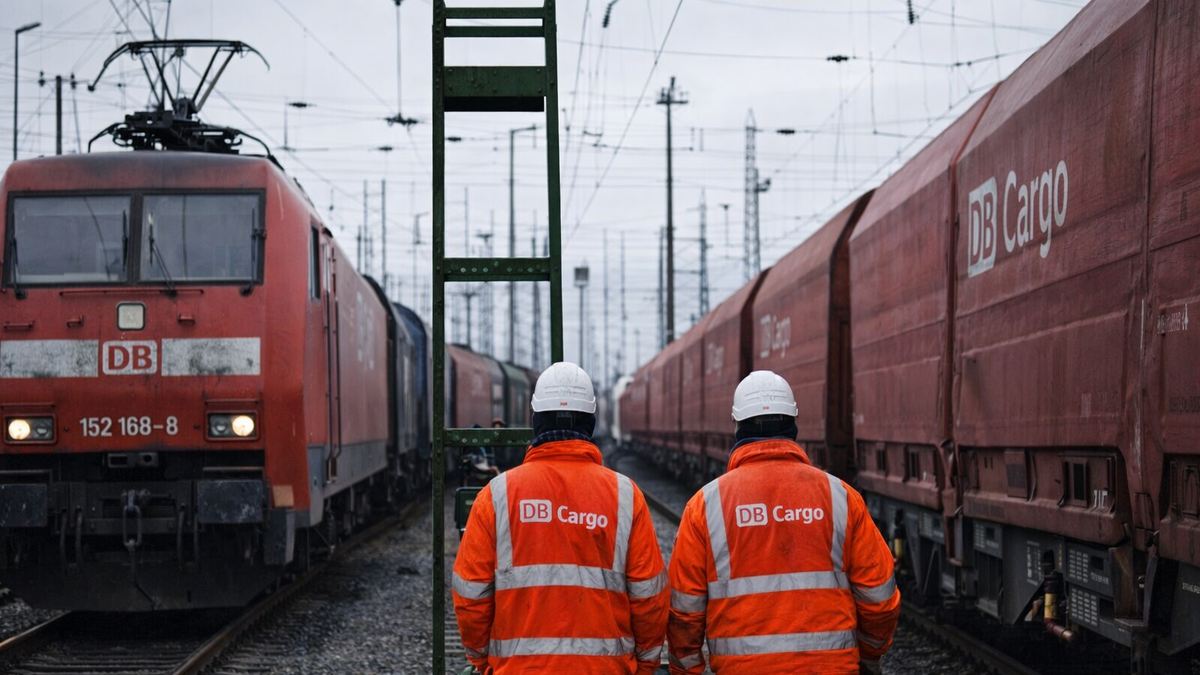
DB Cargo’s plans to restructure could see a further 600 full-time jobs lost in 2027, on top of an already extensive plan to reduce its workforce. The latest proposals also include a two year hike of two unpaid working hours a week and suspension of general contractual pay rises in 2028 and 2029.
These measures are laid down in a draft agreement between the management board of DB Cargo and the company’s central works council (Gesamtbetriebsrat). The document was published by the German train drivers’ union GDL on 24 November 2026. But it has not been approved by the concerned authorities yet.
The draft also warns that DB Cargo could seek even more job cuts if employee representatives reject the proposed increase in working hours or refuse to give up salary increases.
That would be an additional 104 working hours per year, or about 2 hours per week. The proposal comes alongside the company’s ongoing restructuring programme in Germany, which includes cutting around 6,200 of its roughly 14,000 full-time jobs by 2030.
Worker pressure is building
DB Cargo CEO Bernhard Osburg announced the broader restructuring plan in February 2026. He said at the time that workforce reductions would be made in almost every area of the business, including train operations, planning, administration, sales and IT systems.
Osburg told the Rheinische Post that the assessment of the restructuring had made the reductions necessary to bring the company out of the red and achieve sustainable long-term profitability of 3%.
But the latest plans have been met with strong resistance from the GDL which challenges the logic of tying employees' contractual rights to the company's employment numbers.
The union in its response said that asking for more work while at the same time weakening collective bargaining protections risks jeopardising, rather than supporting, the restructuring process.
The GDL’s Federal Chairman Mario Reiß emphatically rejected the notion that employees should be willing to accept cutbacks on their contractual rights or face more job losses.
“Working more for less contractual protection with the GDL is not an option,” he said.
The union has not ruled out a temporary increase of working hours altogether, but insists that any such arrangement must demonstrate tangible benefits in protecting jobs and restoring DB Cargo’s financial stability. GDL is also demanding that the company management contribute to the rescue effort.
GDL demands better operations before more cuts
GDL says DB Cargo should be tackling inefficiency in its day-to-day operations before resorting to job cuts and asking staff for concessions.
The union wants to see fewer empty running trains, less complicated shift patterns and more efficient planning procedures. It wants the company to make better use of its workforce and rolling stock, and tackle endemic issues with vehicle availability and the punctual delivery of supplies.
But GDL says the recovery can’t be built on the backs of employees. The Deutsche Bahn must be sustainably financed. But the German federal government and the European Commission have important tasks here.
In particular, the union is seeking a stable regulatory environment for rail infrastructure charges and single-wagonload freight traffic.
The other big railway union in Germany, the EVG, had already rejected wage cuts on 10 November 2026. It said employees should not be used as a financial cushion for the restructuring of DB Cargo.
EVG emphasised that the current collective agreements remain fully valid and stressed the company's willingness to activate the dialogue clause in the 2025 collective bargaining settlement. This mechanism could open way for negotiations with both unions on specific restructuring agreement.
The last contract signed between Deutsche Bahn and GDL was on 27 February 2026 and includes a 2.5% pay hike as of 1 August 2026.
The European Commission is making recovery difficult with strings attached
Also, a European Commission decision of 29 November 2024 restrains DB Cargo’s restructuring. Brussels gave the green light for €1.9 billion ($2 billion) in restructuring aid that enabled Deutsche Bahn to offset losses DB Cargo had incurred between 2022 and 2024.
But the approval was given on a major condition: DB Cargo must be profitable by the end of 2026, without any further loss coverage from its parent company.
But Osburg admitted in September the company would not hit the deadline. And DB Cargo will likely report negative financial results for 2026 again due to a one-off impairment on its British subsidiary, which is on the market.
Osburg said the company would have been at break-even but for this extraordinary accounting charge.
According to sources at DB Cargo, as reported by Handelsblatt, the impairment adjustments are expected to be in the order of 260 million euros.
There are few signs that Brussels will grant more flexibility. “I don’t have much hope for concessions from the European Commission,” said Ulrich Schmidt, a member of the central works council.
“I do not expect mercy from Brussels,” he told reporters in early November. He said European officials are fierce defenders of competition.
EVG Vice-President Cosima Ingenschay also cast doubt on the restructuring strategy, arguing that the company’s problems are partly due to problems carried over from previous years. She argues that the recovery programme has concentrated too much on DB Cargo itself and not enough on its subsidiaries.
The new restructuring plan must cover all of Europe’s operations
If it fails to meet the 2026 profit target, DB Cargo will have to come up with a new restructuring concept. The revised programme will then have to be negotiated between the German federal government and the European Commission. Negotiations are expected to begin in November.
Osburg already has indicated the next phase will be broader. So far the restructuring programme has focused on the German operations. The new strategy must include all of DB Cargo’s European business, including its 16 foreign subsidiaries.
The chief executive said in September in Berlin that the recovery would take longer. Consequently, he set a new target date of 2031 for the creation of an integrated European rail logistics operator that can generate sustainable profits.
The fight over working hours, wages and job cuts comes at a critical time for DB Cargo. European regulatory requirements are still a millstone around its financial recovery. Management has to deliver structural improvements, while retaining the workforce and operational capabilities to compete in the European rail freight market.
The question is whether the company can turn a profit in the long term without placing an ever greater burden on its workers.
END OF REPORT