Land Nov 27, 2026
Hylane Welcomes First Chinese Electric Truck as Sany Enters Its Rental Fleet
The German zero-emission truck rental specialist will put the Sany e263 through a six-month customer trial from February 2027, assessing its operating costs, performance and after-sales support before deciding whether to expand the partnership.
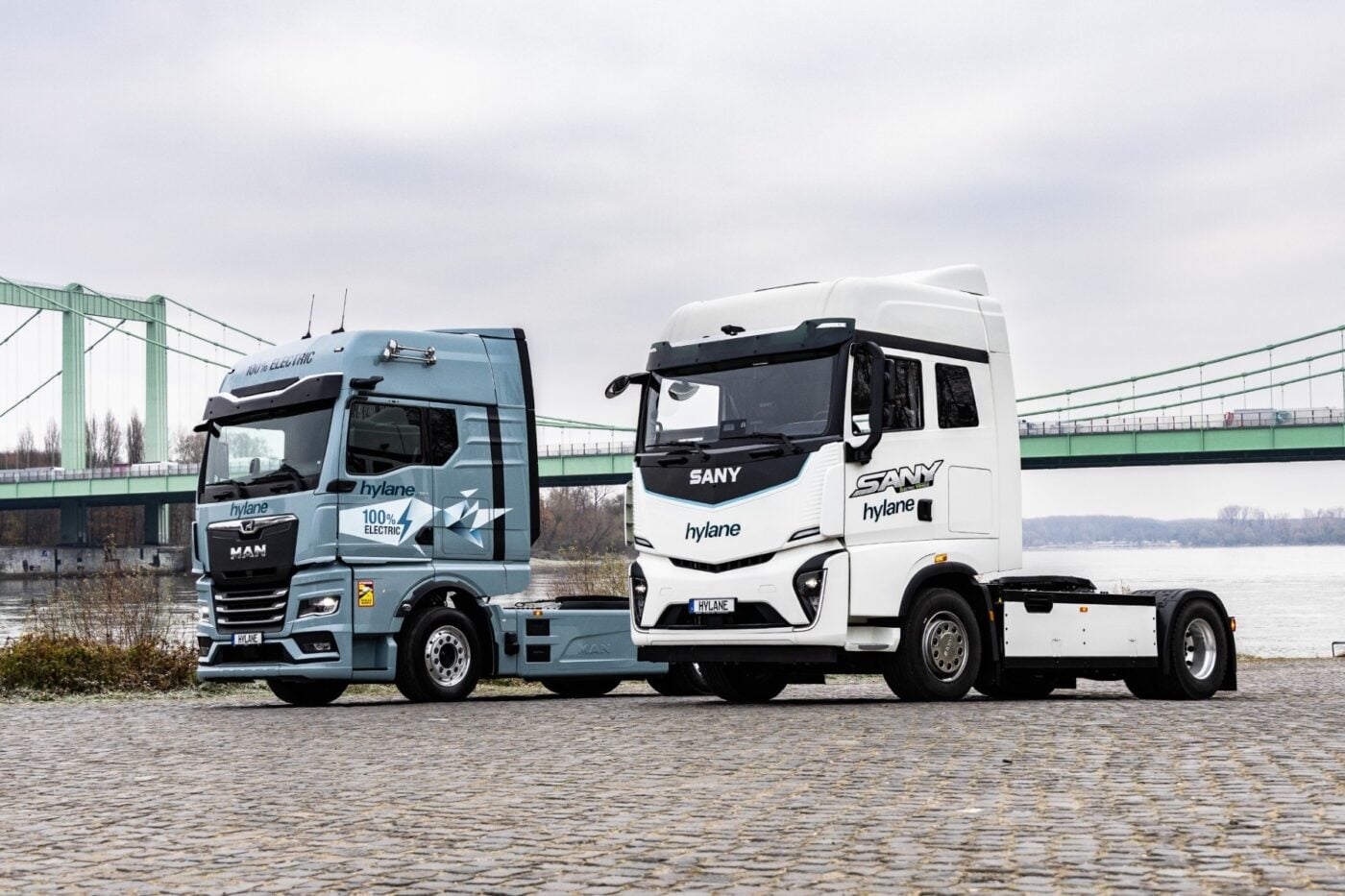
Hylane is preparing to introduce its first Chinese-built truck, marking a new step in the German company's efforts to expand its portfolio of zero-emission commercial vehicles. The Cologne-based rental specialist has selected the battery-electric Sany e263 for a six-month pilot programme scheduled to begin in February 2027. The vehicle will be deployed with a customer whose identity will be disclosed when the truck is delivered.
For now, the agreement covers just one vehicle. Its performance during the trial will determine whether Hylane adds Sany trucks to its regular rental offering and expands the number of units in its fleet. The company unveiled the initiative in Cologne during a press conference marking its fifth anniversary.
The selected vehicle is the Sany e263 S, a 4x2 tractor unit equipped with a single driven axle. Its lithium iron phosphate (LFP) battery has a nominal capacity of 636 kWh, with 620 kWh available for use. According to Udo Bub, Head of Service at Sany eTrucks Europe, the truck offers an estimated range of approximately 500 kilometres.
Charging infrastructure is another feature of the model. The e263 has charging connections on both sides of the vehicle and supports charging power of up to 400 kW. Its unladen weight stands at 10.9 tonnes.
Operating costs under scrutiny
One of the main factors behind Hylane's decision is the truck's projected economic performance. According to Sara Schiffer, Hylane's founder and CEO, the Sany e263 has a total cost of ownership (TCO) approximately 20% lower than comparable models from leading European manufacturers.
Schiffer highlighted the considerable financial pressure facing transport operators, explaining why the company prefers to introduce new commercial vehicle models through pilot projects before making them widely available.
Hylane's rental model is based on a fixed charge per kilometre travelled. Rates depend on the vehicle model, annual mileage and contract duration. This structure allows customers to avoid taking on the financial risks associated with vehicle ownership, while Hylane retains responsibility for the truck's residual value.
The company offers both long-term rental agreements and shorter arrangements, with a minimum rental period of just one month.
Aftersales support will be part of the trial
Beyond vehicle performance and operating costs, the six-month programme will also assess Sany's ability to provide reliable maintenance and technical assistance across Europe.
Rather than establishing its own workshop network, Sany will rely on Alltrucks, which operates approximately 650 service locations across Europe. Bosch will support the initiative by training technicians in electric powertrain technology at its training centres, with courses delivered in the languages of individual countries.
Spare parts distribution will be handled through the logistics operations of Putzmeister, Sany's German subsidiary, which the Chinese group acquired in 2012. The system is designed to enable deliveries as early as the day after an order is placed. Sany's target is to maintain 95% of required components in warehouses located in Germany and other European countries.
Hylane will assume the financial responsibility for vehicle downtime, maintenance and repairs. If a truck remains unavailable for an extended period, the company will provide a replacement vehicle to limit disruption to the customer's operations.
As Chief Operating Officer Markus Stumpp pointed out, vehicle availability is directly linked to customers' ability to generate revenue: when a truck is out of service, its operator cannot earn money from it.
Sany is not entirely new to the European commercial vehicle market. Since 2022, approximately 150 electric concrete mixers equipped with Putzmeister bodies have already been operating in Europe.
From One Truck to Nearly 200 Trucks
Created in 2021 and backed by Devk as its first investor, Hylane has evolved a lot over these five years. The company has grown from a single vehicle to nearly 200 hydrogen and battery-electric trucks from Hyundai, Iveco, Daimler Truck and MAN.
It counts Bosch, DHL, DSV, Hermes and Rewe among its customers as interest grows in alternative rental models to decarbonise freight transport.
Hylane is also building upon its existing partnerships with European manufacturers. In mid-November 2026, the company signed a framework agreement with Man for a further 20 electric eTGX trucks. The first car will enter Hylane’s fleet in May 2026, with deliveries expected to start in early 2027.
The firm has a longer-term goal of having more than 1,000 vehicles operating across Europe by 2030. To reach this goal, it will have to invest several hundred million euros, with the support of its investors, Devk and Palladio Partners.
International expansion is also underway, with the Netherlands hosting Hylane's first foreign subsidiary.
More Chinese manufacturers could follow
The Sany agreement could represent the beginning of a broader opening towards Chinese commercial vehicle manufacturers. Hylane has confirmed that additional pilot projects involving other Chinese truck producers are in preparation, although it has not disclosed their identities.
The company's approach remains cautious: rather than committing immediately to large-scale purchases, it intends to evaluate each manufacturer's vehicles under real operating conditions.
The six-month Sany trial will therefore serve as an important test, not only of the e263's technical and economic performance but also of the reliability of its European service and spare parts network. Its outcome could help determine the role Chinese electric trucks will play in Hylane's future fleet expansion.
END OF REPORT