



Deutsche Aircraft is presenting new milestones in its sustainable aviation roadmap at ILA Berlin 2026, showcasing research-led progress on its D328eco regional turboprop and underlining how industrial development is being shaped by long-term scientific and engineering programmes supported by Germany’s LuFo Klima initiative.
The company is positioning the D328eco as a key step toward climate-compatible regional aviation, with a development strategy built around propulsion efficiency, sustainable fuels, structural integrity and acoustic performance. Its approach relies heavily on applied research and validation activities designed to generate measurable data for certification and industrial readiness.
A central focus of the programme is fuel compatibility. Deutsche Aircraft highlights successful testing with 100% synthetic, zero-aromatic fuel, alongside ongoing collaboration with Pratt & Whitney Canada to further advance Sustainable Aviation Fuel (SAF) readiness. These efforts are intended to support a smoother, more sustainable entry into service while reinforcing Germany’s broader leadership in clean fuel research.
On the engineering side, the company continues extensive structural and vibration testing campaigns, aimed at improving modelling accuracy and enabling tighter systems integration across the aircraft platform. In parallel, acoustic optimisation work is being carried out through precision modelling and flight-test data analysis, with the goal of achieving noise performance beyond current regulatory requirements for regional turboprop aircraft.
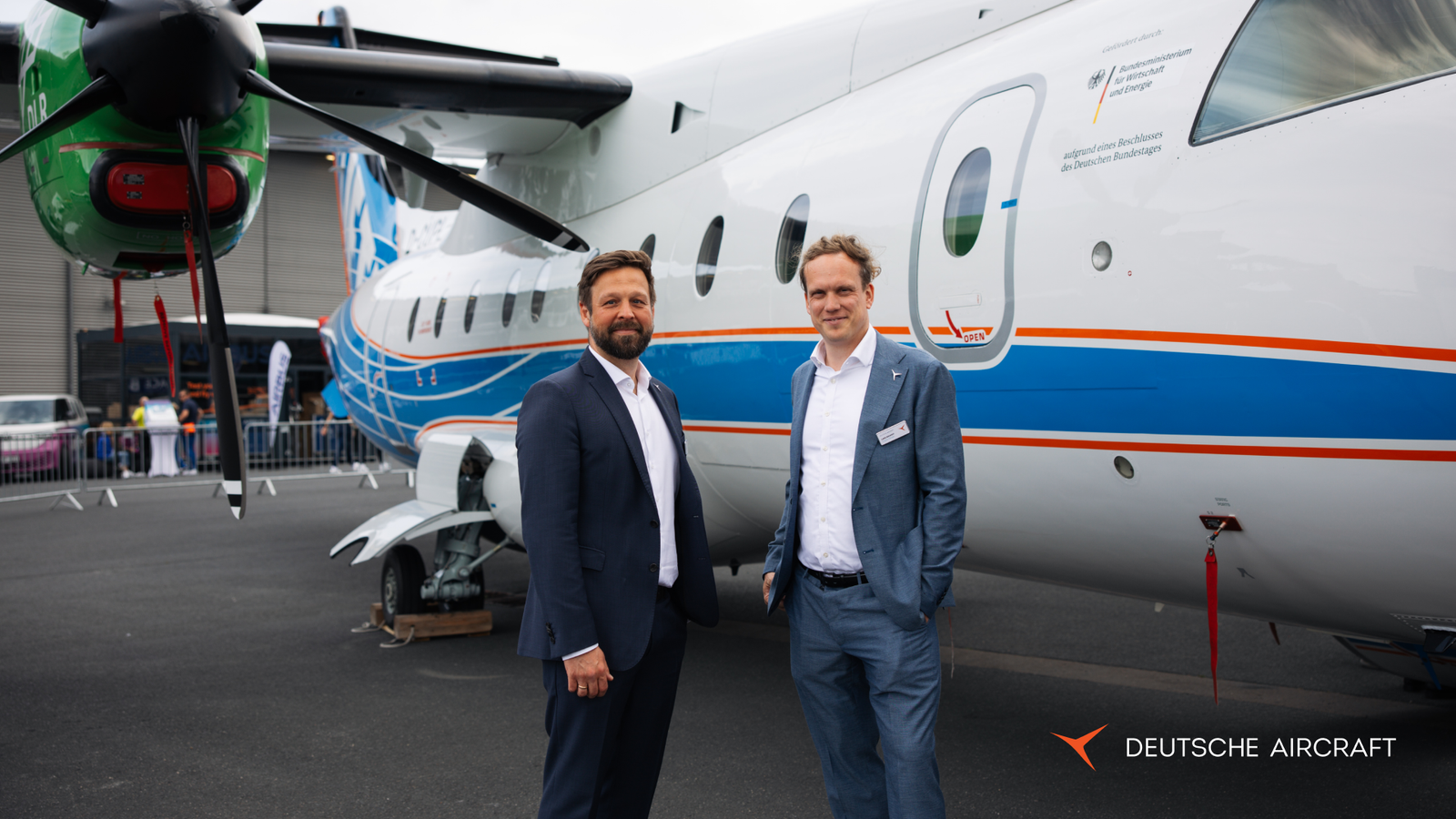
The industrialisation process is closely linked with research institutions, particularly the German Aerospace Center (DLR), whose collaboration is helping bridge the gap between experimental validation and certification. The DLR will also show the D328 UpLift research aircraft at ILA Berlin 2026. The aircraft is equipped with a dedicated research cabin and external measurement systems, such as a nose-mounted air data boom that DLR employs to gather aerodynamic and environmental flight-test data.
DLR also presented the UpLift-D328-Simulator, further strengthening this broader ecosystem. The simulator provides a virtual environment for mission planning, systems integration testing and pilot training preparation, contributing to reduced development risk and more efficient validation cycles within the programme.
Deutsche Aircraft executives underline that the objective is not only technological development, but the transformation of validated research into certifiable aircraft solutions ready for industrial deployment.
As Fredric Fischer, Director Roadmap & Innovation at Deutsche Aircraft, explains, “ILA Berlin 2026 gives us the opportunity to demonstrate how research excellence, strong partnerships and a clear industrial roadmap come together to advance sustainable regional aviation.”
Adding to this, Lars Brandt, R&T Program Manager at Deutsche Aircraft, stresses the importance of data integration across the programme: “Our focus is on turning validated research into reliable, certifiable aircraft solutions. At ILA 2026, we show how flight-test data, structural validation and fuel-compatibility research are systematically integrated into the D328eco programme to support on-time, industrial-ready development.”
Through this combined research and industrial strategy, Deutsche Aircraft continues to reinforce Germany’s aviation innovation ecosystem while advancing the technologies required to bring a next-generation climate-compatible regional aircraft to market.
- Latest
- Trending
ADVERTISEMENT