Land Nov 11, 2026
DHL commits over EUR 55 million to expand its express logistics infrastructure near Stockholm
A new 14,000-square-metre gateway in Arlanda Stad, developed alongside Slättö through its Evolv platform, will feature automated sorting technology and is expected to become operational in 2028.
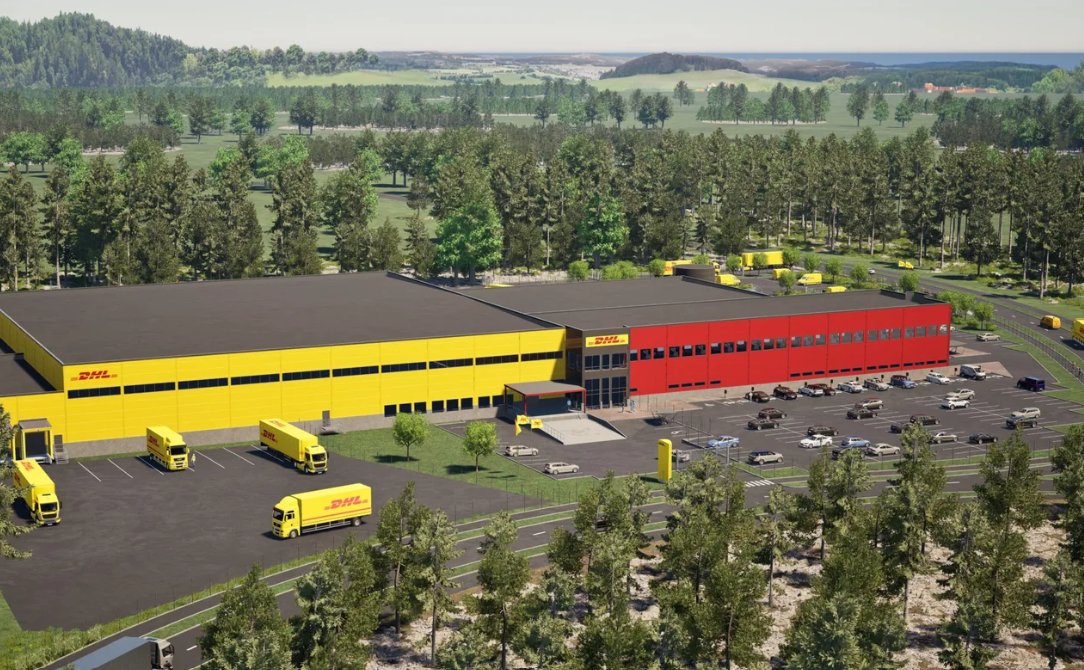
DHL Express has launched construction of a new gateway facility in Arlanda Stad, close to Stockholm Arlanda Airport, as part of its efforts to reinforce its logistics capacity in Sweden. The project represents an investment of more than EUR 55 million and is being developed in partnership with Slättö through Evolv, its platform specialising in logistics and light industrial real estate. The facility is scheduled to enter operation in 2028.
Its location near Stockholm Arlanda Airport and major road connections will provide DHL Express with improved access to Sweden's transport infrastructure and strengthen the country's links with the company's international network, which serves approximately 220 countries and territories.
The investment is intended to increase the capacity available for future import and export volumes while supporting Swedish companies that depend on reliable international express delivery services.
Gareth Biggs, Managing Director of DHL Express Sweden, said the investment reflects changes in global trade rather than a slowdown in international commerce. Companies are increasingly diversifying their supply chains, entering new markets and prioritising resilience and speed. For Swedish exporters, these developments are creating opportunities across established trade corridors as well as emerging growth markets.
He also highlighted the growing logistics requirements of industrial technology, life sciences, advanced manufacturing and e-commerce. Against a backdrop of greater uncertainty and volatility in global supply chains, customers are increasingly relying on international express networks for secure, dependable end-to-end transportation, including heavier shipments. According to Biggs, the new infrastructure will provide the capacity and connectivity needed to support customers as international trade patterns continue to evolve.
Strengthening Sweden’s international trade links
The project arrives as Sweden continues to be highly dependent on international trade. It boasts a strong export-driven economy backed by sectors like industrial manufacturing, technology, life sciences, automotive, renewable energy and e-commerce.
Reliable access to international markets is crucial for businesses operating in these sectors, especially as supply chains adjust to geopolitical uncertainty and shifting commercial conditions.
The new Arlanda gateway will enhance DHL Express’ ability to connect Swedish companies with their customers and suppliers globally and access to more international business opportunities.
Capacity for automated sorting, built on infrastructure to grow
The 14,000 square metre purpose-built facility is designed in collaboration with Slättö to meet DHL Express’s long-term operational requirements and allow for future expansion.
It will have an infrastructure with an automated sorting system that can process 6,000 shipments per hour and 60 direct-loading positions. The increased sorting capacity will help to improve the efficiency of handling shipments and will support the development of DHL Express operations in Sweden.
“The gateway will also facilitate the use of electric delivery vans for the company,” said Thommy Hall, VP Network Operations at DHL Express Sweden. Additionally, the facility will offer employees a modern, functional work environment tailored to the operational needs of the business.
A bigger investment programme in the Nordic and Baltic region
The Arlanda development is part of DHL Express’s wider investment strategy across Northern Europe, where the company continues to expand and modernise its gateway infrastructure.
The latest projects include a EUR 100 million gateway facility for DHL Express Finland at Helsinki-Vantaa Airport and a EUR 24 million development for DHL Express Estonia at Tallinn Airport.
In total, these latest investments are worth around EUR 180 million for gateways in the Nordic and Baltic region. Together with the new Arlanda project, they are intended to strengthen regional connectivity, increase operational capacity and accommodate the growing trade flows between Northern Europe and international markets.
END OF REPORT