Air Nov 5, 2026
Dronamics targets Nasdaq debut through $500 million SPAC business combination
Europe’s first licensed cargo drone airline has agreed to merge with GP-Act III Acquisition Corp, aiming to secure approximately $100 million in net proceeds to expand Black Swan manufacturing and accelerate its international operations.
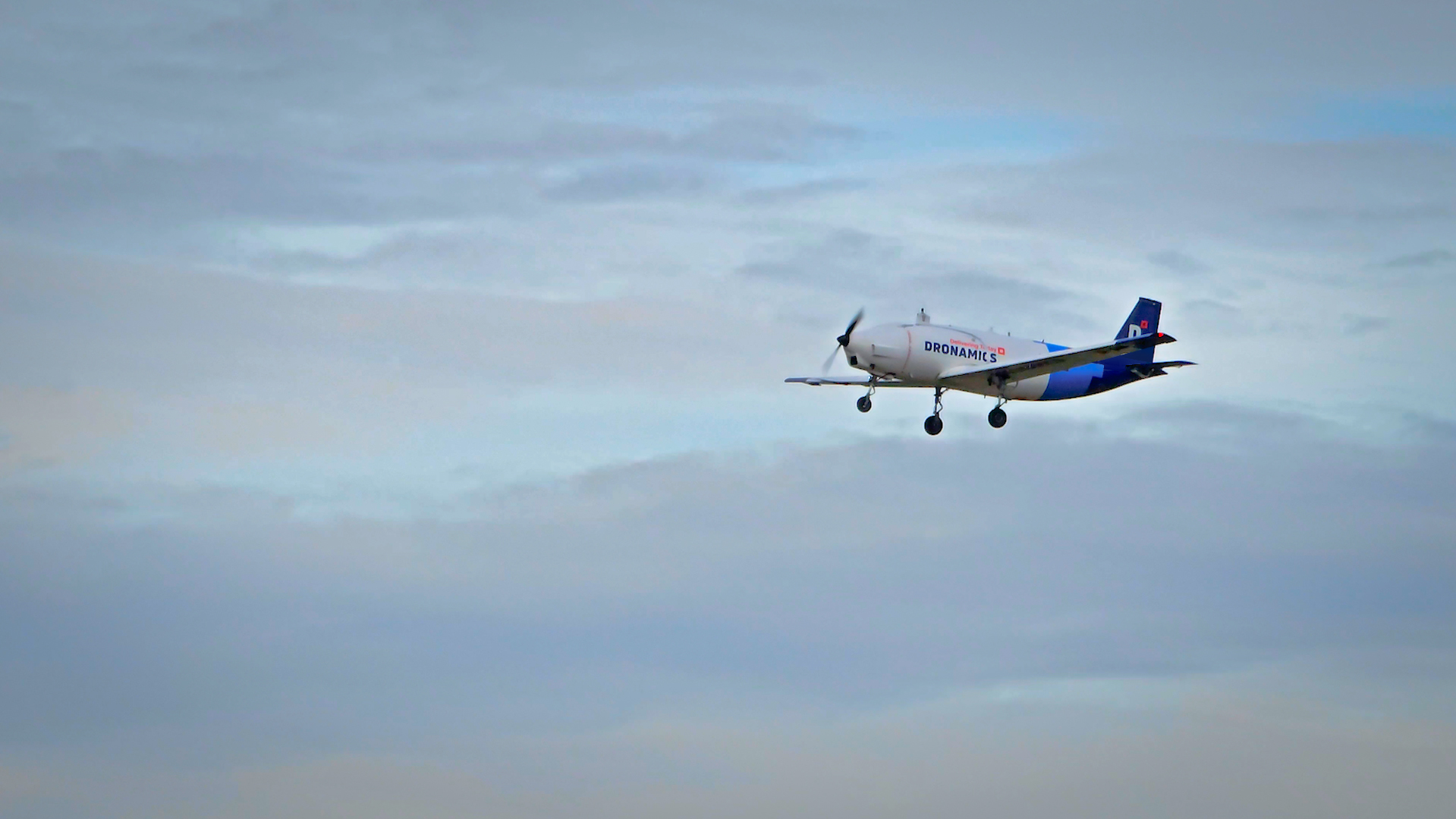
Dronamics is preparing to enter the US public markets through a business combination with Nasdaq-listed GP-Act III Acquisition Corp (Nasdaq: GPAT). The Bulgarian company, which develops and operates long-range unmanned aircraft, has signed a definitive agreement with the special purpose acquisition company (SPAC), paving the way for the combined business to trade on Nasdaq once the transaction is completed.
The deal places Dronamics’ pre-money valuation at $400 million on a fully diluted basis, corresponding to an estimated pro forma enterprise value of approximately $500 million. Existing shareholders are expected to transfer all their equity into the combined entity, maintaining their investments following the merger.
A central objective of the transaction is to provide Dronamics with around $100 million in net cash at closing, after transaction-related expenses. Funding is expected to combine proceeds from a private investment in public equity (PIPE) with the remaining cash in GPAT’s trust account. The final amount will depend on shareholder redemptions and the level of PIPE commitments. A minimum cash requirement of $25 million has also been included in the agreement.
Both companies are currently engaging with institutional investors and strategic partners to secure participation in the private placement. In addition, GPAT’s co-sponsors and several existing Dronamics investors have entered into convertible loan agreements, with part of the financing already funded.
The transaction has received approval from both companies’ boards of directors. Completion is targeted for the first half of 2027, subject to approval by GPAT shareholders and the necessary regulatory authorisations.
The planned capital injection is intended to strengthen Dronamics’ industrial and commercial capabilities. Priorities include increasing Black Swan production, accelerating airline operations and supporting expansion across autonomous logistics, national security, critical minerals exploration and sovereign aerospace.
At the centre of the company's strategy is the Black Swan, a long-range, fixed-wing unmanned aircraft classified as NATO Class III. Dronamics intends to use the platform to establish its own cargo fleet while offering middle-mile freight capacity through regional airports that are frequently underutilised. The company already holds an EU drone airline licence and has obtained airline designator codes from both IATA and ICAO.
The aircraft is also being developed for defence applications, including military resupply, intelligence, surveillance and reconnaissance (ISR), airborne early warning and counter-drone operations. Alongside the Black Swan programme, Dronamics is developing the Black Cygnet, a smaller NATO Class I tactical drone. The aircraft was recently demonstrated during a NATO exercise, where it was used for search-and-rescue and ISR missions.
Commercial partnerships are expected to play an important role in the expansion of the cargo business. Dronamics has signed a binding cooperation agreement with Hellmann Worldwide Logistics, which intends to provide at least 30% of the company's global cargo capacity.
The company estimates that more than 730 Black Swan aircraft could eventually be deployed with partners under various memoranda of understanding (MoUs), letters of intent and term sheets.
Its industrial and technological network also includes several other international players. Dronamics is collaborating with HENSOLDT on an unmanned airborne early warning platform, with Xcalibur Smart Mapping on airborne geophysics and with Asia Air Survey on geospatial surveying.
The partnership with Asia Air Survey has also supported Dronamics' expansion into Japan. Earlier this year, the company established a local subsidiary, Dronamics Japan Holdings, backed by an investment from Asia Air Survey's corporate venture capital arm. The collaboration is focused on aerial surveying, disaster prevention and civil protection activities in Japan and international markets.
Svilen Rangelov, co-founder and president of Dronamics, believes the Black Swan could establish a new category in autonomous aviation by bringing together long-range performance, substantial payload capacity and the potential for competitive operating economics. He also highlighted the importance of the planned Nasdaq listing in financing additional manufacturing capacity and launching operations in the United States and other markets.
Antonio Bonchristiano, chief executive officer of GP-Act III, said the investment case was supported by the Black Swan's ability to perform multiple roles, Dronamics' established industry partnerships and the opportunity to expand the aircraft platform globally.
Founded in 2014 and headquartered in Sofia, Bulgaria, Dronamics operates through a vertically integrated business model. Its activities cover research and development, aircraft manufacturing, leasing and airline operations, giving the company control over several stages of its aviation and logistics value chain.
END OF REPORT