



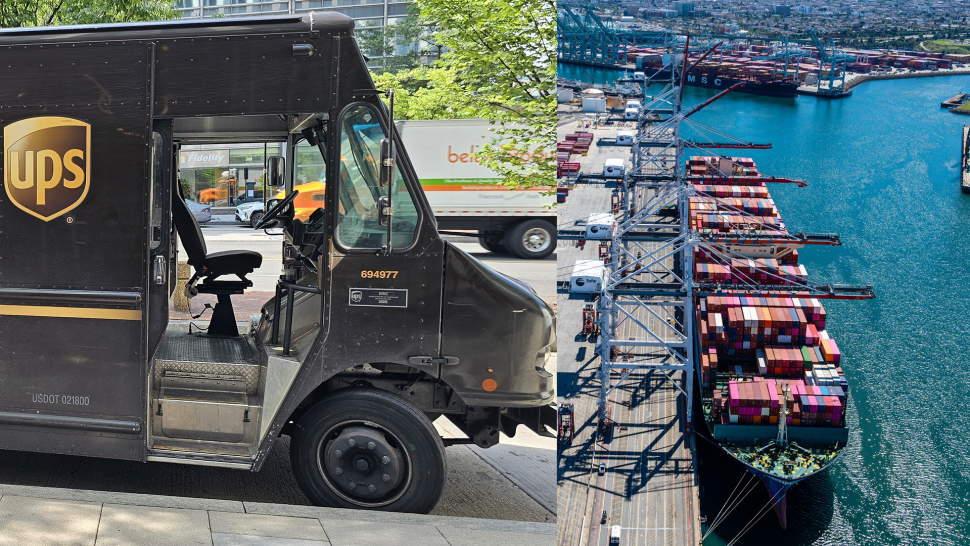
Labor negotiations between West Coast dockworkers and port operators always draw close attention because the coastal gateways handle a large share of the nation’s international trade. Any disruption threat at United Parcel Service also puts parcel and freight shippers on alert as UPS and the Teamsters union approach a contract deadline.
Those two big labor events are set to overlap in 2028. If tensions escalate when retailers and consumers are heading into the peak shipping season for the holidays, the economic fallout could be much greater than either dispute alone.
The contract between the International Longshore and Warehouse Union and the Pacific Maritime Association expires July 1, 2028. One month from now, the five-year master agreement for UPS drivers and parcel handlers that covers wages, benefits and working conditions also expires.
Already, organized labor is viewing the simultaneous negotiations as a potential source of additional leverage, a prospect that remains under the radar of much of the business community.
“The ILWU has the same expiration date as a UPS contract. So think of this. Picture us shutting down the biggest logistics company in the country, and shutting down the ports on the West Coast. “No better ‘bad idea’ than to do that,” Teamsters President Sean O’Brien said during the Aug. 5 episode of his podcast “Better Bad Ideas.”
The timing itself adds another layer of complexity. The United States is also set to hold a presidential election in 2028, potentially putting candidates under pressure to take positions on the disputes while the White House decides whether to intervene if talks break down.
A simultaneous labor disruption would be a serious operational risk for the logistics industry and for companies that depend on domestic and international freight.
If any slowdowns or disruptions are linked, if they coincide, the implications are significant. You could have massive backlogs at ports and for parcel shipments. A retail industry official who was briefed on the overlapping negotiations said, “You won’t be able to get products on time.” The official spoke on condition of anonymity because of the sensitivity of the matter.
Limited parcel shipper choices
Companies may attempt to reduce their exposure by bringing goods in earlier and warehousing them. This approach has been used in recent years when companies were facing the prospect of potentially disruptive events, and could be relevant again if talks appear to bog down by spring 2028.
But parcel freight is tougher to solve.
“The challenge on the UPS side is you can’t move up parcel shipping, it is more real time, so there are fewer options,” the source said.
Companies could turn to FedEx and other carriers, but analysts and industry experts believe those alternatives will be limited. Competing carriers would have to take on additional volumes without creating their own operational bottlenecks.
Ports are an important economic gateway
The potential for disruption on the West Coast is huge.
The Pacific Maritime Association says the West Coast ports, led by the giant Los Angeles-Long Beach complex, account for 37.2% of U.S. containerized import tonnage and 9% of U.S. GDP.
That piece of imports has shrunk in recent years as shippers have diversified their supply chains and employed more gateways. Still, West Coast ports account for a large portion of U.S. economic activity.
By contrast, UPS ships more than 16 million packages a day, or about 17% of the total domestic parcel volume. The parcel freight flowing through the company’s network is projected to be 5% to 6% of U.S. GDP.
Since O’Brien, who has been publicly warning of a strike unless UPS agrees to new demands from what is considered the highest-compensated parcel workforce in the U.S., previously reported by FreightWaves.
Analysts have argued that the current UPS contract puts the company at a big competitive disadvantage to Amazon, FedEx and dozens of independent last-mile delivery operators. Some analysts say UPS would have to claw back some of the concessions it made to the union to improve its competitive position relative to rivals. But such a stance, too, could raise the prospect of a strike if management took it in bargaining.
ILWU has history of tough negotiations
The ILWU’s relationship with container terminal operators has also been punctuated by periods of intense conflict.
The longshore union has a history of aggressive bargaining. In 2002, management locked out dockworkers after a costly work slowdown that lasted 10 days. The strike resulted in a backlog of container ships that was not cleared up until President George W. Bush invoked the Taft-Hartley Act and ordered the ports reopened.
In 2008, the negotiations were much less disruptive. The ILWU agreed to automation, but the agreement was full of many caveats that left considerable union control over future projects.
The next major clash occurred in 2014. Negotiations started one month before the contract deadline and lasted for 10 months. Meanwhile, conditions at ports worsened as longshore workers called in sick or didn’t report for assignments.
Crane productivity fell sharply from some 25 to 27 moves per hour to only eight. By the start of 2015 there were around 40 ships waiting offshore of Southern California ports.
And once an agreement was reached, it took another six months to clear the backlog and get port operations back to normal fluidity.
The process that led to the approval of the 2023 contract took more than 13 months. It came amid a spate of port disputes and closures and rising fears a strike could wreak havoc on supply chains.
West Coast longshore workers continue to be among the highest-paid industrial workers in the world.
Why It’s Important
Shippers should brace themselves for the possibility of simultaneous labor disruptions at West Coast ports and UPS in 2028. The two contract deadlines are just a month apart, meaning any slowdown or strike could create huge backlogs through ports, parcel networks and wider supply chains, with potentially serious repercussions for businesses shipping goods in the United States and around the world.