



More than 40 kilograms of cocaine crossed the country from California to Florida aboard a commercial truck whose carrier was reportedly unaware of the illegal cargo. Investigators intercepted the shipment as suspects began unloading a pallet containing the drugs, uncovering a broader trafficking operation that stretched across three South Florida counties.
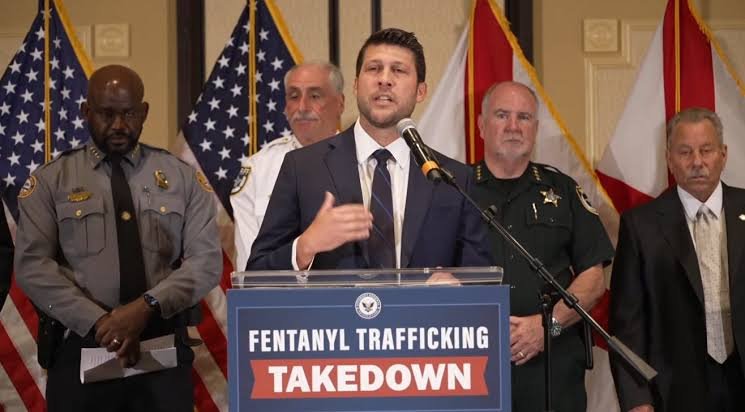
Florida Attorney General James Uthmeier announced the results of Operation Icebreaker on October 13, confirming that 25 people had been charged in connection with the investigation. Authorities seized approximately 45.5 kilograms of cocaine during the operation, along with fentanyl, methamphetamine, prescription pills and firearms.
The coordinated enforcement effort covered Palm Beach, Broward and St. Lucie counties. According to the Attorney General’s announcement, investigators uncovered a network that exploited commercial transportation to move illegal drugs through legitimate freight channels.
How traffickers allegedly used commercial freight networks
Investigators said the group concealed shipments of several kilos of cocaine in commercial trucks. The network is said to have used drivers who were aware of their criminal activities as well as legitimate carriers who, the authorities say, did not know they were transporting illegal cargo.
The investigation identified Ariel Fernandez-Alonso as a major supplier. He told investigators he was allegedly receiving between 50 and 60 kilos of cocaine every 15 days. As Fernandez-Alonso and his crew started unloading the shipment, detectives intercepted one delivery.
Authorities have not determined if the intercepted pallet was part of a full truckload (FTL) or a less-than-truckload (LTL) operation. The shipper, consignee, freight broker and carrier involved have not been identified publicly. pickup and delivery locations have also been withheld by investigators and the court documents offer no other details on how the shipment was arranged Logistically.
The case is the latest in a series of investigations showing how criminal organizations can exploit the infrastructure of commercial transportation. In previous reporting, FreightWaves covered a $139 million drug trafficking operation that used broker-style arrangements with drivers who were aware they were part of the conspiracy.
In another case, about $6 million worth of cocaine was found stashed under the floor of an abandoned semi-trailer near the Canadian border. While the circumstances were different in both investigations, the risks criminal networks pose to legitimate freight movements are clear.
Surveillance, undercover buys helped build the case
The investigation began in March 2026 when narcotics detectives with the Palm Beach County Sheriff’s Office began investigating suspicious behavior on social media.
The 162-page affidavit for an arrest warrant describes the investigative techniques used to identify alleged distributors and establish connections within the network. They included undercover drug buys, court-authorized wiretaps and surveillance operations.
Detectives learned during the investigation that Kenny Charles was one of the main suppliers for Richard Paterniti. But the court document does not reveal how authorities initially tracked or identified the specific shipment of cocaine that traveled from California to Florida.
In the end, law enforcement agencies conducted coordinated enforcement actions in the three counties and executed more than 20 search warrants.
Multi-county sweep net 25 detained
Operation Icebreaker has so far resulted in 25 people being charged. The list included Ariel Fernandez-Alonso, Richard Paterniti, Kenny Charles, Craig Benard, Jerri Kitzelman and Jerry Salerno.
The charges include drug trafficking, racketeering conspiracy and unlawful use of communication devices. They said officials also seized various illegal drugs and firearms during the operation.
All charges are allegations and those charged are presumed innocent until proven guilty in a court of law.
Why this case is important for the trucking and logistics industry
A perennial hazard to transit of commercial freight that Operation Icebreaker brought to light is that traffickers use legitimate carriers unwittingly as conduits for their criminal supply chains by hiding illegal cargo in legitimate shipments.
The carrier, shipper and consignee of the shipment were not disclosed, making it difficult to know more about how the cocaine got into the freight network and what security measures could have detected it sooner. Investigators have not yet determined if the load was shipped full truckload or less than truckload.
But the case illustrates the importance of vetting shippers and business partners, maintaining accurate cargo documentation and tracking freight during the transportation process.
Freight brokers and other logistics providers, such as trucking companies, can help reduce the risk of criminal exploitation through improved verification procedures and effective cargo-control practices . The probe additionally emphasizes the need to thoroughly investigate suspicious activity and not automatically assume a carrier or driver’s involvement just because illegal goods are found in a commercial shipment.